Building Wealth

For the first 30 or so years of working, saving and investing, you’ll be first in the mode of getting out of the hole (paying down debt), and then building your net worth (that’s wealth accumulation.). But don’t forget, wealth accumulation isn’t the ultimate goal. Decumulation is! (a separate category here at the Hub).

Dividends: The Foundation of the Smart Beta Movement

blog-see-more-dividendschris_gannatti_crop-bwBy Christopher Gannatti, Associate Director of Research, WisdomTree

Special to the Financial Independence Hub

Smart beta exchange-traded funds (ETFs) are rapidly proliferating and capturing assets at a faster clip than the broader ETF industry. In 2015, 143 smart beta ETFs came to market, [Note 1] representing half of the year’s new ETF launches, or double the percentage of traditional beta products born last year.

Dividend strategies are one of the primary drivers of smart beta ETF growth. Smart beta ETFs had about $616 billion in assets under management at the end of 2015, [Note 2] and more than a quarter of that total was allocated to dividend-oriented funds.

Since the publication of the widely followed Fama-French research in 1993, outperformance of fundamentally weighted indexes has mostly been attributed to the market factor, the size factor (mid- and small caps outperforming larger stocks) and the value factor. [Note 3] Later, momentum factor was added as an accepted driver of fundamental weighting’s ability to top market cap-weighted strategies.

At WisdomTree, we believe weighting by dividends elevates fundamental indexing or smart beta. In 2006, 25 dividend ETFs [Note 4] came to market, 22 of which courtesy of WisdomTree. Our Dividend Stream® weighting methodology offers distinct advantages over weighting by market capitalization, dividend yield or focusing on the number of consecutive years that companies have increased payouts. Continue Reading…

Becoming a new Robo-Advisor client may be challenging, Dalbar finds

Robot hand, ordering on a laptop keyboard, an exchange trade. Robot trading system is a computer trading program that automatically submits trades to an exchange without any human interventions. Depth of field with focus on finger.DALBAR has released results for its study of the user experience of North American users of robo-adviser services, dubbed the Robo-advisor Onboarding Experience study.

It found that opening a new account is a critical first point of contact between a service provider and a client.

In this press release, it found that some Canadian robo-advisors are “clearly falling short of peer performance as well as of Canadian investors’ expectations for service in the wealth management space.”

Service gaps identified  

Funding the account was the biggest challenge facing Canadian robo-advisors.
Several firms encountered serious technical and logistical challenges using live chat effectively.

Continue Reading…

How “Victory Lap” was conceived

MOSCOW - AUGUST 08: Group Russian unknown golfers shake hands on annual open international event for professionals and fans - VI Moscow Festival Retrostyle in Le Meridien Moscow County Club August 08, 2008 in Moscow, Russia
Victory Lap: Work while you play, play while you work

How did the Victory Lap concept originate? I smile every time I think about the fact that Jonathan and I have written a retirement book about not retiring. I know it’s weird, but weird seems to work in today’s world …

It all started about five years ago: the day I woke up and realized I didn’t want to do my corporate job anymore. Thinking like this was strange for me because I had always liked my job. I was good at it and it paid well, providing security and a good living for my family.

But truth be told, over the last few years the job was starting to have a negative effect both on my health and on my personal well-being. The stress of performing at a high level year in and year out was getting to me. I was reminded of this every morning, when I took my blood pressure medication.

Continue Reading…

Are mutual funds headed for extinction?

James Avatar
James Gauthier, JustWealth

By James Gauthier, CIO, JustWealth

Special to the Financial Independence Hub

The advent of the mutual fund was one of the greatest innovations in the field of finance. Mutual funds created a practical means for common folks to invest in the markets which used to be only accessible by the wealthy.

The mechanics of how mutual funds operate have not changed much in the many decades since they have been around. Simply put, a group of investors pool their money together and form a unit trust where all investors get a pro rata ownership of what they contributed to the pool in the form of units (or shares). The pool is then used to buy a number of underlying investments such as stocks or bonds.

At the end of each day, all investments in the trust are priced and a Net Asset Value (or NAV) is determined by dividing the total value of the trust investments by the units outstanding. Investors who want to purchase shares of the trust may do so based on the NAV established at the end of each day.

Mutual funds have been available to Canadians for over 80 years, and now number more than 15,000 worth well over $1 trillion. Companies or individuals who sell mutual funds like to promote the benefits of mutual funds: Continue Reading…

When to buy an ETF for maximum return


To determine when to buy an ETF, some investors use technical analysis and other tools. But you need to dig deeper.

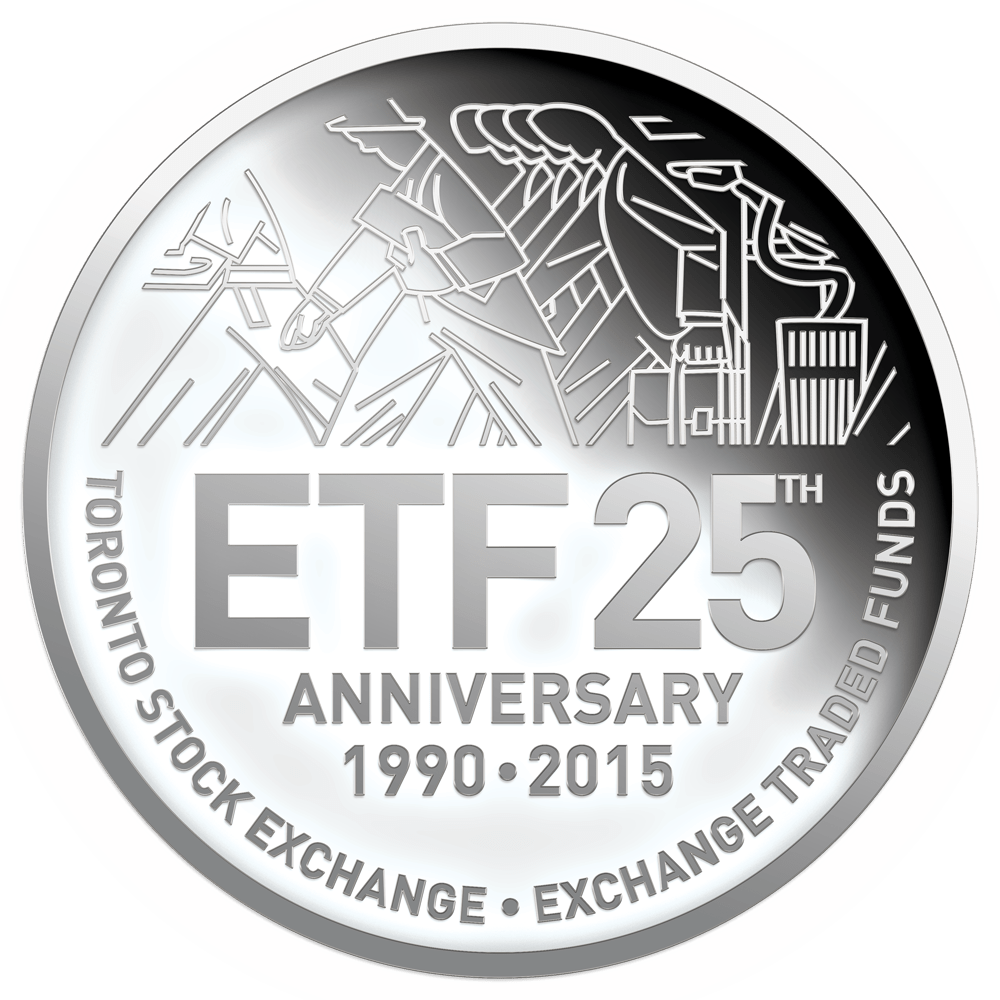
ETF-25Y-medallion-ROUND-ENInvestors often wonder: what is a good entry point when purchasing a stock or an ETF?

The first question before asking when to buy an ETF is whether an exchange traded fund investment is right for your portfolio. An ETF investment is one of the most popular and most benign investing innovations of our time. ETF investments are a little like conventional mutual funds, but with two key differences.

First, ETF investments trade on a stock exchange throughout the day, much like ordinary stocks. So you can buy them through a broker whenever the stock market is open, and generally you pay the same commission rate that you pay to buy stocks. In contrast, you can only buy most conventional mutual funds at the end of the day. What’s more, commissions vary widely, depending on negotiations with your broker or fund dealer.

Second, the MER (Management Expense Ratio) is generally much lower on ETFs than on conventional mutual funds. That’s because most ETFs take a much simpler approach to investing. Instead of actively managing clients’ investments, ETF providers invest so as to mirror the holdings and performance of a particular stock-market index.

ETFs practice this “passive” fund management, in contrast to the “active” management that conventional mutual funds provide at much higher costs. Traditional ETFs stick with this passive management—they follow the lead of the sponsor of the index (for example, Standard & Poors). Sponsors of stock indexes do from time to time change the stocks that make up the index, but generally only when the market weighting of stocks change. They don’t attempt to pick and choose which stocks they think have the best prospects.

This traditional, passive style also keeps turnover very low, and that in turn keeps trading costs for your ETF investment down.

When to buy an ETF

Continue Reading…