Decumulate & Downsize

Most of your investing life you and your adviser (if you have one) are focused on wealth accumulation. But, we tend to forget, eventually the whole idea of this long process of delayed gratification is to actually spend this money! That’s decumulation as opposed to wealth accumulation. This stage may also involve downsizing from larger homes to smaller ones or condos, moving to the country or otherwise simplifying your life and jettisoning possessions that may tie you down.

5 Steps to a Victorious Retirement

Who doesn’t want a Victorious Retirement?

Just in time for the long weekend and Canada’s 150th birthday, MoneySense.ca has just published a 5-part series on retirement, going from deciding what you want to working longer, the Ages & Stages by decade, being a snowbird, and finally what to do once you finally reached the hallowed land of Retirement/Findependence/Victory Lap.

Here’s a summary of each piece (all written by Yours Truly), and links to the full articles:

1.) The first step: What do you really want?

Take a custom approach to retirement planning. There’s no point fretting too much about retirement and how much to save if you haven’t first determined what you want to DO once you’re retired. For starters, how are you going to fill those 2,000 hours a year you use to spend in the office and commuting? Click here for full article.


2.) We live longer. Why not work longer?

Ask questions about a retirement plan that’s right for you. Life expectancies are on the rise: more and more Baby Boomers can expect to become centenarians and that probably goes double for their children, the Millennials. Makes sense to consider working a little longer, if only part-time. Or if you really dislike your chosen profession, go back to school or retrain and find something you’d really enjoy doing in your golden years: preferably something that pays! Click here for full article.


3.) Snowbird? Learn the “substantial presence” test

Learn the tax pitfalls of retiring to the sun in the U.S. It all depends on how long you plan to stay down south each year: the formula isn’t simple. If you don’t relish the thought of paying tax to two countries, you may want to make sure you’re not considered to have a “substantial presence” in the U.S.  Click here for full article.

4.) Your retirement plan has a life cycle

Retirement planning strategies for every age. Every decade from your 20s to your 70s and beyond should take you a little further along the journey to financial independence/Retirement. Just like we all share the same fate in our human life cycle, so it is with the financial life cycle. Click here for full article.


5.) Retirement planning —after you retire

The plan doesn’t stop when you stop working.

My co-authored book Victory Lap Retirement features on its cover what appears to be a sprinter breaking through the finish line of a long marathon. But that doesn’t mean we’re saying Retirement is a literal finish line and with it the end of striving and purpose. In fact, we’re saying a “Victory Lap” really only begins when you reach the “finish line” of financial independence, or Findependence.

There will still be a big adjustment as you move from Wealth Accumulation to the De-accumulation or “Decumulation” phase: less earned income and more passive sources of income. And you’ll need to master the tax aspects because Tax may be one of the biggest expenses in Retirement. Click here for full article.

Retirement STILL Rocks

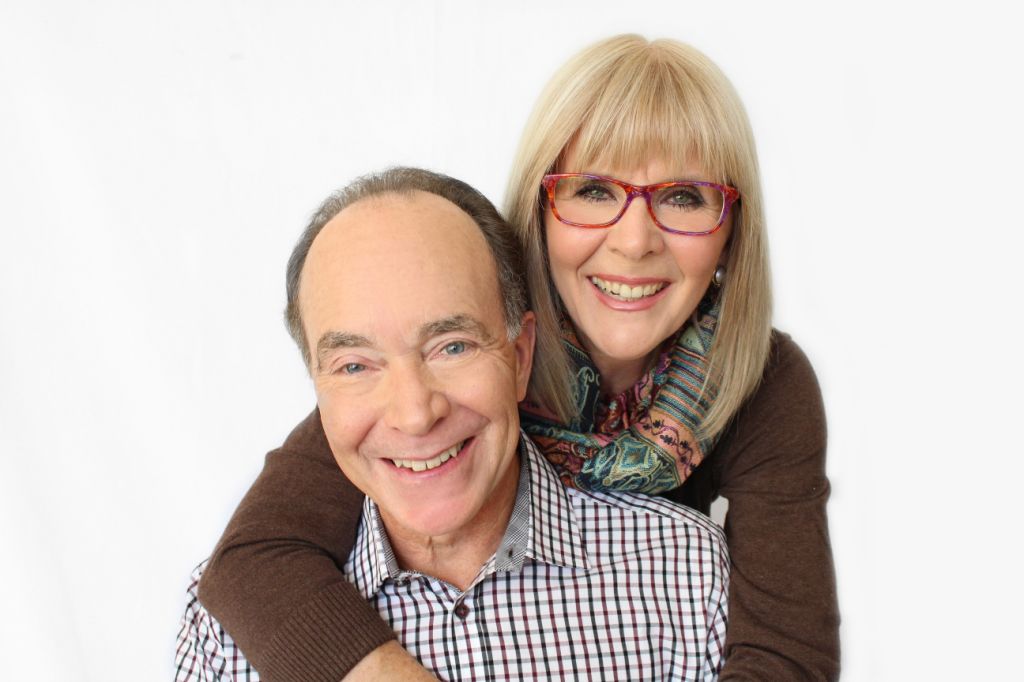
Heather Compton & Dennis Blas, coauthors of Retirement Still Rocks

By Heather Compton and Dennis Blas

Special to the Financial Independence Hub

Since retiring in 2004, we’ve learned a thing or two.  Foremost, a rockin’ retirement requires more than a bucket list: it’s not a given, it’s a statement of intention. A satisfying retirement requires finding new ways to satisfy our needs and utilize the skills and talents that give us the greatest satisfaction. Like a working career, a retirement career unfolds, develops, progresses and changes as life circumstances unfold. This doesn’t mean some front-end planning won’t be useful. Our cornerstones for a rockin’ retirement include Lifestyle, Relationship and Finances.

Go-Go to Slow-Go to (sigh) … No-Go

Many of us will have a third act lasting 30 plus years and few will plan for the full-stop retirement of a previous generation.  All play and no work also makes Jack a very dull boy! We may think of retirement as one long time frame, but those who study aging divide it into three distinct phases: the go-go, slow-go and no-go years. Certain Victory Lap careers, travel destinations and budding interests must be pursued in the go-go years; others might wait until the slow-go. Either way, you’ll want to mind-bank lots of great life experiences to relive in the no-go years! Continue Reading…

6 ways to ensure you won’t outlive your money

“Retirement: World’s longest coffee break.” —Author Unknown

Over the years you’ve taken plenty of advice, saved and invested diligently. Now you and your family are knocking on retirement’s door or, perhaps, in its midst.

The good news is the family members will likely live longer than before. The flip side is that more money may be required to fully fund retirement lifestyle.

Let’s assume that retirement spans from age 60 to 90, often longer. Many worry that the money won’t last and runs out during retirement.

Analyze life expectancy of the immediate family members for both spouses or partners. Specifically, review the current ages of grandparents, parents, uncles, aunts and cousins.

Some are petrified at the mere thought of such a prospect becoming reality. The question becomes what you can do to at least contain this situation.

I summarize six essential ideas designed to ballpark your lifestyle needs and help your retirement money last:

1. Family life expectancy

Analyze life expectancy of the immediate family members for both spouses or partners. Specifically, review the current ages of grandparents, parents, uncles, aunts and cousins. Get familiar with the ages attained by family members that have passed away. Pay attention to patterns of critical illness and longevity.

Today, it is commonplace for many to live well into their 80s. It is wise planning for a family to expect that at least one spouse could easily live past age 90. Another expectation is that family longevity continues to increase. Updating the retirement projection refreshes the family’s capital needs for the desired lifestyle.

2. Becoming too conservative
Continue Reading…

How to make realistic retirement calculations for your future

When you’re investing and planning for retirement, make realistic calculations rather than indulging in wishful thinking.

If you plan to retire at 65, and you’re 50, you won’t be dipping into your investments for 15 years. If you are in reasonably good health, you could live well into your 80s: possibly longer.

Let’s say you have $200,000 in your RRSP, and expect to add $15,000 in each of the next 15 years.

To determine if this is enough, you need to make some realistic retirement calculations about investment returns and income needs.

What you can expect

Long-term studies show that the stock market as a whole generally produces total pre-tax annual returns of 8% to 10%, or around 6% after inflation. For the purposes of retirement planning, we’ll assume a 6% yearly return, and disregard inflation. Your $200,000 grows to $479,312*, and your yearly $15,000 RRSP contributions add up to $370,088, for total retirement savings of $849,400.

*Be sure to check your math. There are many compound-return calculators available online. For example, you can find a comprehensive compound-return calculator at the Bank of Canada’s web site.

Income and outgo

If you continue to earn 6% a year, and you withdraw $50,964 a year (6% of the $849,400 in your RRSP), you can avoid dipping into capital until your mid-70s, when RRIF rules require a larger withdrawal.

However, if you start taking money out faster, or earn lower returns, you’ll run out of money.
If you withdraw $90,000 a year while earning 6%, the money you’ve accumulated will last just over 13 years. If you earn 5% but withdraw $90,000 a year, your money will be gone in just over 12 years.

Beware of getting caught in a vicious circle

Continue Reading…

Turning 65 soon? Service Canada wants to give you OAS benefits!

Turning 65 in the next year? These things do eventually happen, God Willing!

The bad news is you are now considered by the Government to have reached Old Age; the good news is that also means Ottawa wants you to consider starting receiving Old Age Security (OAS) benefits the month after you officially turn 65.

My latest MoneySense column provides all the details, starting with a letter Service Canada should be sending you automatically shortly after you reach 64. Click on the highlighted text for the full column about how to get ready to receive Old Age Security benefits and possibly the Guaranteed Income Supplement (GIS) to OAS: What to expect when receiving OAS at 65.

As you’ll see, no action at all is required if they did send you this initial package and you’re happy to receive gross (pre-tax) cheques mailed to the address they have on file. If you want the funds deposited electronically to your bank and/or have tax deducted at source (as I did), then you either have to go to the web site provided or call them on the phone.

I have to say my initial attempt to do this on the Internet was a frustrating one. It turned out to be far easier to call them on the telephone on the English-language helpline listed in the letter: 1-800-777-9914. Due to “high call volume” I was put on hold for 15 minutes, during which time the automated voice advised listeners to apply for OAS at least six months before their 65th birthday and no more than a year in advance. It also said the maximum monthly OAS benefit is currently $578.53.

I chose to have 25% tax withdrawn at source so with no further action on my part, I can expect my first OAS deposit of $433.90 (net of tax) to arrive magically in my bank on or about May 29, 2018, and every month after that for as long as I live, like any other pension. By then it may be slightly more, as it may be indexed to the cost of living.

Take OAS early, CPP late if you can possibly swing it

Keep in mind that, like the Canada Pension Plan (CPP), you can opt to defer receipt of OAS benefits to as late as age 70, thereby raising the payout. I revealed my reasons for taking OAS as soon as it’s on offer in an earlier MoneySense column last summer: Why I’m taking OAS right at 65. Continue Reading…