For the first 30 or so years of working, saving and investing, you’ll be first in the mode of getting out of the hole (paying down debt), and then building your net worth (that’s wealth accumulation.). But don’t forget, wealth accumulation isn’t the ultimate goal. Decumulation is! (a separate category here at the Hub).
Some investors eventually leave their commission-based advisors and opt to set up a simple portfolio of index funds or ETFs on their own. There are plenty of compelling reasons to do so; the reduction in fees alone can save investors thousands of dollars a year, and academic research shows that the lower your costs, the greater your share of an investment’s return.
In my fee-only planning service, many clients end up doing exactly that. I always enjoy hearing the rebuttals from bank and investment firm advisors whenever they hear their clients want to move to a lower-cost portfolio. Here I’ve tried to capture some of that conversation with sh*t my advisor says:
Sexism: When my husband told him we’re choosing simple index investing and that I handle the family finances he smirked and said to my husband, “What credentials does your wife have to manage money?”
The real enemy:Our investment company is being vilified when the true villains are credit card companies with their interest rates.
Proof of concept: I have tons of clients with assets over $500,000 so I must be doing something right.
Working for free: My advisor told me she basically worked for me for free for the past eight years and accused me of dumping her just as my assets were growing.
It takes a professional: People think they can trade mutual funds or ETFs on their own but it’s not as easy as you think. Plus, you don’t have anyone like me to call up and ask if you’re doing the right thing. Re-balancing a portfolio is easy if you have the background, but doing it like you’re thinking about (indexing) is very tough without the training and knowledge.
What’s in a fee?: The fees are at 2 per cent (Ed. Note: actually, 2.76 per cent) because this isn’t just about buying and selling. We created a complete portfolio with you for your tolerance in the market and deal in actively traded mutual funds that most of the time outperform the market.
Nortel: ETFs aren’t all that great. When you buy an ETF you buy the whole fund. In the late 90s when Nortel owned 30 per cent of the TSX it crashed. If you purchased that ETF you’d be down 30 per cent too! But with a mutual fund you can’t buy that much. You are only able to purchase up to 10 per cent of any one company. So you would have been fairly safe with the crash of Nortel.
Downside protection: If the market goes down 20 per cent your ETFs will too. You are much more protected with mutual funds.
Apples-to-apples: All of our fees are wrapped up together in our MER. We do not charge account fees, transaction fees, advisory fees, admin fees or fees for our service. It is just the MER.
Clairvoyance: The bond market has likely reached its peak and appears to moving in a different direction. The equity markets are very risky at this time. In my mind the only safe place left is guaranteed deposits.Continue Reading…
Looking back over the past few decades, I’d say that some of my most useful and profitable investment principles came from things I’ve read or experienced that had nothing to do with the stock market.
I’ve already written about my first experience as a substitute newspaper delivery boy, filling in at age 11 for the 13-year-old who delivered the papers on our street. He made it sound simple: “You pick up the papers from the route boss on the corner, and you deliver them to the houses on this list. You go around to the houses and collect the money at the end of the week. The next day, you pay the route boss for the papers you took, and you get to keep all the money that’s left over.”
Every word in that explanation is true. However, he left out one crucial bit of info: rather than pay cash to the paperboy, a third or more of the customers mailed in a check every month to the newspaper office. After the check cleared, the office mailed a check to the (regular) paperboy. This was my first experience with paid work (other than leaf raking, lawn mowing or snow-shoveling, for which I got paid at the end of the day). It provided an instant, valuable lesson: before agreeing to any sort of business deal, you need to know all the details, even if this forces you to ask awkward questions.
Focus on plain-vanilla stocks and bonds
Over the years, this lesson has kept me out of all sorts of money-losing investments and unfair or poorly designed business proposals. It also explains how I came around to the view that you should focus on “plain vanilla” stocks and bonds in your portfolio, and avoid complex investment products, especially those with an insurance component.
Investment products profess to offer a “deal” that has more profit potential and/or less risk than you get from plain vanilla stocks and bonds. In my experience, what you lose on the one side of the promise is less valuable than what you gain (if anything) on the other. The deal in investment products is, however, much more complicated than the deal on the plain vanilla alternative.
It’s easy to find references to the hypothetical gains and advantages of investment products: just look in the marketing brochure, or ask the salesperson. To find out the downside of the product, you have to dig through many pages of legalese/fine print. The seller always has an information advantage over the buyer.
As a group, these products are likely to provide a lower long-term return than what you’d expect from a portfolio of high-quality stocks. But they provide a higher return to the salespeople, compared to what they can earn by selling you a portfolio of high-quality stocks. So, over a few decades, my first newspaper delivery experience at age 11 led me to advise against buying the many types of investment products that expose investors to costly conflicts of interest.
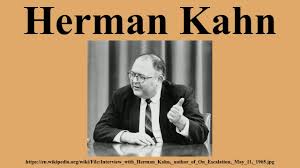
I learned a higher-level lesson about investing from the work of military-strategist/futurist Herman Kahn, author of On Thermonuclear War, Thinking About the Unthinkable and On Escalation. I first heard about Kahn in the early 1960s, when I had just entered high school. This was the height of the Cold War. Like many people back then, I worried that a nuclear war could conceivably break out at any time, with little or no warning. Scientists warned that if war came, “the living would envy the dead.” I tried not to think about it.
YouTube.com
In his book, Kahn said that thermonuclear war would not start overnight. Based on his study of military history, he said the world was more likely to go through 44 stages between the Cold War and World War III. He likened the 44 stages to rungs on a ladder, and divided them into seven subsets.
He labelled the first subset — rungs one through three — as “Subcrisis Maneuvering”; the second group, rungs four through nine, as “Traditional Crises”; the third, 10 through 20, as “Intense Crises”; the fourth, 21 through 25, as “Bizarre Crises”; the fifth, 26 through 31, as “Exemplary Central Attacks”; the sixth, 32 through 38, “Military Central Wars.”
Kahn refers to the passage from subset 6 to subset 7 — that is, from rung 38 to rung 39 — as “The City Targeting threshold.” He labels the final subset, number seven — rungs 39 through 44 — as “Civilian Central Wars.”
In Kahn’s ladder, the first use of nuclear weapons occurs at rung 23 (Local Nuclear War, Military). Civilians only start to become targets at rung 29 (Exemplary Attacks on Population). Civilians become a focus at rung 42, (Civilian Devastation Attack). Rung 43 is “Some Other Kinds of Controlled General War.” Rung 44 is World War III, but Kahn called it “Spasm or Insensate War.”
I found all this greatly reassuring. It gave me reason to believe that if war was coming, it would follow some sort of pattern, rather than come as a total surprise, like a global car crash. Of course, I was still in my teens. Adults differed widely in their attitude toward Kahn and his views.
Some people felt Kahn’s nonchalant writing about thermonuclear war marked him as a heartless monster. (On Thermonuclear War popularized the term “megadeath” — the death of one million individuals.) But Kahn was a jovial, gregarious individual, and this came through in his writing. If he had written in a morose, emotional tone, nobody would have read the book, and that would have been a tragic waste.
Others saw Kahn as an object of ridicule. They loved Stanley Kubrick’s political-satire/black-comedy film, Dr. Strangelove or: How I Learned to Stop Worrying and Love the Bomb. The film’s title character, Dr. Strangelove (played by Peter Sellers), is widely viewed as a parody of Kahn and his unflinching descriptions of the effects of war. It’s less widely known that Kahn collaborated with Kubrick on the script. Some of the film’s funniest lines make use of Kahnian terms, such as “Doomsday Machine.” Others are comical paraphrases of sentences in Kahn’s books. The project appealed to Kahn’s sense of humour.
Spotting unwise or unnecessary risks
Kahn’s work was widely read by high-ranking members of the U.S. and U.S.S.R. government and military. By describing and dissecting Kahn’s 44 stages, politicians and generals on both sides got better at spotting and avoiding unwise or unnecessary risks. In fact, many people give Kahn and his fellow “megadeath intellectuals” some credit for heading off World War III. Instead of world wars, major world powers shifted to regional proxy wars, like the Vietnam war, and the Soviet-Afghan war of the 1980s. Continue Reading…
Exchange-traded funds (ETFs) have seen immense growth over the past decade. There are a multitude of benefits, including transparency, tax efficiency and the ability to make intraday trades, that have contributed to the use and growth of ETFs. While these are all beneficial to investors, we continue to see questions around ETF trading. Although ETFs trade on-exchange like stocks, investors have to understand that ETFs trade differently and that ETF execution is an imperative part of investing that should not be minimized.
Many investors know that when evaluating an ETF, average daily volume (ADV) does not indicate the true liquidity of an ETF. The liquidity of an ETF resides in its underlying securities, but how does one access that to ensure smooth execution?
Let’s discuss the do’s and the don’ts of how to best trade an ETF.
The Don’ts
1.)Don’t trade in the first or last 15 minutes of the trading day. This is when trade desks have less transparency and markets are more volatile.
2.) Don’t place market orders; if you want to trade electronically, place limit orders. We advise investors to always use limit orders, especially in times of volatility. We also advise investors to not use stop-loss orders that turn into market orders.
The Do’s
1.) Do utilize your resources. Consult your trading desk as well as the relevant capital markets desk. The majority of issuers have capital markets teams that can consult on a trade. Additionally, the majority of advisors have access to a trading desk. These desks have access to expert market makers who can access the underlying liquidity.
2.) Do use a limit order when trading electronically, this cannot be said enough!
Most advisors have a trading desk through their firm or custodian, and they are always a resource as well. If there is one thing to take away from this piece, it’s to use your resources and make that phone call or email—it can be the difference between seamless execution and a very costly mistake.
Bryan Moore is Head of National Accounts and Capital Markets for WisdomTree Canada.
Commissions, management fees and expenses all may be associated with investing in WisdomTree ETFs. Please read the relevant prospectus before investing. WisdomTree ETFs are not guaranteed, their values change frequently and past performance may not be repeated. Past performance is not indicative of future results. This material contains the opinions of the author, which are subject to change, and should not to be considered or interpreted as a recommendation to participate in any particular trading strategy, or deemed to be an offer or sale of any investment product and it should not be relied on as such. There is no guarantee that any strategies discussed will work under all market conditions. This material represents an assessment of the market environment at a specific time and is not intended to be a forecast of future events or a guarantee of future results. This material should not be relied upon as research or investment advice regarding any security in particular. The user of this information assumes the entire risk of any use made of the information provided herein. Neither WisdomTree nor its affiliates provide tax or legal advice. Investors seeking tax or legal advice should consult their tax or legal advisor. Unless expressly stated otherwise the opinions, interpretations or findings expressed herein do not necessarily represent the views of WisdomTree or any of its affiliates.“WisdomTree” is a marketing name used by WisdomTree Investments, Inc. and its affiliates globally. WisdomTree Asset Management Canada, Inc., a wholly-owned subsidiary of WisdomTree Investments, Inc., is the manager and trustee of the WisdomTree ETFs listed for trading on the Toronto Stock Exchange.
“In giving advice seek to help, not to please, your friend.” ― Solon, (638 BC–559 BC), Greek lawgiver & politician
You are probably wondering what on earth William Shakespeare, the highly renowned English poet and playwright, has to do with dispensing portfolio advice. After all, he was around more than four centuries ago. Let the short story unfold.
Investors think of portfolio management strategies as modern day creations. Particular emphasis is directed to findings of the last fifty years. This area of study is commonly referred to as “Modern Portfolio Theory,” or “MPT” for short.
For example, Benjamin Graham is considered the father of value investing. His bestseller book titled “Security Analysis,” co-authored in 1934 with David Dodd, is still a course staple at various business schools. As an aside, Warren Buffett was a student of Benjamin Graham.
Many investors focus their attention on books, magazines, newsletters, educational papers and blogs devoted to MPT issues. The internet, television, radio, print and social media outlets cater to an array of MPT needs. The list keeps growing daily by leaps and bounds.
Moreover, today’s investors and professionals have a wide assortments of MPT tools at their disposal. Virtually anyone can track, analyze, select, benchmark, monitor and implement every imaginable portfolio nuance. Conversely, it is very easy to become mired in MPT matters.
However, you may be surprised to discover that portfolio theory is far from modern. It does not have to be complex to be effective. Further, nobody needs to become overwhelmed in MPT.
In fact, portfolio theory sports a long and rich history, spanning centuries. Its fundamental pillars have remained much the same. Even though countless tweaks have been made over time.
Shakespeare’s insights
A while back, I revisited some plays that I had studied during my days of high school English classes. “The Merchant of Venice,” a comedy written over four centuries ago by William Shakespeare, (1564–1616), comes to mind.
I rediscovered one notable excerpt from that play. A concise and insightful situation. It ought to interest practically every investor who thinks long-term.
Let us turn the hands of time back to the days of Shakespeare and focus on the plight of Antonio, the Merchant of Venice. This passage was spoken early in Scene 1 of the play:
SALARINO: But tell not me; I know, Antonio Is sad to think upon his merchandise.
ANTONIO: Believe me, no: I thank my fortune for it, My ventures are not in one bottom trusted, Nor to one place; nor is my whole estate Upon the fortune of this present year: Therefore my merchandise makes me not sad.
Stop right there. Read it once more. Were he living today, Shakespeare would make a shrewd portfolio manager. I would happily encourage him to become a member of our team. I would empower him to continue dispensing that same eloquent portfolio advice from his day.
Even four centuries ago, Shakespeare professed the sage benefits of diversification. Antonio’s portfolio had various ships, heading to several destinations, with different cargo and spread out over time. A high priority for portfolios continues to be the assessment of what is prudent and sufficient diversification for each case.
Shakespeare’s wisdom is classic, sensible advice for the nest egg. It is also logical and straightforward. Had the Nobel Prize existed in his day, Shakespeare would surely have been nominated for his portfolio insights. Plus, he had skills to blend portfolio strategy into his play.
Time tested practices
Classic investment practices from long ago point to considerable common sense. I highlight a few:
Shakespeare’s portfolio insights have truly survived the tests of time. Something all investors aspire for the nest egg, especially retirement. Keep your eyes firmly on the objectives you seek. Slow and steady gets you to the desired ballpark.
Refrain from reinventing the investment wheel. The more things change, the more they stay the same. The approach to your plan of action is not materially different today as compared to one from centuries past. You have access to far more options and added distractions.
Methodical and logical decisions are best. Spread long-term investing risks by diversifying broadly. Develop and follow a sensible asset mix. Park your emotions at the door. It is a simple and effective base to adopt.
His advice on diversification is core portfolio strategy. It helps achieve and sustain investing success while keeping complexity in check. As in Antonio’s day, it also reduces the chances of the nest egg making you sad.
My take is that present portfolios benefit from applying fundamentals developed in centuries past. Vintage portfolio theory, perhaps, but very modern in its early days. Your mission is to make sense of bumps, curves and potholes that develop along your chosen path.
The broadly diversified approach of yesteryear is still superb, timeless, invaluable advice for your MPT needs. Choose solid, yet simple, foundations that support your financial castle throughout the long journey.
I say accept the portfolio advice. Shakespeare would be proud.
Adrian Mastracci, Discretionary Portfolio Manager at Lycos Asset Management, started in the investment and financial advisory profession in 1972. started in the investment and financial advisory profession in 1972. He graduated with the Bachelor of Electrical Engineering from General Motors Institute in 1971, then attended the University of British Columbia, graduating with the MBA in 1972. This blog is republished here with permission from Adrian’s website, where it appeared on June 19, 2018.
In my last post I covered why simplicity often beats complexity, especially when investing. To quote myself: “Simplicity is … the art of designing good, simple habits you can effectively implement and readily sustain.” This keeps you on track toward your personal financial goals, with minimum fuss and maximum cost-management.
So why doesn’t everyone invest simply? Because it isn’t easy. We’re often done in by a host of human habits like fear, greed, loss aversion and herd mentality. These and many other instinct-driven biases trick us into abandoning our good, simple plans whenever the next “all you need to do …” trend comes along.
“All you need to do is buy some dividend-paying stocks and you’ll have the income you need.”
“All you need to do is buy a few ETFs and you’ll be all set.”
“All you need to do is buy a couple hours of financial advice to get you up and running.”
While dividend-paying stocks, ETFs and hourly advice might still have valid roles to play in your plans, these sorts of “how to invest” fads shouldn’t override why you’re investing to begin with. Plain and simple, your “why” should be guided by your long-term financial goals, like how much wealth you’d like to create or preserve over what period of time. Your “how” should be grounded in robust academic evidence and time-tested solutions.
Unfortunately, the data tells us investors are often unable to take it easy on hyperactive trading. For example, a 2017 Vanguard white paper, “Principles for Investing Success,” found that investors would move in and out of mutual funds and ETFs alike in reaction to market mood swings. They’d also pile into and out of funds according to recent Morningstar ratings. Instead of patiently embracing an efficient, long-term discipline, they were buying hot, high-priced funds and selling them low, after they’d cooled off.
Vanguard concluded (emphasis ours): “Investors should employ their time and effort up front, on the plan, rather than in evaluating each new idea that hits the headlines. This simple step can pay off tremendouslyin helping them stay on the path toward their financial goals.”
Simple? You bet. Easy? The evidence suggests otherwise. That’s why I prefer to work with families upfront and ongoing with respect to their planning and investing. That’s the only true way I know to ease their way over the long haul.
Steve Lowrie holds the CFA designation and has 25 years of experience dealing with individual investors. Before creating Lowrie Financial in 2009, he worked at various Bay Street brokerage firms both as an advisor and in management. “I help investors ignore the Wall and Bay Street hype and hysteria, and focus on what’s best for themselves.” This blog originally appeared on his site on June 5, 2018 and is republished here with permission.

 Posted By
  Some investors eventually leave their commission-based advisors and opt to set up a simple portfolio of index funds or ETFs on their own. There are plenty of compelling reasons to do so; the reduction in fees alone can save investors thousands of dollars a year, and academic research shows that the lower your costs, the greater your share of an investment’s return.
 Posted By
 Posted By
 Posted By