Building Wealth

For the first 30 or so years of working, saving and investing, you’ll be first in the mode of getting out of the hole (paying down debt), and then building your net worth (that’s wealth accumulation.). But don’t forget, wealth accumulation isn’t the ultimate goal. Decumulation is! (a separate category here at the Hub).

Blockchain Revolution, Global Prosperity and Prosperium

What does the Blockchain Revolution have to do with global prosperity and what’s this new cybercurrency called Prosperium?

Let’s start with the bestselling book Blockchain Revolution, by technology guru Don Tapscott and his son Alex, a former investment banker. I recently re-read the book in preparation for a series of blogs I am doing for a cybercurrency start-up called Prosperium (http://www.prosperium.io/). Prosperium promotes and more importantly intends to generate actual community prosperity. This blog you’re now reading is the debut of that series.

My connection with the firm is through a serial entrepreneur and Canadian internet commerce pioneer named Tony Humble, who was the co-founder of Basis 100 (BAS: TSX). I have previously done business with Tony via The Wealthy Boomer magazine and website (which ran from 1999 to 2005) and later my financial novel Findependence Day, which spawned the Financial Independence Hub (where you’re reading this blog.)

We’ll look at Prosperium and its business model specifically in the follow-up blog to this, including interviews with Prosperium’s founder, Doug Coyle (shown in photo near the end of this blog). But let’s focus first on Blockchain Revolution, since the book is as its title implies a revolutionary blueprint for all things fin-tech, including cybercurrencies like the original Bitcoin and everything spawned in its wake, including Canadian-inspired firms like Ethereum and now Prosperium.

I attended the original launch of the Tapscotts’ book at the Rotman School on May 5, 2016 and you can find my review at the Financial Post and a subsequent one on the Hub. The FP review ran the day after the launch, and the headline is as good a place to kick off this second look at the book: Bitcoin and Blockchain could be the start of a bigger revolution than the Internet itself.
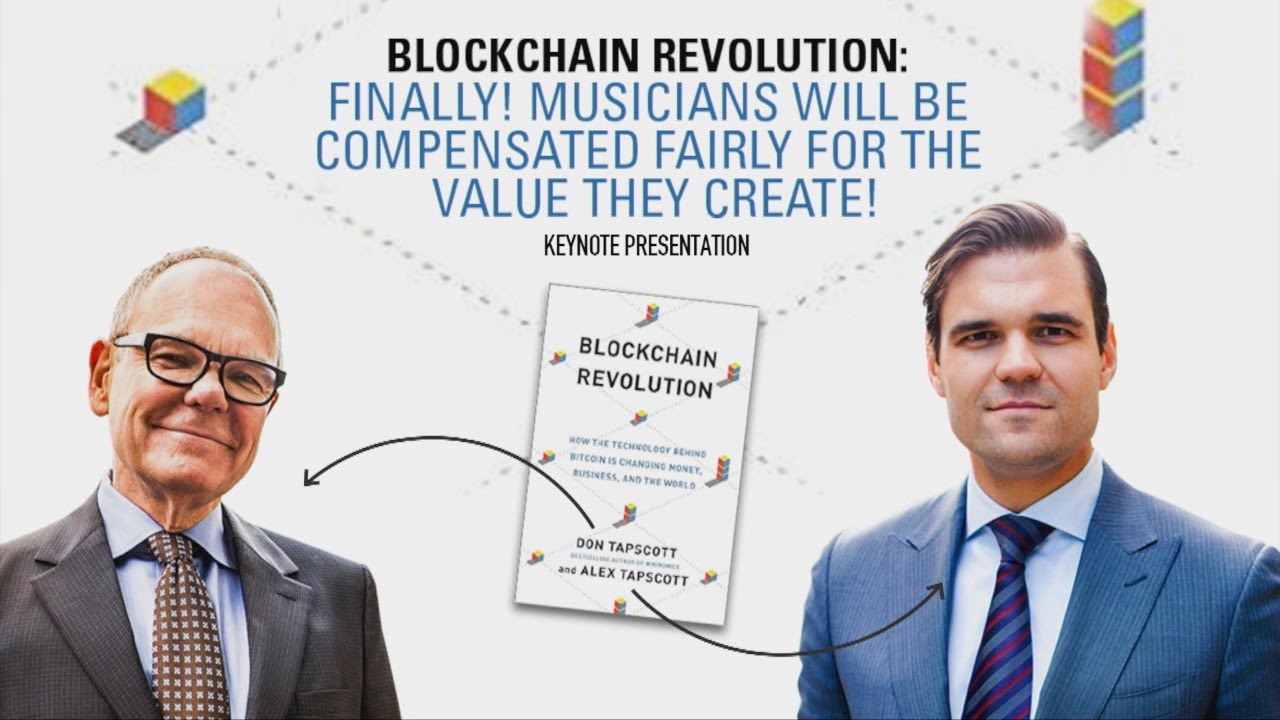
Don Tapscott (L) and Alex Tapscott (R). Youtube.com

Rather than repeat my points in this limited space I refer readers first to that review and then to my first Hub review of the book, which ran on June 1st, 2016. At the end you can find a link to a half-hour YouTube video produced by ThatChannel.com in which Norman Evans (the Hub’s creative director) and I interviewed both Tapscotts and some others who attended the Rotman launch.

Blockchain promises a quantum leap in global prosperity

Continue Reading…

The hardest thing about being a stock investor

Stock market investors face a difficult challenge. While long-term stock market returns are quite attractive, in the short-term returns can be quite volatile.

This volatility can be difficult to stomach at times, especially when accompanied by worrying news flow.

Adding to the angst for Canadian investors can be the volatility of the Canadian dollar, yet it makes sense for Canadians to diversify globally.  It is important from time to time to review the historical evidence to help us manage our behaviour and stick with our investment plans.  Let’s review some of the long-term evidence:

Evidence*

“Long-term stock markets returns are quite attractive”

  • The average annual return of the S&P/TSX Composite index of Canadian stocks over the 60 years between 1957 and 2016 is 9.1%
  • The average annual return of the S&P500 index of large cap US stocks over the 91 years between 1926 and 2016 is 10%
  • The average annual return of the MSCI EAFE index of developed market stocks outside North America over the 47 years between 1970 and 2016 is 9.1%
  • Exposure to small-company stocks and low-valuation stocks has led to higher performance levels than that of market capitalization weighted indices over long periods of time

“In the short-term returns can be quite volatile”

Continue Reading…

Liberal tax policy: a question for Canadian voters

The second PM Trudeau

By Trevor Parry

Special to the Financial Independence Hub

Prime Minister Justin Trudeau, in his dogged defense of what are the most fundamental tax proposals made since the report of the Carter Commission (which gave us our modern Income Tax system) claimed last Thursday that it is wrong that someone earning $50,000 a year as salary pays more in tax than someone earning $300,000 in their corporation.

Many tax professionals have dissected this ridiculous statement and could in considerable detail discuss where Mr. Trudeau was in error.  In simple terms Mr. Trudeau would have you believe that the corporate shareholder lives in a different world where they are not affected by personal taxation.

According to the Ernst & Young tax Calculator an Ontario resident earning $50,000 would pay just under 30% on their income or $8,311 in taxation. The Ernst & Young Tax Calculator can’t factor in the value of a company or government funded health benefits program or pension plan.

If we turn to the corporate tax result, an active business earning $300,000 of profit in Ontario would be subject to taxation at 15%.  We don’t need a sophisticated tax calculator to determine that this equates to $45,000.  One should be baffled.

Corporate income also attracts personal taxation

Mr. Trudeau also is comparing apples and oranges.  Does the entrepreneur who owns the business pay themselves anything? Regardless of whether they take income as salary or dividends it will attract personal taxation.   Let’s say that they took a salary of $50,000, the same as Mr. Trudeau’s downtrodden employee.  They would also have paid $8,311 in tax.

They might have had to pay themselves considerably more in order to afford an RRSP contribution, as it is highly unlikely they have a pension plan in place.  If they decided to invest that $300,000 in their corporation any income or growth on that asset would be taxed almost at the same rate as an individual and when they withdraw the money as a dividend they would pay tax at the rate of 45.3%.

Perhaps the shareholder is as malevolent as Mr. Trudeau and “Red” Billy Morneau believe and they are deducting all of their lifestyle costs, including mortgage, food, transportation, vacations, toothpaste, etc. as a corporate expense.  They would be guilty of tax evasion and the Criminal Code has provisions for dealing with that.

Continue Reading…

Two notable books to guide your ‘Retirement’ journey

“Books are the bees which carry the quickening pollen from one to another mind.” — James Russell Lowell, poet and author

This week I highlight one of my best recommendations for Retirement. Invest in self-education with some quality reading. The critical factor is how to select just a couple of books.

Investors have a thirst for knowledge about their precious retirement journey. They seek detailed information to assist in navigating the capital accumulation process to achieve retirement. Then comes the desire of making that capital outlast the spending phase.

Walk into any well-stocked bookstore and the retirement section will seem like a maze. There are plenty of titles competing to become permanent occupants of your precious bookshelf space.

My two book selections provide insight and understanding into the design and management of the retirement nest egg. The authors are well known. The books complement one another.

The emphasis is understanding long-term principles, policies and best practices that steer the family’s retirement goals from dreams to realities. Getting fully acquainted with these two books helps craft better decisions about retirement. Something for everyone’s retirement toolbox.

Photo: Kia Meiklejohn

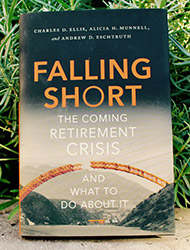
Falling Short: The Coming Retirement Crisis and What To Do About It, by Charles D. Ellis, Alicia H. Munnel, and Andrew D. Eschtruth

This century has clearly shown that we are living longer, health costs are rising and employer pensions are diminishing. That is the big picture applicable to retirees in the USA. However, similar arguments also exist for the Canadian retirement landscape.

The good news is that what is seemingly a dire retirement situation can be easily rectified by implementing a few coordinated steps. This book makes you appreciate the scope of that big picture. Working a little longer, saving a bit more, judicious use of government benefits and being smart about portfolio draws are some of the key answers that deliver.

The message for every retiree is that a successful retirement is about being empowered to look after the personal situation. At age 60, it is not unusual for retirement to last into the 90’s for at least one spouse.

Yes, long term retirement that spans decades is expensive. Sensible and methodical decision making is sound advice for all ages. It renders the scope of the big picture into realistic solutions.

Paycheque to paycheque: the fate of half of Canada’s employees

Living paycheque to paycheque? You’re hardly alone. As my latest Financial Post blog reprises today, almost half of Canadian workers (47%) told the Canadian Payroll Association’s 2017 survey that they’d find it hard to meet their financial obligations if their pay cheque were delayed by even a single week.

You can find the full blog by clicking on the highlighted headline here: Nearly half of Canadians would face a financial crunch if paycheque delayed by even a week, survey shows. The  article also appears in the Thursday print edition, page FP5, under the headline Nearly half of Canadians walk financial tightrope.

As I point out at the end of the FP piece, there’s some irony in that the way out of this savings conundrum is to make an effort to save paycheque by paycheque: a strategy the CPA and other financial experts generally term “Pay Yourself First.”

That means using your financial institution’s pre-authorized chequing arrangements (PACs) to automatically divert 10% of net pay into savings the moment a paycheque hits your bank account. Just like income taxes taken off “at source,” the idea is that you won’t miss what you don’t actually receive.

Pay Yourself First

Continue Reading…