Decumulate & Downsize

Most of your investing life you and your adviser (if you have one) are focused on wealth accumulation. But, we tend to forget, eventually the whole idea of this long process of delayed gratification is to actually spend this money! That’s decumulation as opposed to wealth accumulation. This stage may also involve downsizing from larger homes to smaller ones or condos, moving to the country or otherwise simplifying your life and jettisoning possessions that may tie you down.

Vanguard Canada launches four new domestic Fixed Income ETFs

Vanguard Investments Canada Inc. has announced that four new domestic fixed-income ETFs began trading on the TSX today, doubling a lineup that previously included a couple of short-term bond index ETFs, an aggregate bond index ETF and two currency-hedged foreign bond ETFs.

The new funds add coverage to government and corporate bonds,  long-term bonds, and to domestic short-term government bonds. The full release is here on Canada Newswire. Here are the names, ticker symbols and Management fees of the four new ETFs:

ETF

TSX Symbol

Management Fee1

Vanguard Canadian Corporate Bond Index ETF

VCB

0.23%

Vanguard Canadian Long-Term Bond Index ETF

VLB

0.17%

Vanguard Canadian Short-Term Government Bond Index ETF

VSG

0.18%

Vanguard Canadian Government Bond Index ETF

VGV

0.25%

These four new ETFs round out a list of domestic fixed-income ETFs that also include the Canadian Aggregate Bond Index ETF (VAB), the Canadian Short-term Bond Index ETF (VSB), the Canadian Short-term Corporate Bond Index ETF (VSC) and two foreign (US and global) bond index ETFs hedged back into the Canadian dollar (VBU and VBG respectively). You can find the full list, including the four new products, here. (Select Fixed Income as the asset class to zero in on the full list of nine bond ETFs.)

In the press release, Vanguard Canada head of product Tim Huver said “These ETFs provide the flexibility to position portfolios along the yield curve and take advantage of targeted exposure to corporate and government bonds.”

TFSA Primer 2017

“Many investors are wondering whether to pursue a TFSA or RRSP strategy. Quite simply, the TFSA, which started in 2009, compliments both the RRSP and RRIF.”

It need not be an either/or approach.
Wise investors embrace the Tax-free Savings Account (TFSA) in pursuit of long term goals, like retirement.


I summarize my 2017 TFSA primer:

1.) How TFSAs work

Eligibility:

• Canadian residents, age 18 or older, who have a Social Insurance Number can open a TFSA.

• One TFSA account per individual should suffice most cases. Be aware of plan fees if you own more than one.

Contributions:

• There is no deadline for making TFSA contributions as the unused contribution room is carried forward.

• A withdrawal in any calendar year increases the TFSA room in the following year.

• TFSA contributions can be made in cash or “in kind” based on the calendar year.

• Deemed disposition rules for “in kind” contributions are the same as those for RRSPs.

Your maximum TFSA deposits are as follows:
Continue Reading…

4 key factors and 3 tips to consider when investing for retirement

We recommend that you base your investing for retirement on a sound financial plan. Here are the four key factors that your plan should address to ensure that your retirement investing generates enough income in retirement:

1.) How much you expect to save prior to retirement;

2.) The return you expect on your savings;

3.) How much of that return you’ll have left after taxes;

4.) How much retirement income you’ll need once you’ve left the workforce.

Stick with conservative estimates to account for unforeseen setbacks

As for the return you expect from investing for retirement, it’s best to aim low. If you invest in bonds, assume you will earn the current yield; don’t assume you can make money trading in bonds.

Over long periods, the total return on a well-diversified portfolio of high-quality stocks runs to as much as 10%, or around 7.5% after inflation. Aim lower in your retirement planning —5% a year, say — to allow for unforeseeable problems and setbacks.

Above all, it’s important to remember that while finances are important, the happiest retirees are those who stay busy. You can do that with travel, golf or sailing. But volunteering, or working part-time at something you enjoy, can work just as well.

One thing we encourage all investors to do is perform a detailed study of how you spend your money now. Then, you analyze your findings to see what personal expenses you can cut or eliminate. This too can have fringe benefits, especially if it helps you break unhealthy habits. You may be surprised at how much you’re spending and how much more you could be saving for retirement.

Dollar-cost averaging brings automatic profits

Continue Reading…

Better Retirement choices: An elegantly simple solution

By Doug Dahmer

Special to the Financial Independence Hub

“Life,” philosopher Albert Camus contended, “is the sum of all your choices.”

Do you think otherwise?

Good or bad. Easy or hard. Right or wrong. Every choice you make will impact your life to some degree.

Choices with little impact are often made without much thought and the trouble is this casual approach to decision making tends to be deployed on bigger and more impactful choices.

In my profession, as a retirement income specialist, I see poorly made choices all the time. They, unfortunately, tend to be life altering, irreversible and totally avoidable. Like a doctor passing along a gloomy prognosis, I am heartbroken to see the look on peoples’ faces when I tell them how a choice they made will put them at a disadvantage for the rest of their lives.

And, as I said, many of these damaging financial choices are often avoidable.

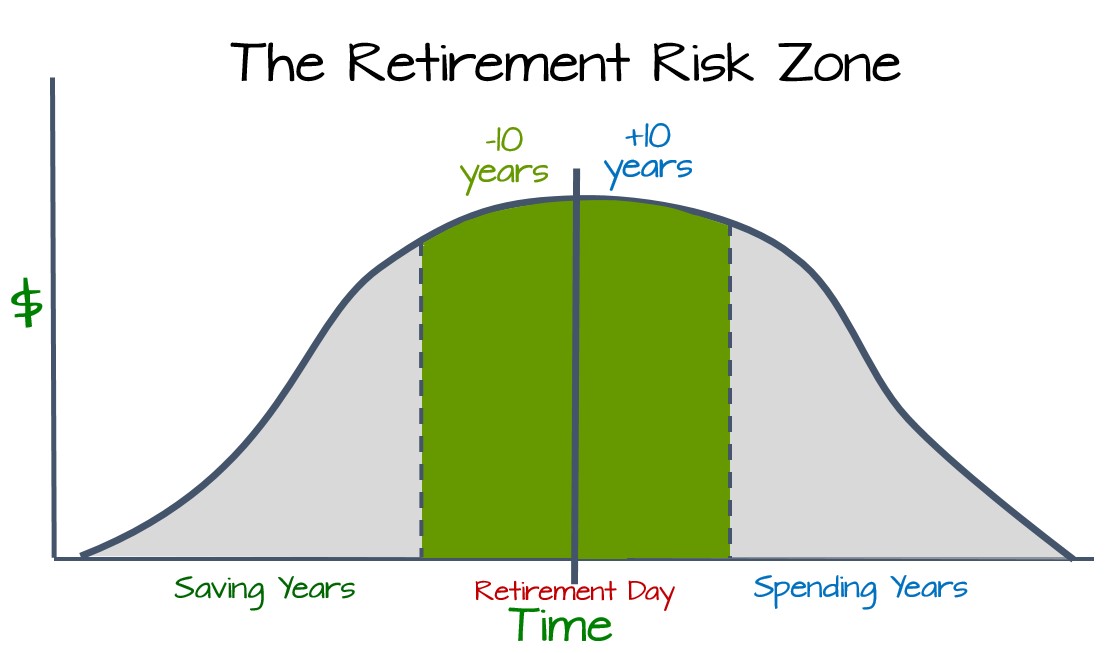
 The Retirement Risk Zone Years (TRRZY)

The years leading up to, and the early years of retirement are packed with important choices that can create turning points in your life. We call this period of your life ‘The Retirement Risk Zone Years’ (TRRZY).

TRRZY has aptly earned this acronym because this phase of life contains the highest concentration of high-impact choices that can lead to turning events, both good and bad, in people’s lives.

It is important to recognize that the number and frequency of tough and important choices increases during this time. In addition, the implications of choosing poorly intensify as both time and flexibility have turned from friend to foe. Successfully creating your best possible retirement years is directly linked to how well you navigate the challenging choices of TRRZY.

Over this nearly two-decade period we must adapt our thinking to a new reality. Strategies that served us well during our savings years can turn on their heads and start to work to our disadvantage as our flow of funds reverses from saving to spending. Those who fail to recognize and adapt to this new thinking have a high propensity for making poor choices, many of which they will regret in future years.

Turning Points during “TRRZY”

Continue Reading…

Retired Money: Everything you wanted to know about LIRAs but were afraid to ask

We’re now well into RRSP season, as the last two days of Hub posts demonstrates. See RRSPs: getting past the contribution inertia (a guest blog by Sage Investors’ Aman Raina), and my latest FP article, reprised on the Hub as Why RRSPs are less critical for Millennials than for the Boomers.

Over at MoneySense, my latest Retired Money column has been published, and it looks at the closely related topic of LIRAs (Locked-in Retirement Accounts, which have been termed “the RRSP’s less flexible cousin.” You can find the full column by clicking on this highlighted headline: Unlocking the Mystery of LIRAs.

In a nutshell, LIRAs are also known in some provinces as Locked-in RRSPs, which is exactly what they are. Unlike regular RRSPs, from which you can withdraw funds (and pay tax) if you need it at any time, LIRAs generally prohibit you from making any withdrawals before 55. Granted, when you’re younger that prohibition — illustrated above as a locked piggy bank — may seem frustrating but the idea is to protect our future retired selves from our current “tempted to spend it all” current selves.

As TriDelta Financial wealth advisor Matthew Ardrey told me, you’re going to see a lot more about LIRAs in the coming years. Whether you’re leaving a classic Defined Benefit pension plan or a more market-tied Defined Contribution pension plan, the job market these days is in such flux that a lot of people are going to have to start learning about what happens when you leave an employer pension plan earlier than you might once have envisaged.

LIRAs will multiply as Boomers reach Findependence

In the case of leaving an employer that provided you with a DB pension, you’ll be getting a lump sum based on the so-called “Commuted Value” of the pension at the time you leave (whether voluntarily or due to corporate layoffs or restructuring). I suggest that those who value the certainty of future DB pension payments plan eventually to annuitize such plans, likely the end of the year you turn 71. Continue Reading…