Once you achieve Financial Independence, you may choose to leave salaried employment but with decades of vibrant life ahead, it’s too soon to do nothing. The new stage of life between traditional employment and Full Retirement we call Victory Lap, or Victory Lap Retirement (also the title of a new book to be published in August 2016. You can pre-order now at VictoryLapRetirement.com). You may choose to start a business, go back to school or launch an Encore Act or Legacy Career. Perhaps you become a free agent, consultant, freelance writer or to change careers and re-enter the corporate world or government.
As some investors near retirement, their advisors recommend switching to bonds and other fixed-income investments for their retirement investments instead of holding stocks or ETFs.
To some extent, this is an understandable retirement investing strategy, since bonds can provide steady income and a guarantee to repay their principal at maturity.
Unfortunately, using bonds for retirement may not be the best strategy. Bond prices will likely fall over the next few years because interest rates are likely to rise. Bond prices and interest rates are inversely linked. When interest rates go up, bond prices go down; when interest rates go down, bond prices go up.
Or you can scroll down below for a lightly edited transcript of the proceedings.
But first, here’s an overview written by Doug Hoyes, co-founder of insolvency trustees Hoyes Michalos:
Doug Hoyes
Doug Hoyes:
Today’s podcast is the first ever podcast interview with Jonathan Chevreau and Mike Drak together, talking about their new book Victory Lap Retirement. This is so exclusive an interview that the book won’t even be officially released until October 10, 2016 but it is available for pre-order at amazon.ca, and the Kindle version is available now.
Mike Drak created the concept of a Victory Lap as an alternative to retirement, and teamed up with Jonathan to write their new book.
So what is a Victory Lap?
You will have to read the book for a full description, but as Jonathan and Mike and I discussed the concept of retirement has changed significantly. Our grandparents and parents had a good chance of working at the same company until aged 65, and then retiring with a full pension before dying at age 70.
Today almost no-one works at the same company for their entire working life, and most employers no longer offer full pensions, so the old fashioned view of retirement at age 65 with a full pension is no longer reality for most workers.
Instead, we are working longer, and living longer.
The essence of Victory Lap Retirement is to leave corporate employment, which usually entails working for someone else, and enter a new and different phase of your life.
Mike and Jonathan wrote Victory Lap Retirement to show readers how to transition from a high stress work environment to a low stress sustainable lifestyle to enjoy a happier, healthier life. For many, that may involve turning a hobby or passion into income during your “retirement” years, or working part time to “stay involved.”
Debt and Retirement
Debt is a prominent subject in Victory Lap Retirement, including this quote:
…make breaking free from the chains of debt your first priority. Not only will debt limit your financial freedom severely, it will suck the life right out of you.
As we discussed, debt and retirement don’t mix. When you retire your income decreases, so it’s likely you won’t be able to afford payments on a mortgage or other debt in retirement. Get out of debt long before retirement.
Unfortunately that’s not always possible, which is why seniors are the fastest growing age group of people filing bankruptcy and consumer proposals. Older debtors, aged 50 and older, now account for 30% of all insolvency filings, up from 27% two years ago, and that number keeps growing.
Senior debtors, people aged 60 and over, have the highest amount of unsecured debt of any age group when they go bankrupt, almost $70,000. A growing percentage of them even resort to payday loans to stay afloat.
If you’ve got debt, retirement is very difficult. If you have trouble making your debt payments while you are working, it may be impossible to keep up when you retire and your income drops, which is why we all agree that eliminating debt is essential long before retirement.
In addition to eliminating debt, Mike and Jonathan suggest you ask yourself “what do I like to do?” and start planning your Victory Lap now.
For more, listen to the podcast or read the transcript.
I don’t like to admit it, but over the years and due to circumstances largely beyond my control, I have turned into a skeptic.
I wasn’t born that way, but who here can blame me for turning into one with all the crazy stuff going on in this world? Today people seem to say anything they want. They just make stuff up. If you want proof of this, just watch the race for the presidency in the US. Enough said.
I discovered I was a skeptic one day while drinking bottled water. I used to get clean drinking water at several places in or outside my house. I just had to pick up the hose and there it was, as much as I wanted and best of all, it was free. I think we can all agree that when healthy things are free that’s a pretty rare and good thing, especially these days.
But things changed after I married the Contessa and became “sophisticated.” Water was no longer free and I began a new routine of driving to the grocery store to buy bottled water. It didn’t stop there, because I now drink a particular brand of water called “Smart Water,” probably not a very smart thing to do as it costs more than regular bottled water.
Have you read about what’s inside your bottle of water? The nutrition label is all zeros, because there’s nothing in it besides water.
It’s incredible how advertisers have been able to convince us to start drinking bottled water when we all have free clean water to drink at home. I would love to meet the person who came up with the idea that we need to drink eight 8-ounce bottles of water a day in order to stay healthy.
In North America bottled water is a $170 billion dollar industry. I don’t know where all this bottled water is coming from, but I can’t get this image out of my head of a couple of people sitting in a bathtub somewhere filling up water bottles. That’s what being skeptical does to you.
Here’s my latest MoneySense Retired Money blog, which looks at the perennial topic of when to take the Canada Pension Plan, or CPP. Click on the highlighted text that follows: The best time to take CPP to maximize payouts. (It may be necessary to subscribe to get full access to the piece after a certain limited number of monthly views to the site).
In an earlier blog in the series, I revealed why personally I planned to take Old Age Security as soon as it was on offer, at age 65.
In this followup, I come to the diametrically opposite conclusion that the longer you commence deferring the onset of CPP benefits, the better — assuming normal health and longevity expectations.
Doug Dahmer
I consulted three major sources for the piece. One is Doug Dahmer, founder of Burlington-based Emeritus Retirement Solutions. You can also access a useful CPP tool he runs at www.cppoptimizer.com. Run Dahmer’s name in the Hub’s search engine and you can find a number of guest blogs on the topic of decumulation.
In a nutshell, Doug thinks most of us — including me and my wife — should defer CPP as late as 70, choosing instead to start withdrawing from RRSPs in our 60s, assuming the money is needed on.
Another useful source I consulted is Doug Runchey of Victoria-based DR Pensions Consulting. For a small fee, Runchey — who used to work with the CPP — will take your government-issued CPP contribution statements and crunch the numbers to tell you how to optimize your benefits.
We’ve all had times we’ve dreamed about our eventual retirement when we’ll have all the free time available to pursue whatever we want to do.
We don’t have the time to do everything while working full-time, so we have a long list of things we’d like to do later on.
But why wait until you retire? Here are five things you shouldn’t put off until retirement.
1.) Travel
Travel is often number one on the list of activities people want to do when they retire. They will finally be free to see the sights they’ve dreamed of all these years.
But, why not make plans to go on that long awaited trip now? Travelling with your family can create a bond and memories that last a lifetime.
Many travel experiences are easier when you’re younger – and cheaper too.
It’s much more difficult to travel when you have certain health conditions and physical limitations. Even if you’re still healthy and in great shape you probably won’t have the same level of energy and endurance.
Older people tend to want more comfort – and that can be costly. You may not have the money if your portfolio takes a downturn, or living expenses are higher than expected.
2.) Downsize your home
One way to trim expenses is to sell your oversized home and move to a smaller, more efficient place now rather than waiting for retirement. Relocating to a more affordable area is also a great option. If your kids are out of the house, you don’t need the extra space, and costly home maintenance it taking over your weekends, why not downsize now?
Check out “active living” or “adult lifestyle” communities where ownership starts as low as age 45.
Not only can this slash your housing costs now, it’ll free up cash for you when you finally do retire.
3.) Exercise
Exercise is one activity that’s typically put off when we’re busy, but lack of exercise is a major cause of many chronic diseases to which we can become susceptible when we age. Incorporating an exercise program of at least 30 minutes a day leads to a healthier lifestyle once you retire.
Retired life will be more enjoyable if you’re not dealing with health problems, and medical expenses can be greatly reduced.
4.) Living on a reduced budget
Once your major expenses of children and home mortgage have disappeared, why not start living within your future means with a reduced budget that would reflect your lower retirement income?
Run the numbers. You can determine a realistic view of your cash flow and be prepared to make significant changes if you need to.
5.) Hobbies
People tend to put off their hobbies and personal interests. They have a low priority when you’re busy with work.
Try out new hobbies or other activities to see if you find them enjoyable before you jump in whole-hog at your retirement.
If you wait you may find some activities harder to master.
Barry had always been interested in fine woodworking and was looking forward to this new hobby once he retired. But, as he got older, his eyesight started to deteriorate so he was no longer able to see the fine detail work clearly. He became frustrated and quit.
Final thoughts
Don’t postpone your life until you retire. Making retirement your lifelong primary goal could end up in disappointment once you get there.
Make the best life you can right now and at retirement you’ll have a different kind of fun.

 Posted By
  As some investors near retirement, their advisors recommend switching to bonds and other fixed-income investments for their retirement investments instead of holding stocks or ETFs.
 Posted By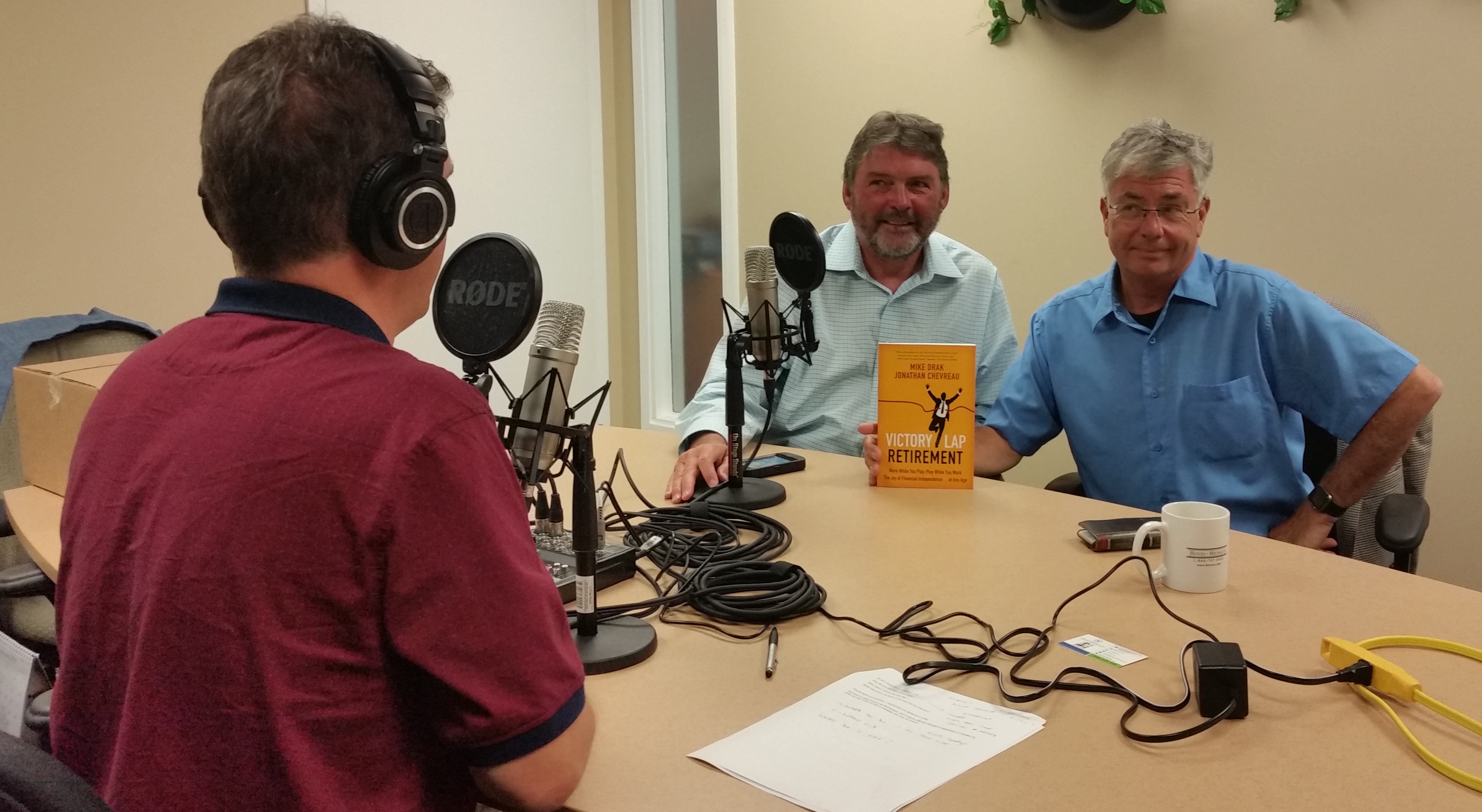

 Posted By

 Posted By