Hub Blogs

Hub Blogs contains fresh contributions written by Financial Independence Hub staff or contributors that have not appeared elsewhere first, or have been modified or customized for the Hub by the original blogger. In contrast, Top Blogs shows links to the best external financial blogs around the world.

How to profit from the Domain Name business

By Katrina Manning

Special to the Financial Independence Hub

We’ve all heard of domain names purchased 10 years ago for $10 dollars and selling for $20 million today — or some other story of similar nature.  As a result, you might be interested in buying and selling domain names either full-or-part-time for profit. It seems so easy and simple: just pick the right domain name, hold on to it for a while then sell for profit.

But is it really that simple? Well, since everyone is online –you can imagine that the ocean is wide. And you don’t want to start with a bit of research. You need a map, and we’ve created one for you here.

Stay focused

There are millions of domains already registered, especially the easiest ones that consist of one word such as apple.com, Facebook.com and so on. On the other hand, there are countless combinations of available domain names to register, especially if you consider the thousands of new domain name extensions such as .ng domain or .eu domain names.

As you can see, it is critical to keep your focus narrow. What subjects are you already familiar with, which can make the process much simpler? Do you have experience with animals or tech? Have you worked in the entertainment or service industry? Think about the industries you are most familiar with first, and start with that. Why is this important? Well, you don’t want to target prospective buyers based on their potential for sales if you don’t have insight into the industry you are aiming at.

In other words, don’t just rush to buy multiple domain names you think would appeal to health care clinics you’ve identified as potential buyers. You might not be aware of any industry-specific rules that govern facets of legal advertising. You won’t make much of a profit, if any, if you buy domain names your target audience can’t use. This is where it pays off to take the time to understand your audience.

Take the time needed to learn

Continue Reading…

How to create a winning retirement income strategy

A successful retirement begins with a successful retirement income strategy.

One of the things that investors of all ages fear is that they won’t have a good financial plan in place so that they have enough retirement income to live on once they’ve stopped working.

Here are some ways to ease that anxiety:

In retirement, try to even out (equalize) your income with your spouse’s income, to lower overall taxes. Here’s how:

1.) Have the higher income spouse pay the household bills

The easiest way to even out income between two spouses is to have the higher-income spouse pay the mortgage, grocery bills, medical costs, insurance and other non-deductible costs of family life.

2.) Set up a spousal RRSP

Registered retirement savings plans, or RRSPs, are a form of tax-deferred savings plan designed to help investors save for retirement. RRSP contributions are tax deductible, and the investments grow tax-free.

3.) Pay interest on your spouse’s investment loans

If the lower-income spouse takes out an investment loan from a third party, such as a bank, the higher-income spouse can pay the interest on that loan.

RRIFs are a great long-term retirement income strategy

Continue Reading…

Why Baby Boomers like me can’t retire

Mike Drak

After having talked to numerous Baby Boomers lately, I’m convinced more than ever that the majority of we boomers really don’t want to retire, we just need a change, and some help figuring out what to do with the rest of our lives.

In this article I would like to share my thoughts on why some people feel the need for a significant change late in their careers and why traditional retirement is not the answer. I know these feelings because it happened to me. And I’ve been telling the story at a number of presentations Jonathan and I have conducted at various branches of the Toronto Public Library in recent weeks.

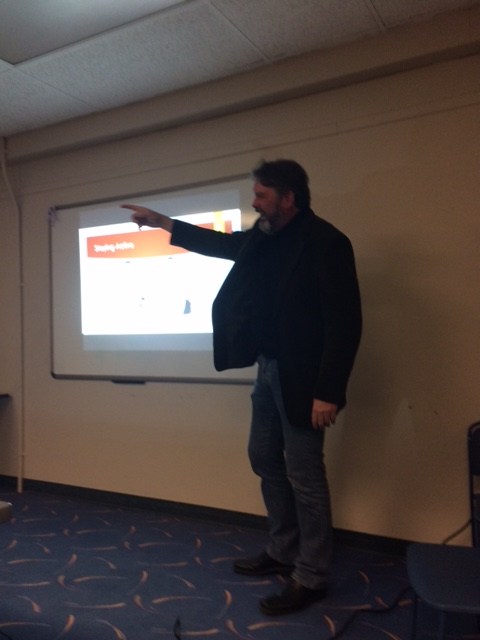
The photo shows  one such presentation at the York Woods branch on Victory Lap Retirement, followed by a Q & A session. I love doing these presentations, as it gives me an opportunity to present to my fellow boomers and find out what is going on out there in the real world.

I Started Feeling Antsy Late In My Career

There were a number of reasons for the change I made and here they are in no particular order:

1.) I became very good at doing my job. This naturally happens when you do the same job for twenty plus years. You get comfortable, there is little challenge and you plateau.

2.)  After 36 years of work I was tired of taking orders and being told what to do.

3.) I became bored with my job. That is what happens when you turtle and continue to play safe. I wasn’t learning anything new and I didn’t derive any satisfaction (happiness) from my job. The thrill was long gone and winning more sales contests and trinkets didn’t matter to me anymore. I remembered laughing a lot more earlier in my career. I knew I needed to laugh more before it was too late.

Continue Reading…

Toronto & Vancouver real estate investors should sell now, author says

Real estate in Toronto and Vancouver is at the irrationally exuberant greed stage and investors should sell, says bestselling author Calum Ross

By Calum Ross

Special to the Financial Independence Hub 

The Problem

Real estate investors often fail to objectively assess their existing portfolios in the same way that a holistic wealth management professional or financial planner would when dealing with equity investments.

Many real estate investors who began their investment careers following sound investment principles have got caught up in the hype and strayed from their core investment principles. When a particular asset class performs well, there is often a sentiment of irrational exuberance that develops around that asset class. When this happens, savvy investors adapt their strategy while others continue to “go with the herd” and experience the eroding effects of inertia.

The problem is highlighted today in two key ways:

  • Yield on Toronto and Vancouver Real Estate Has Diminished: Rising real estate prices in these markets have outstripped the increase in rental rates that has eroded yields. This now means many real estate investors are over-weighted in one asset class, and that many new real estate investments are in reality speculative-grade investments because they don’t meet the suggested 3% interest rate cushion to sustain cash flow (a metric outlined in more detail in my recent book on borrowing to invest).
  • Investors are Demonstrating Irrational Exuberance and Greed Towards Real Estate: I’m deeply concerned by the number of people who believe real estate values will continue to climb at these uncharacteristically high levels. Not only are current appreciation rates unsustainable, but the fact that rental increases are not even close to keeping pace makes real estate investment even less appealing.

There are too many investing in real estate who are chasing returns through appreciation alone. There’s an alarmingly high net inflow of money to real estate in overpriced markets even as yields continue to plummet.

Continue Reading…

Retired Money: The “Glide Path” to semi- retirement

My latest MoneySense Retired Money column looks at a concept called “The Glidepath” approach to semi-retirement. Click on the highlighted text for the full version, which is headlined How to Transition Into Retirement.

The “Glide Path” is a term used by veteran and now semi-retired financial advisor Warren Baldwin. At 66, Baldwin still works part-time as a senior vice president T.E. Wealth, working out of Oakville, Ont.

When used in the context of airplanes and flight, glide path is a familiar image that Baldwin’s clients easily understand. His own “glide path” to semi-retirement began three and a half years ago. “Maybe it takes five years because it takes two years to plan and get your mind around it. For me, it was coming up three years ago, when I was 63. The timing was right.”

The “Work Optional” stage of life

Another way to describe this is the “Work Optional” stage of life, a term popularized by Emeritus Retirement Solutions’ Doug Dahmer, who is a frequent contributor to the Hub’s “Decumulation” pages. See for example, this post.

Continue Reading…