Building Wealth

For the first 30 or so years of working, saving and investing, you’ll be first in the mode of getting out of the hole (paying down debt), and then building your net worth (that’s wealth accumulation.). But don’t forget, wealth accumulation isn’t the ultimate goal. Decumulation is! (a separate category here at the Hub).

Educate yourself about fees and reap the benefits!

tfsa-returns
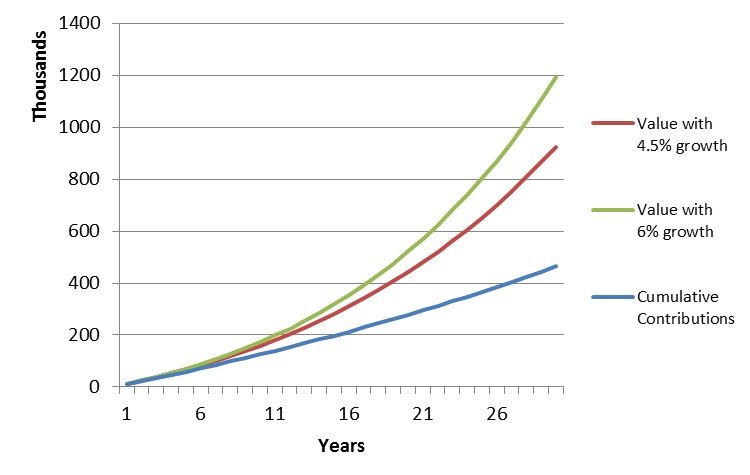
Impact of high investment fees on a TFSA portfolio. Explanation towards end of this blog.

Last month, the British Columbia Securities Commission (BCSC) launched an investor education campaign targeted at helping investors better understand the fees they pay. There simply can’t be enough education around this issue and we absolutely applaud their efforts.

Its Investright.org website is a great source of information and education and this latest campaign showcases some new tools and guides that any investor would find helpful. There are even some new TV ads which would be kind of funny if the subject matter wasn’t so serious.

New regulations came into effect on July 15 of this year which require investment advisors to provide better disclosure about their compensation. Rather than simply show percentage fees, compensation and other charges will have to be shown in dollars and cents. We expect investors to suffer a fair degree of sticker shock next year when everyone will start receiving these new mandated statements.

New statements won’t show all fees

Continue Reading…

“Scary” Investment moves to avoid

Shocked scared woman with financial market chart graphic going down on grey office wall background. Poor economy concept. Face expression, emotion, reaction

By Fraser Willson 

 Special to the Financial Independence Hub


If you have young children or grandchildren, you know what’s really important. Yes, it’s Halloween time again, which means you’ll see plenty of witches and vampires scurrying around. You’ll no doubt find these characters more amusing than frightening, but you don’t have to look far to find things that are a bit more alarming — such as these scary investment moves:

Paying too much attention to the headlines

Some headlines may seem unnerving, but don’t abandon your investment strategy just because the news of the day appears grim.

Chasing “hot” investments

You can get “hot” investment tips from the talking heads on television, your next-door neighbour or just about anybody. But even if the tip was accurate at one point, by the time you get to a “hot” investment, it may already be cooling down. And, even more importantly, it simply may not be appropriate for your individual risk tolerance and goals.

Ignoring different types of investment risk

Most investors are aware of the risk of losing principal when investing in stocks. But if you shun stocks totally in favour of perceived “risk-free” investments, you’d be making a mistake because all investments carry some type of risk. For example, with fixed-income investments, including GICs and bonds, one risk you may encounter is inflation risk — the risk that your investment will provide you with returns that won’t even keep up with inflation and will, therefore, result in a loss of purchasing power over time.

Another risk you can incur is interest-rate risk — the risk that new bonds will be issued at higher rates, driving down the price of your bonds. Bonds also carry the risk of default, though you can reduce this risk by sticking with bonds that receive the highest ratings from independent rating agencies.

Failing to diversify

If you only own one type of investment, and a market downturn affects that particular asset class, your portfolio could take a big hit. But by spreading your dollars among an array of vehicles, such as stocks, bonds and government securities, you can reduce the effects of volatility on your holdings. (Keep in mind, though, that diversification cannot guarantee profits or protect against loss.)

Focusing on the short term

If you concentrate too much on short-term results, you may react to a piece of bad news, or to a period of extreme price volatility, by making investment moves that are counterproductive to your goals. Furthermore, if you’re constantly seeking to instantaneously turn around losses, you’ll likely rack up fees, commissions and possibly taxes. Avoid all these hassles by keeping your eyes on the future and sticking to a long-term, personalized strategy.

You can’t always make the perfect investment choices. But by steering clear of the “scary” moves described above, you can work toward your long-term goals and hopefully avoid some of the more fearsome results.

0ec7e0fFraser Willson is a financial advisor and insurance agent for Edward Jones Investments. He works closely with families and businesses, helping them achieve their investment objectives in an organized and disciplined manner.


Financial Independence, Zen and the Art of Wealth

zenw_fr_500_773I was recently asked to review a new book, Zen and the Art of Wealth, by Warren MacKenzie. It’s the story of two friends who chat while one helps the other build his drystone wall.

It’s a good book and reminded me of some important life lessons that I had forgotten over the years. The book also triggered some memories about how I was first exposed to the world of Zen.

My first exposure to Zen was as a child, when I watched the TV show “Kung Fu” starring David Carradine as Kwai Chang Caine. In the first episode, Caine is accepted for training at a Shaolin monastery, where he grows up to become a Shaolin priest and martial arts expert. Caine fights for justice, protects the underdog and has a strong sense of social responsibility, something that is sadly lacking today. Flashbacks were often used to reveal specific lessons from Caine’s childhood training in the monastery, from his teachers: the blind Master Po and Master Kan.

I loved the lessons from Caine’s training in the monastery and those lessons have stuck with me for some reason over the years: Continue Reading…

Book Review: The Devil’s Financial Dictionary

41ixw3fyeLL._SX354_BO1,204,203,200_Like most closed shops, the financial industry features its own specialized vocabulary. As an investor, the key to understanding the financial industry is to understand the buzzwords and special terminology that are as often used to obfuscate concepts as to illuminate investors.

All of which makes Jason Zweig’s The Devil’s Financial Dictionary an invaluable tool for serious investors. Zweig is of course the Wall Street Journal’s eminent personal finance columnist. The book, published late in 2015, was inspired by Ambrose Bierce’s classic book, The Devil’s Dictionary.

As Zweig writes in his book’s introduction, “If investors are to be partners instead of pigeons, they must master the many ways in which Wall Street uses language to conceal rather than reveal information. Every profession is a conspiracy against the laity, and every profession’s jargon is meant to confuse and exclude those who aren’t part of the guild.”

If you learn nothing else, consider the following pithy observation by Zweig:

The denser the jargon, and the more polysyllabic the terminology, the more likely someone is hiding something from you.

Arranged alphabetically, as one would expect of a dictionary, this is a book you can peruse randomly; in fact, I’d suggest that approach. Without further ado, here are some sample definitions that got my attention and/or made me chuckle: as you’ll see, many of the definitions are simultaneously amusing and yet useful in penetrating the true meaning of many financial terms. They’re also quite cynical, which is half the fun: I’m sure Zweig had a blast writing them up in the first place.

ANALYST, n. A purported expert on a company who in theory estimates its value by breaking it down into its constituent parts but in practice functions as a salesperson and cheerleader.

CREDIT CARD, n. A thin slab of plastic that enables a person to feel pleasure today by incurring pain tomorrow. Continue Reading…

Starting is Hard, Doing it is Easy: 9 ideas to get you started

The secret of getting ahead is getting started - famous American writer Mark Twain quote interpretation with pink notes on vintage carton board

Starting is hard.  Doing is easy.  Even when it comes to the hardest things, starting is harder than actually doing the hard thing.

For the most important things, or the things where we have the most to gain, starting is the hardest thing.

If things are really easy to do, if they’re important, starting is hard.

Why is that?  Maybe we’re afraid of the consequences if we fail.  Maybe we’re afraid of the consequences if we succeed. After all, what would we fret about all day if all our “to do’s” were done?  Who knows where or why but as the proverb goes, “there is an enemy within.”

And if this enemy shows itself in areas which are important or where we have the most to gain or lose – it probably manifests itself as often as ever when it comes to the following:

  • relationships
  • personal fulfillment
  • exercise
  • diet
  • finances

These are all big areas where we could stand to gain a lot if we get things right!  And the longer we delay starting, the more it stresses us out – we sit in a paralytic trance, waiting for inspiration to hit us and it just never happens.

Perhaps breaking larger goals into smaller, more tangible steps might help, or at least it might trick you into doing something that sends you in the direction of progress.  While we don’t proffer advice in many of the above areas and in fact struggle as much as anyone,  we think the following smaller steps might help get you on the road to sorting out your financial house.  We’re sure there are more but here’s 9 to start:

9 smaller ideas to move you towards getting your finances in order

1.) Make sure you have an up-to-date Will, Power of Attorney designation and Health Directive.

2.) If you have people that depend on you, get insurance to make sure they’re taken care of if something happens to you – term life insurance is relatively cheap and pricing is fairly standardized.

3.) Pledge allegiance to the following mantra: “By far the most important thing I can do to ensure long term financial success is to live within my means.”

4.) If you have children, be sure to open a Registered Education Savings Plan (RESP) and invest enough to get the maximum Canadian Education Savings Grant (CESG)….free money from the government (need we say more?).

5.) If your company has a retirement savings program with matching contributions, it’s usually a good idea to contribute enough to get the maximum match.

6. ) Open a Tax Free Savings Account (TFSA).

7.) If you have investments, grab a pen and piece of paper and write down what you’re invested in, why and how much you pay annually in fees.

8.) If you can’t do number 7 without turning on your computer, educate yourself – we recommend the following Sensible & Concise Investment Books

9.) If these steps still seem overwhelming, find someone qualified and independent to help you.

Postscript –  if you’re interested in digging a little further into the enemy within, please read Steven Pressfield’s The War of Art.  He calls the enemy Resistance and it’s very real and very, very scary…..

graham-bodelGraham Bodel is the founder and director of a new fee-only financial planning and portfolio management firm based in Vancouver, BC., Chalten Fee-Only Advisors Ltd. This blog is republished with permission: the original ran late September here