Building Wealth

For the first 30 or so years of working, saving and investing, you’ll be first in the mode of getting out of the hole (paying down debt), and then building your net worth (that’s wealth accumulation.). But don’t forget, wealth accumulation isn’t the ultimate goal. Decumulation is! (a separate category here at the Hub).

Large RRSPs nice problem to have, tax on them not so much

My latest Financial Post column can be found in Friday’s paper or online by clicking on this headline: Confronting the ‘wonderful’ problem of the too-large RRSP.

It describes what one source describes as a “nice problem to have.” That’s having accumulated so much money in a Registered Retirement Savings Plan (RRSP) that it presents a lucrative source of tax revenue for the federal Government once you reach age 71 and have to start making forced annual — and taxable — withdrawals from a Registered Retirement Income Fund or RRIF.

Doug Dahmer

This is a huge tipping point: moving from Wealth Accumulation to De-Accumulation, or what this site calls Decumulation.  Suddenly, you’re confronted with the flipside of what CIBC Wealth’s Jamie Golombek has famously dubbed “being blinded by the refund,” a reference to the juicy tax deductions we enjoy by making regular RRSP contributions during our high-earning high-taxed working years.

The article quotes regular Hub contributor Doug Dahmer – president of Burlington, Ont.-based Emeritus Retirement Income Specialists, and pictured here – who says baby boomers have a huge looming tax problem ahead with their 6-figure RRSPs once it comes time to start withdrawing money or securities from them. The FP piece references Dahmer’s Hub blog earlier this year: Better Retirement Choices: An elegantly simple solution.

The case for early RRSP withdrawals and delaying Government benefits

As Dahmer has related here and elsewhere, he does believe RRSPs can get too large (at least if you’re averse to generating large amounts of taxable income down the road), so he is an advocate of drawing down RRSPs during the low-taxed years that many semi-retirees may experience somewhere between corporate life (typically early 60s) until it’s RRIF time in your early 70s. Continue Reading…

Odds of outperformance in emerging markets stacked in favor of active managers

By Caroline Grimont

(Sponsored Content)

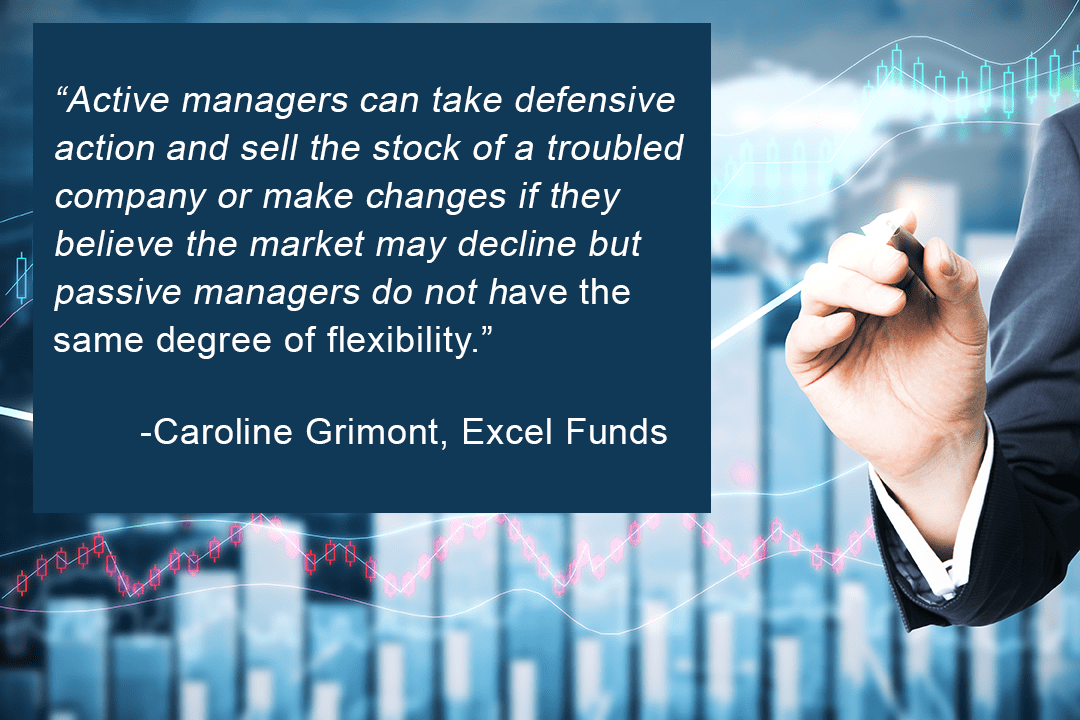
When investing in emerging markets, the odds of outperformance are stacked in favor of active managers. That’s because, unlike developed markets, emerging markets are a heterogeneous and inefficient asset class.  Each individual market and region possesses unique characteristics, risks and opportunities, which can be best leveraged through active, on-the-ground management.

The underlying truth is that indices such as the MSCI Emerging Markets Index that are used by passive managers to invest in emerging markets are a poor representation of opportunities in these markets. Indices typically include only the largest stocks by market capitalization and exclude potentially faster growing small and medium cap stocks which can be accessed by active managers.

And the fact that roughly two thirds of emerging market stocks are excluded from the respective indices means that investors in passive index-based investments lose the opportunity to participate in the growth of the majority of emerging market equities.

On the other hand, active on-the-ground managers have the advantage of being “free to roam” in making their investment decisions, compared to passive managers who are restricted to investing in stocks in an index over which they have no control.

As well, “in certain niche markets, like emerging market and small company stocks … it is possible for an active manager to spot diamonds in the rough,” states a Wharton, University of Pennsylvania article.[i] Conversely, the performance of passive managers is dictated by the index.

To put this reality in perspective, one of the world’s largest index providers, S&P Dow Jones Indices, highlights the shortcomings of using a broad-based passive strategy to invest in emerging markets in its research paper, Emerging Markets: What’s in your Benchmark?  It surmises: “Numerous factors, including country and regional combinations, can create vast differences in performance and return patterns. If you’re looking to boost returns through exposure to international markets, you may want to dig deeper and consider looking beyond traditional broad-based benchmarks to truly assess the value of an allocation to any of the world’s emerging economies.”[ii]

Unconstrained by sector bias

Another benefit of using active managers in emerging markets results from the fact that they are not constrained by the dominant sector bias in EM indices.

Continue Reading…

How to find the best high-dividend-yield ETFs

High-dividend-yield ETFs can be great additions to a portfolio: here are tips that will help you find the best ones

Here’s a look at high dividend yield ETFs and our advice on finding the best ones for your diversified portfolio.

4 ways to invest in profitable high-dividend-yield ETFs

  • Look for ETFs that hold companies with long-term success and a long history of paying dividends. These companies are the most likely to keep paying and increasing their dividends.
  • The current financial health of each company in the ETF. If a company is doing well, has done so consistently, and shows signs of growth, these factors are indicative of stocks that will keep paying a dividend.
  • How does the company manage its relationships with investors? If there is a favourable relationship, and the company fits the other qualifications listed above, it may be a good dividend-paying stock to invest in.
  • Note the competition. Look for ETFs with companies with a strong hold on a growing market and a unique product or service that cuts its competition.

High-dividend-yield stocks are a key part of a successful portfolio but at the same time they can give investors a false sense of security. That’s because some investors tend to think that all high-dividend-yield stocks are safe.

When a high dividend yield means danger

A high dividend yield may be a danger sign. It may mean investors are selling and pushing the price down. A falling share price makes a stock’s yield goes up (because you still use the latest dividend payment as the numerator to calculate yield — but the denominator, the price, has dropped). But when a stock does cut or halt its dividend, its yield collapses.

The best ETF investments practice “passive” fund management

Continue Reading…

A Millennial’s Jump Start on Personal Finance

By Trevor McDonald

Special to the Financial Independence Hub

Most millennials aren’t taught personal finance beyond the few who soaked up “lessons” from having an allowance or chores while growing up. Given the increasing use of digital currency, from tapping phones together to send money, depending on Venmo and utilizing bitcoins, ask a millennial how to write a check or balance a bank account and few can give a succinct answer: but does that even matter? Has personal finance changed so much in the past few decades that its definition is due for an overhaul?

Financial literacy and well-being is and always will be vital. How it’s defined and its best practices evolve as we do. Just like any type of “health,” financial health requires setting a strong foundation, teaching and practice. It’s strange that we have an entire generation in full-fledged adult categories without a clue of how to handle their finances.

Consider this the starter kit for millennials:

1.) Credit score management

 The importance of credit scores isn’t going anywhere. In fact, they’re more important than ever with some employers using credit scores to narrow down job candidates. Make sure to monitor your credit score, check your credit report regularly for errors, and make your payments on time. This will help ensure you maintain a healthy score. There are other ways improve your credit score that you might not know, too, such as snagging a tradeline where you’re added onto a person’s credit account who already has a solid score. A tradeline company can manage this, linking paying customers to a tradeline account so any messiness of blending finances with personal relationships is avoided.

2.) Buffering that nest egg

Having at least three months’ worth of living expenses in “liquid cash” that’s easily accessible is a reasonable starting point. Some financial experts recommend one year, but a year’s salary can sound very overwhelming. Start socking away funds in an emergency account by using an app that rounds up purchases and siphons funds to this account so you don’t even notice.

3.) If possible, entrepreneurs and business owners should seek out life in specific states or overseas

Millennials are the generation of entrepreneurs, and this makes personal finance even stickier. Where you live plays a huge role in your ability to build wealth. Obviously some regions have higher costs of living than others, but every state also has a different income tax. There are seven states, including highly desirable ones like Florida, that boast a zero per cent income tax rate. Moving abroad often allows for foreign earned income exemption in which you don’t pay any state income tax (of course) but also no federal taxes except social security and Medicare.

4.) Budget, budget, budget

Continue Reading…

Business owners need to step up Wealth transfer plans for next generation

Here’s my latest High Net Worth blog for the Financial Post, titled Only 40% of new business owners have transition in place, says new report.

The latest in a series of global surveys by RBC Wealth Management and Scorpio Partnership finds that while more than a third of business owners in the United States, Canada and the United Kingdom  have a full formal plan in place to pass their wealth on to their heirs, one in five have not even started to plan.

RBC surveyed 384 high-net-worth and ultra-high-net-worth individuals in the three countries, with average investible wealth of US$6.4 million. While 51% of business owners have a will in place, a startling 22% have not yet started any sort of wealth transfer preparations; which means “the majority of business owners are relatively unprepared to pass on their financial legacy,” the report says.

One of the experts I consulted was business transition and valuation expert Ian R. Campbell, who  recently wrote a Hub blog about Donald Trump’s business transition plans for his high-profile family members. It was also the basis for an earlier Financial Post column by me headlined Donald Trump is upping the ante in the Wealth Transfer game.

Continue Reading…