For the first 30 or so years of working, saving and investing, you’ll be first in the mode of getting out of the hole (paying down debt), and then building your net worth (that’s wealth accumulation.). But don’t forget, wealth accumulation isn’t the ultimate goal. Decumulation is! (a separate category here at the Hub).
Here’s an interesting development in the general field of discount brokers, ETF makers and robo advisers.
Last November, Questrade Wealth Management Inc. (QWM, a subsidiary off Questrade Financial Group Inc.) launched an “online wealth management” service called Portfolio IQ that bears a strong resemblance to so-called “robo” advisers.
A fact sheet bearing the slogan “Wealth Management isn’t just for the Wealthy anymore” described Portfolio IQ as “an online wealth management service” delivering professionally and actively managed portfolios at an ultra-low cost. It promised customized portfolios for those with as little as $2,000.
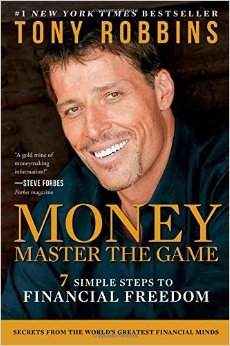
We’ve been reviewing books about financial independence here at the Hub since our launch early in November 2014 and long before that at FindependenceDay.com, as well as the Financial Post, MoneySense and Maclean’s. Up until now, the books reviewed on this site have been read and reviewed by me. But it’s almost impossible to read everything, even if the focus is as narrow as financial independence and the author is someone as prominent as Tony Robbins. So starting with this guest post, we’re going to widen the net with this review of Robbins’ new book by Tea at Taxevity’s Promod Sharma. We will certainly consider reviews of other financial books by objective sources. If you’re an author looking to be reviewed and willing to supply a review copy of your book, contact me at jonathan@findependencehub.com. If you’d like to try reviewing other books at the Hub, contact me at the same email. As for the review of the new Robbins book, you can find the original review on Promod’s site here. You also can find two interviews Promod conducted with me over at Findependence.TV, before and after the site launch. Over to Promod! — Jonathan Chevreau
–
–
Promod Sharma
By Promod Sharma,
Special to Financial Independence Hub
There are many reasons to read a book about money and there are lots of books about money. Tony Robbins has a new one, Money: Master The Game. Unfortunately, not many people read books. Even fewer read nonfiction. Only a small sliver read books about money. Be an exception and join them.
Not Perfect
There are various criticisms of the book, such as:
being an outsider: but being outside the traditional financial community gives Tony a different perspective
contradicting advice: but that’s common in life. He interviews 50 money experts with varying views.
over-simplified: but isn’t that better than over-complicating and confusing? Complexity can be added once the A-B-Cs (or 1-2-3s) are known.
conflicts of interest: Tony recommends companies in which he might have financial interests (see dealing with biased financial advice). That doesn’t mean the choices are bad but they but warrant more investigation.
too long: yes … I got the audiobook, which runs over 21 hours and sped up the playback by 30%
US-centric: yes but the general ideas apply everywhere
Do celebrities give better financial advice? Maybe not but Tony reaches the unreachable: people who get missed by conventional financial education. Even when Tony says things you’ve heard before, you might be more likely to believe them now. For instance, I’ve covered things like
We often know the keys about money (e.g., spend less than you earn, disaster-proof your life, save for the future). That doesn’t mean we do. Tony helps people change. He might get you to change too. He has a knack for making financial education engaging. He explains his terms and uses many examples.
Differently
Instead of writing a book, Tony could have created videos and an app. That’s what I thought before getting the book. I don’t see videos, but he has a free app (if you’re willing to give your contact information).
Instead of using a conventional publisher, Tony could have self-published. He could have made the book cheaper. He could have narrated the full audiobook, rather than portions.
Overall, what he did is fine.
Free Meals
Tony is paying for 50 million free meals. Besides donating all his book royalties, he’s made an additional personal financial contribution. That’s rare. Chances are good that you’ll end up on his mailing list, though. That gives him the opportunity to sell you his other stuff with the money you’re saving.
Caution
Tony tackles tough topics such as the conflicts of interest rampant in the financial sector. He gives solutions too. Think before you leap.
The stories from successes like Richard Branson are interesting but may not provide much practical guidance (e.g., how Honest Ed turned $212 into $100 million). Look for patterns rather than a guaranteed formula to financial independence.
I wasn’t expecting much from Tony’s book but because he’s popular, I knew that I had an obligation to read it. Overall, I’m impressed and highly recommend Money: Master The Game. There’s lots of practical advice.
Money books get stale. Tony’s book is new, which means now is the best time to read it.
Fortunately, awareness of the scourge of dementia has been greatly raised by the success of the novel and then film, Still Alice, about a Harvard professor who suffers from early onset Alzheimer’s. The movie version debuted last autumn at the Toronto International Film Festival and Julianne Moore won an Academy Award for her performance. Just before the Hub launched in November, our sister site ran this piece, entitled The downside of rising longevity: Dementia.
But on the plus side of extended longevity come the stories of those who found business or creative success only late in life. Check out this piece posted earlier this weekend in the Hub’s Encore Acts section: Hope for late-bloomer Boomers: Success as an Encore Act.
From the Good Financial Cents blog comes 16 hobbies that can actually make you money. We at the Hub have always thought it makes cents (sense) to turn an avocation into a vocation that pays. That’s the whole point of the Encore Acts section of the Hub.
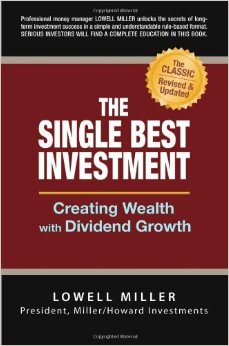
It came to my attention via Wes Moss, who I interviewed for an upcoming MoneySense column, whose book You Can Retire Sooner Than You Think we reviewed here at the Hub. I mentioned the book in passing last week in this MoneySense blog last week. That blog focused on asset allocation but provided a big hint about Miller’s philosophy: there’s no place for bonds in Lowell’s investment worldview.
The book’s first chapter sets the tone in its title: Say goodbye to bonds and hello to bouncing principal. Like many stock believers and bond haters, Miller takes it as a given that the investing environment generally includes inflation. Since “safe” investments like t-bills, bonds, money market mutual funds and CDs (Certificates of Deposits in his native USA; known as GICs in Canada) are all “poor investments because what they give is less than inflation takes away.”
Stocks are the only asset class likely to beat inflation in the long run, but the “price” of such an investment is volatility. Continue Reading…
Peter Grandich is a well-known financial and economic commentator and author, based in New Jersey. His fascinating story of financial success and setbacks and gradual transition to more spiritual matters can be found in his recent book, Confessions of a Wall Street Whiz Kid. ( I provided a testimonial.) You can also get a free PDF version. Find out more at his website at PeterGrandich.com.
Paul Philip is a Toronto-based financial planner and head of Financial Wealth Builders Securities. I’ve known both gentlemen for years and can say they are intimately familiar with the concept of Findependence.
In the Q&A below, Peter asks Paul about his (that is, Paul’s) conversion from a belief in active security selection to strategic indexing via the index mutual funds of Dimensional Fund Advisors (DFA).
Yes, mutual funds, not ETFs. As you will see in the interview, the pair certainly sing the praises of this “best-kept secret” but I believe it’s in the best interests of consumers to learn about this firm and the advisors who are building practices sometimes exclusively around DFA index funds. I have in the past attended several all-day seminars presented by DFA Canada and personally own some of their funds (though not exclusively). Several other guest bloggers here at the Hub focus on DFA funds and Paul will be providing the Hub with a regular blog on these topics. — Jonathan Chevreau
Peter: Paul, what are your thoughts on investing in today’s uncertain times? Continue Reading…

 Posted By