Victory Lap

Once you achieve Financial Independence, you may choose to leave salaried employment but with decades of vibrant life ahead, it’s too soon to do nothing. The new stage of life between traditional employment and Full Retirement we call Victory Lap, or Victory Lap Retirement (also the title of a new book to be published in August 2016. You can pre-order now at VictoryLapRetirement.com). You may choose to start a business, go back to school or launch an Encore Act or Legacy Career. Perhaps you become a free agent, consultant, freelance writer or to change careers and re-enter the corporate world or government.

My unplanned retirement at 52: “It’s better to have a plan!”

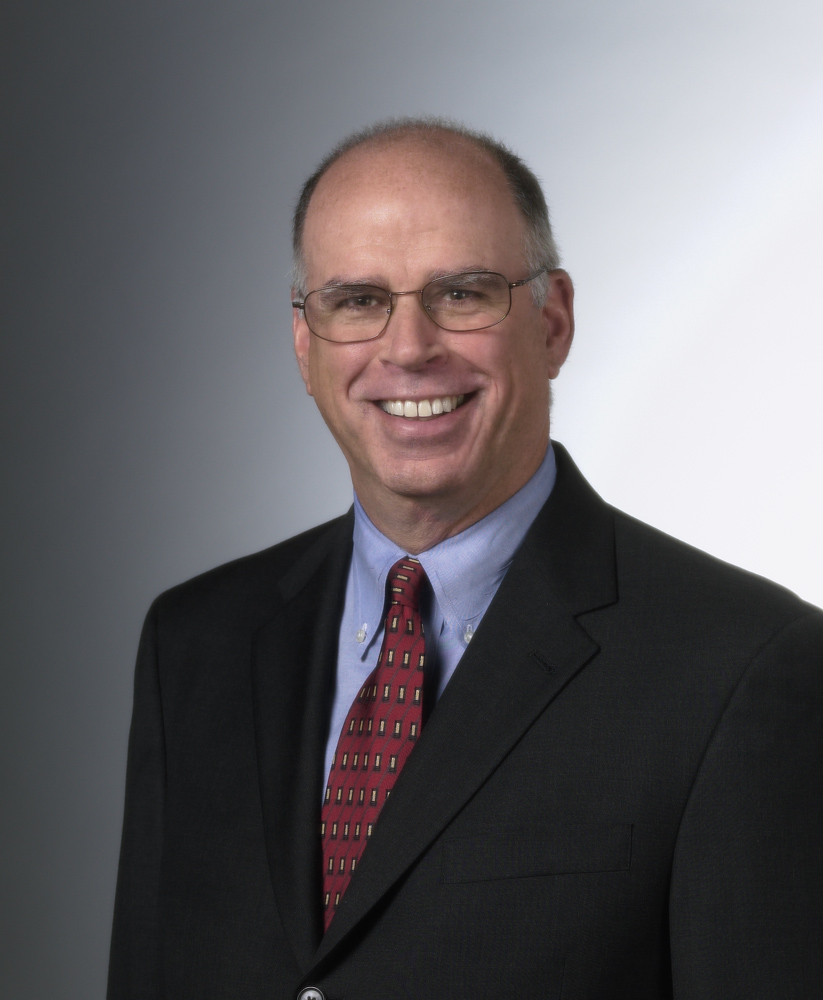
By Del Chatterson

Special to the Financial Independence Hub

Del Chatterson

My unplanned retirement at 52 seems to have been successful, if I look back over the last 15 years, but I could have done it better and suggest that you can too, if you have a plan.

Here is my story and the lessons I have learned. I am sharing them on the assumption it’s never too late for you or me to do it better. At age 52, I quit my day job and headed into the unknown. At that time I certainly did not call it “retirement.” It was more “seeking new opportunities,” time for a change of career plans” and other appropriate clichés.

How did I get to that point? Well, I was just another engineer/MBA with a career in corporate positions and management consulting, followed by twelve years in my own business. My computer products distribution enterprise grew quickly and did very well during the booming PC revolution of the ‘80s. Then in the ‘90s the PC market rapidly changed and smaller players were squeezed out by the few surviving big manufacturers, distributors, and retailers. So the business become less fun and less rewarding as I went through the challenges of a merger, wind-up, re-start and finally an exit. My decision to leave was based simply on the lack of personal satisfaction. The stimulating challenges and my motivation had evaporated. It was time to move on.

Inspired by The Wealthy Barber

During most of the 25 years after my MBA, I had earned good compensation and was apparently smart enough to manage a sound savings and investment plan (encouraged by the wise and practical advice of Jonathan Chevreau, the Wealthy Barber and many others.) The biggest bump in compensation and savings happened, of course, during the good years in my own business when sales and profits were booming. But when I quit working and starting searching for new opportunities there were two things missing: I did not know what I really wanted and I didn’t have a plan.

Financially, I was able to carry on without income and live off my investments. My savings and investment plans, starting in my early 30s, were based on reasonable risk and return assumptions in a well diversified portfolio. I started with a brokerage account and a commission-based broker. But after some poor advice and a couple of big losses, I switched to another broker for a few years, then finally decided to go 100% self-directed. I learned my choices were as good as those of the big brokerage research advisors and I now had the luxury of boasting about the winners and keeping quiet about my mistakes.

I remained cautious on 85% of the portfolio, although it was 95% in equities, as I could never justify the low returns of fixed income and was willing to be patient through the downturns. I often explain (usually to aggressive wealth management sales people) that my decision to continue to manage my own investments is not for the better returns, but for the education and entertainment value. Admittedly, sometimes an expensive education and sometimes more horror story than action-adventure.

Over the years, however, I had achieved acceptable average returns and at age 52 I could quit working and earning income. I could “retire.”

The Rule of 15

How did I know that? Being an engineer and MBA, I did have spreadsheets to run through various scenarios that showed I could live well and still leave an inheritance behind whenever I checked out. I even developed a simple “Rule of 15” that saves you all the trouble of preparing those spreadsheets. If you have fifteen times your annual spending invested, then you are good to retire. That’s it: if you need $50,000 a year to live on, you can retire on $750,000. That amount will take thirty years to decline to zero if you can earn at least 5% a year return on it.

The experts of course, will tell you it’s more complicated than that and you need to consider inflation and volatility of returns, housing, health and family issues. However, they are not predictable anyway and you have some room for error and the ability to manage within the 5% return and the 30-year time frame assumptions. Don’t make it complicated and suffer paralysis by analysis. The Rule of 15 is a simple reality check on your retirement plans.

But financial independence — findependence as Jonathan Chevreau calls it — is not enough. You may know how you are going to spend your money during your retirement, but how are you going to spend your time? That turns out to be even more important to your long-term health and well being.

Voluntourism

In my case, I meandered aimlessly into my unplanned retirement and tried to keep it interesting by dabbling in everything from Internet start-ups to building a consulting business; from running marathons to running for MP, playing golf to playing guitar. I dealt with some family issues, separated and divorced and did some voluntourism by helping entrepreneurs in developing economies and aboriginal communities.

After fifteen years of wandering between consulting, semi-retirement and self-unemployment, I recognized this approach was not giving me much satisfaction. I needed more passion and purpose in my life.

Since my own process clearly was not working, I started soliciting input and advice from professional resources to help figure out what I really needed for personal fulfillment. It began with a personal assessment of who I was and what I wanted. Better knowledge of myself helped me focus on what I should be spending my time on to achieve the goals of personal fulfillment. Clarity helps.

Here are the most important lessons that I learned in my unplanned retirement:


  1. Do not make decisions by neglecting them until events decide for you.


  1. Have a plan that recognizes your personal needs, goals, resources, limitations and timetable.


Assess who you are and where you are now; decide where you want to be and when; then start acting according to your plan. Hope for a little luck along the way, but don’t count on it.

About the Author:

DEL CHATTERSON is your Uncle Ralph.

He is dedicated to helping entrepreneurs to be better and do better.

 Del is an experienced and successful entrepreneur, executive and consultant. As an entrepreneur, he grew his computer products distribution business from zero to $20 million per year in just eight years. His consulting company, DirectTech Solutions, provides strategic advice to business owners at all stages: from start-up through the challenges of managing growth and profitability to the exit strategies for management transition and business succession.

9781496932259_COVER.inddDel is an Engineer and MBA and has lectured on entrepreneurship and business management at both Concordia and McGill Universities in Montreal. He continues to share his experience and offers ideas, information and inspiration for entrepreneurs worldwide under the persona of “Uncle Ralph.’

He has recently published two books for entrepreneurs:“Don’t Do It the Hard Way” and “The Complete Do-It-Yourself Guide to Business Plans.”

Learn more here.


Extreme Early Retirement? I call it Extreme Early Findependence!

Savings Thermometer Measuring Money Nestegg IncreaseBy Jonathan Chevreau

MoneySense.ca today is running my column on Extreme Early Retirement from the November issue. It looks at the phenomenon championed by super-frugal savers like Mr. Money Moustache and Jacob Lund Fisker of so-called Extreme Early Retirement.

The idea is to be self-sufficient, do without, live in a small home, eliminate frivolous purchases like cars or furniture and save like crazy for five or ten years: and we’re not talking the typical savings rates of 10 or 15% of a paycheque: more like 50% or more.

Frugality to a Fault?

Continue Reading…

The 1,000 buck-a-month rule: You can retire sooner than you think

wesmoss
wesmoss.com

By Jonathan Chevreau

Here’s a blog I wrote for MoneySense.ca before the Hub launched, housed in what it now terms the MoneySense Findependence Archives. It seemed to resonate so I’ve repurposed it here, adding the cover shot of the book from which it’s drawn: You Can Retire Sooner Than You Think.

It deals with an interesting rule of thumb that most retirees and would-be retirees would do well to adopt. Developed by U.S. financial planner Wes Moss, it’s called the 1,000-Bucks-a-Month Rule. It means that for every thousand dollars in monthly income you want in retirement, you need to have saved $240,000. Continue Reading…

A salon for would-be Boomerpreneurs & business owners seeing exit strategies

Dining room
Brainstorming over a dining table like this one.

The other evening ten 60-ish baby boomers got together in a private home in mid Toronto to discuss Boomer retirement and related matters. There were two main groups: most were business owners who have been self-employed for 30 or more years. A handful (including myself and the hostess) had spent most of our careers working as employees in large organizations.

Long-time business owners looking for exit

In both cases, the great question before us was “What do I do with the rest of my life?” The business owners were concerned about exit strategies to monetize their years of sweat equity, which could include outright sale or passing the reins to younger family members.

Long-time employees looking to find a transition business

The other group is considering becoming business owners or entrepreneurs even at this late stage of life, or what I term “Boomerpreneurs.” We may or may not have left the workforce voluntarily but suddenly had some leisure and money to contemplate our next move.

In almost all cases, this was a high-achieving group and while one younger attendee (in his mid 50s) had spent a “mini retirement” of several months in Central America, most of us agreed we were in no way ready for endless days of daytime TV, golf or bridge. Some were conscious of the extended Life Expectancy theme underlying this website’s “Longevity & Aging” section, but others were acutely aware that we all entering the final few laps of the great race of life. The long-time business owners in particular seemed ready for a change, but were aware the transition or exit could well require four or five more years of continued effort.

Actually, this was the second time the group had met. I would have love to have attended the first one in October but had already committed to a three-week trip to Turkey. The focus of the first one was that many baby boomers can expect another 10,000 days of life on the planet, so what’s your plan on how you’re going to spend that time? As the facilitator, Alan Kay (more on him below) put it, it’s all about “repurposing yourself, not a blank canvas.”

Acquiring new skills — at 60

Interestingly, the hostess (one of only two women in the second meeting; the rest were obviously men) experienced almost the same events as I have in 2014. Both of us had quite independently chosen to attend Toastmasters weekly, to hone our public speaking and leadership skills (neither of which suggests sitting before a fire in your rocking chair). She is also attending a Rotman course that prepares you to assume positions on corporate boards. As if that weren’t enough, this high achiever is also taking acting lessons.

Does Business Ownership run in the family?

Her husband, and our host, has long been a business owner. In fact, long ago when I worked on a computer newspaper, I had naively written a piece about him extolling the fact that he was a “27 year old president” of his own computer company. At the salon, he said his own father was a business owner so it seemed a natural step for him at the time. I replied that my father was a high school teacher with security and a Defined Benefit pension plan, which may have explained why I tended to stick with salaried employment within other people’s businesses.

Regrets of the dying

We discussed life purpose, why we are even on the planet, and the five regrets of the dying, a piece published recently in the Globe & Mail. Some felt that one of the advantages of building something even at this stage of life would be to employ the generations following us, including our children.

There was a feeling it’s time to simplify, perhaps to slow down a tad but few seemed to seek a traditional “full-stop” retirement. Call it semi-retirement or phased retirement, depending on circumstances. I didn’t get the impression anyone was suffering financially, so the continued interest in remaining active was more about community, giving back and the like.

Naps in the home office

Some of us work from home, some still go to an office, even if they own the building in which it’s housed. Among the “work-from-home” crowd, which included our host and myself, we confessed there was the advantage of the occasional afternoon nap.

As for the session and what’s next, it’s all rather fluid although the hosts did facilitate an exchange of emails with the intent of connecting on Linked In.  Certainly, this web site will happily describe further developments and facilitate communications between members and would-be members. There are, for example, our so-far-dormant discussion forums, which could be used to continue the dialogue in cyberspace.  It was just such a salon that spawned the Huffington Post.

alankay
Alan Kay, The Glasgow Group

Pending permission from the other participants, I’ve erred here on the side of protecting actual identities but may update this blog or post new ones with actual names and coordinates as they arise. I can say the session was moderated by Alan Kay, who is happy to be identified as “a fully recovered ad guy, facilitating change through tools like stakeholder consultations and roundtables using his Solution Focus expertise.”

And yes, this often means sitting around a kitchen table like the one illustrated above; you can find him via his website here. Or contact me at jonathan@findependenceday.com.

When a Business Owner gets cancer

josh-patrick
Josh Patrick

Good piece in the New York Times today about what happens when the owner of a small business gets cancer. It’s written by the business owner himself: Josh Patrick runs a small wealth management and consulting business and like many personal services business that sell time rather than product, it pretty much depends on the owner for revenue.

He learned he had non-Hodgkin’s lymphoma, in 2008. (He is now 62).

Mr. Patrick struggled first with the decision about whether or not he should share the knowledge of his cancer with clients. He did and despite his fears to the contrary, none of his clients left as a result of this disclosure. One client even pre-paid, although Mr. Patrick still had to downsize his operation. He had a few employees: one of whom volunteered to leave while another agreed there would be no raise for a year.

Importance of providing clear instructions to spouse

Once it was clear he would be undergoing a (dangerous) stem-cell transplant, he made sure his wife had the paperwork on the life insurance, names of clients and where they could go for alternative service, and how to wind down the business if it came to that. All business owners should have a such letter for their spouse, he says.

After the nine months of treatment, he realized his hopes to immediately resume operating the business at full speed were a tad optimistic. Suddenly, health had become a priority over the business and he realized it would take a few years before his energy levels returned to the point he could work as hard on the business as he had before the cancer revealed itself.

Not coincidentally (given the wide publicity that comes with a story in the Times), his business — Stage 2 Planning Partners — focuses on retirement planning for business owners.  I dare say he’s now busier than ever.