Hub Blogs

Hub Blogs contains fresh contributions written by Financial Independence Hub staff or contributors that have not appeared elsewhere first, or have been modified or customized for the Hub by the original blogger. In contrast, Top Blogs shows links to the best external financial blogs around the world.

When does your Business need a Merchant Account?

(Sponsored Content)

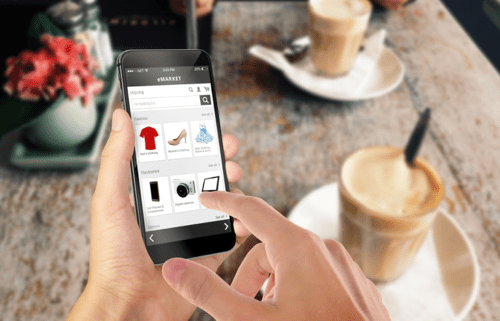
Credit and debit cards are among the most common payment methods, whether you run a retail store, an online store, or a combination of both. They are convenient and easy to carry, not to mention relatively easy to obtain. They make shopping easier because customers don’t have to worry about carrying enough cash.

But if your store isn’t accepting credit cards, you risk losing millions in revenue. That’s why it’s crucial to ensure that your business has everything it needs to accept credit-card payments. And to start accepting credit cards as method payments: a bank account, a payment processor, and a merchant account.

As a savvy business owner, you probably have a business bank account. But what about a merchant account? In this post, we’ll explain what exactly a merchant account is and when you may need one.

What exactly is a Merchant Account?

In short, a merchant account allows you to accept credit-card payments. Once a card payment is made, it passes through the merchant account and is deposited into your checking account after the funds have been cleared through the merchant account, which usually takes a few days.

You may be wondering why you need a merchant account when you can simply use a payment processor like PayPal or Stripe. However, having your own merchant account, which can be set up through payment providers like OnlineMerchantsHelp, offers more flexibility, control, and better security with online payments.

So, is your business in need of a merchant account? And when you should you get a quote?

When Does Your Business Need a Merchant Account?

Continue Reading…

The rising cost of buying homes near Schools

By Penelope Graham, Zoocasa

Special to the Financial Independence Hub

Buying real estate is a stressful enough endeavour,  but throwing kids into the mix adds a whole new layer of complexity to the house hunt.

While most buyers have a lengthy wish list of must-haves, usually centred around size, access to amenities and location, living close to a highly-rated school is a top consideration for 39 per cent of Canadians contemplating their next real estate purchase.

And you can certainly expect to pay more to live within a coveted catchment area, even in regions with softer conditions than the red-hot Vancouver and Toronto real estate markets.

“School districts have become a large factor that buyers consider when searching for a home. As a result, homes in better school districts tend to have greater demand and a larger buying pool,” says Chantel Crisp, broker of record at Zoocasa Realty. “Parents are motivated to get their children into great school districts even during economic downturns, so neighbourhoods with better school ratings are sought after in both times of economic growth and decline.”

Higher prices for higher learning

Just how much more do homes fetch in top school neighbourhoods? Buyers can expect to pay a whopping premium of over $800,000 in some cases, according to data collected via Zoocasa’s school search function. The fact that it’s not always clear whether a home lies within a school’s boundary can be a point of frustration for buyers trying to harmonize their home buying ambitions with their academic needs says Zoocasa CEO Lauren Haw.

“Homes across the street from one another may be in different catchment areas. Understanding where your home is within a certain boundary can help with long-term transition planning and reduce unnecessary moves,” she says. “Not to mention wealthy accumulation – school rankings are highly correlated to real estate prices.”

To get a better idea of how much living near a top-rated school will impact buyer budgets, check out the infographic below, based on the sale prices of homes with more than three bedrooms, and top EQAO-rated elementary schools in each of Toronto’s six boroughs. Continue Reading…

A cure for the Retirement Blues

Whaaaat? Is it possible that this whole retirement thing can be a letdown once you finally get there — that some people may experience the Retirement Blues?

My latest MoneySense Retired Money column looks at the problem of having too much free time in your golden post-employment years, which you can find by clicking this highlighted headline: Retiring frees up 2,000 extra hours a year.

In the piece, I describe at least one senior who felt in retrospect that he retired too early: he had a great pension so money wasn’t a problem but he soon realized he had started to miss the many benefits of work. In short, he had a mild — or not so mild — case of the Retirement Blues.

As you’ll see, the column references an RBC program called Your Future by Design (See www.retirementdesigners.ca).

The 2,000 hours is the result of a simple calculation: 50 weeks multiplied by 40 hours a week equals the amount of “found” leisure time freed up by no longer working full-time. The 2,000 hours figure was referenced in a survey by the Royal Bank last year. Those with long commutes can add a few more hundred hours a year of “found” time.

Keep in mind that if you don’t work at all in retirement you’ll have a lot more than just those 2,000 hours a year to fill. Subtracting 3,000 hours for sleep, you’ll have a total of 5,840 waking hours every year. So if you live 30 more years after retiring, that’s 175,000 waking hours to be occupied.

Little wonder that 73% surveyed by RBC aren’t sure what they’ll do with all that time. We spend more time planning vacations (29%) or weddings (19%) than on retirement!

5 top retirement activities, plus a sixth that should be considered

RBC finds the top five activities for replacing work are health & fitness, travel, hobbies, volunteering and relaxing at home,  but I suggest in the column that many recent retirees may discover they want a sixth activity: work, if only on a part-time basis.

Imagine that: doing a little more of what you may have done too much of during your primary career, but enjoying it for its own sake, its networking properties and social stimulation. And, incidentally, adding a little to your retirement nest egg while you’re at it.

Continue Reading…

Me, retired? No way!

The other day I was at my local bank branch doing some business and the teller asked me how I was enjoying my retirement.

Hearing that surprised me but then I realized they had a message on their computer system that identified me as a retired employee of the bank.

For some reason I felt the need to defend myself and started to explain that I in fact was not retired, that I was busier than ever running my blog, selling my book, serving as a retirement coach and doing public speaking. But then I had a sudden change of heart and decided to stop what I was doing. I realized that defending myself was the OLDME raising its ugly head again and I don’t like OLDME anymore.

Label Me Anything But Retired!

The word retirement is being thrown around these days, describing so many things from the old style “full stop” retirement to everything but the kitchen sink. I believe lack of clarity is causing confusion for a lot of people these days.

Why should we automatically label someone retired just because they decided to leave a job which in my particular case lasted for 36 years? Continue Reading…

Easy Payment solutions for Home-based businesses

By Cher Zevala

Special to the Financial Independence Hub

More and more people are striking out on their own and starting their own businesses. Whether they simply want the freedom to work from anywhere in the world or feel they have something worthwhile and valuable to contribute to the business world, today is the age of startups and home-based businesses and customers are flocking to them.

For the owners and managers of these businesses things can look a lot different when, all of a sudden, you have to be the receptionist, the accountant, the inventory manager, and virtually everyone else who staffs a business. However, most of these are one-person operations, which can be difficult to manage.

The end result of any business is to make a profit. While you need to direct your attention to all aspects of your new business the ultimate goal is to get paid;  if your company exists solely on the web you’ll need the tools to make it easy for your customers and clients to pay you. Here are few easy payment options that accomplish that:

PayPal

In many ways the dinosaur of online payment systems, PayPal remains an easy way to receive payments provided your customer has a PayPal account. Not as popular as it used to be, it’s still a wise choice to have a PayPal payment option on your business website.

The funds you receive can be transferred to your bank account but some people choose the option to leave money in their PayPal account and use it for other purchases that offer PayPal. The choice is entirely up to you.

E-Commerce Plug-ins

Continue Reading…