Hub Blogs

Hub Blogs contains fresh contributions written by Financial Independence Hub staff or contributors that have not appeared elsewhere first, or have been modified or customized for the Hub by the original blogger. In contrast, Top Blogs shows links to the best external financial blogs around the world.

4 books to prepare for Your Victory Lap

Image result for retire wild happy and freeImage result for the essential retirement guideImage result for your retirement income blueprintImage result for it's your time by donna mccaw

A question that frequently comes up is what books we would recommend people read to help prepare themselves for a successful VL (Victory Lap). I think this happens because many of our talks are held at libraries and people there are accustomed to doing their own research. There are a lot of good books out there, including Victory Lap Retirement, but the following four will do the job getting you both mentally and financially prepared to launch your own VL.

1)   How To Retire Happy, Wild, and Free, by Ernie Zelinski.

This is the book that helped convince me it was ok to leave my stressful banking job. If you are in a similar position, you know it is hard to leave a well-paying job late in your career. However it is just as hard staying in a job that makes you miserable just to save some extra money for a retirement that you have no idea what it will look like. When you are in a job you hate, something has to give and I hope it’s not your health. If you lose your health,  does it really matter how much money you have? You might want to think about that one a little before it’s too late.

We give out a copy of Ernie’s book at our presentations, as there is usually at least one person in attendance who is willing to admit they are struggling with the “should I stay or should I go?”  decision.

Having been there myself I feel for them and know Ernie’s book will help them, just like it helped me.

2)    The Essential Retirement Guide, by Frederick Vettese

I like to sleep at night and after reading this book I was able to sleep a lot better. Most of us are stressed out about the possibility of running out of money in retirement. I can’t speak for any of you but I worried about money, making the mortgage payment, getting the kids through school for most of my life and I’ll be damned if I’m going to waste any more of my life worrying about money during my Victory Lap. Life is too short for that and I have better things to do with my time.

Continue Reading…

Is Life Insurance the ultimate in financial #adulting?

By Mark Hardy, TD Insurance

Millennials have plenty on their plate when it comes to financial #adulting. From paying off student debt and managing day-to-day expenses to buying a house and starting a family, the new financial responsibilities can seem daunting.

A recent survey by TD revealed another gap in millennials’ financial picture: life insurance. The survey found more than half (55%) of millennials don’t have any life insurance, but more than a third have thought about it, especially when it comes to protecting their loved ones.

When prioritizing their financial “to-do” lists, things like paying down debt (25%) or saving for a home (21%) were most important, while life insurance came in dead last. For people starting a family – or those who already have young families or dependents – who don’t yet have life insurance, it’s important to bump it up the priority list because this is the time when financial obligations really start to increase.

The survey also found most millennials assume life insurance is best to cover one-time costs, like funeral expenses (68%), but many don’t realize it can assist with so much more. For instance, day-to-day living expenses like mortgage payments or student loans are areas where life insurance can help protect loved ones from financial pressures in the event of the unexpected. Bottom line, it’s an important part of a comprehensive financial plan.

Cost is a cup of coffee a day

Another survey finding cited cost (55%) as a top barrier to purchasing life insurance. In fact, the younger one is when buying life insurance, the less coverage will cost. And many may find it surprising that on average, the cost of life insurance breaks down to less than a cup of coffee a day over a 10-year period.

Finally, it’s important that first-time purchasers have a strong understanding of their options. To do that they’ll need to start with a complete list of financial obligations – like mortgages, debt, and whether theirs is a single or multiple-income household. With that information in pocket, they can check out online assessment resources, like the Right Fit Coverage Assessment tool, which will help calculate the type of coverage best fitted to their unique needs. And, they can also speak to an insurance advisor if they have more questions or need additional advice.

Remember, life insurance is a vital piece of the overall financial picture and will offer some peace of mind to loved ones.

Mark Hardy, Senior Manager of Direct Life & Health, TD Insurance is an insurance professional with more than 15 years of experience in the industry in a wide range of roles including Technology, Data, Strategy and Product Management. As Senior Manager of Direct Life & Health at TD Insurance, he is responsible for bringing life & health insurance solutions directly to Canadians. Mark has an MBA from the Rotman School of Business.


A nation of financial illiterates?

By John Shmuel, Managing Editor, LowestRates.ca

Special to the Financial Independence Hub

Do you consider yourself financially literate?

When we posed that question to Canadians last month in an IPSOS survey, the overwhelming majority — 78% — said yes.

Canadians are clearly confident about their financial knowledge. But their actual knowledge, unfortunately, is lacking. When we followed up our initial question with a quiz, comprised of 15 intermediate questions about financial products, the majority of Canadians (57%) failed.

It should be noted that these weren’t simple questions. But they also weren’t questions that require special certification or an advanced knowledge of finance. One question asked whether there were financial institutions in Canada that offer free chequing accounts (there are). Another asked whether you needed a special license to buy stocks (you don’t).

Failure to know the answers to these questions shows that Canadians are confused about financial products. And financial institutions take advantage of that.

Let’s return to the question on chequing accounts. About 34% of those surveyed said they thought all banks charge you money to have a chequing account. Another 14% said they didn’t know the answer. With nearly half of Canadians not realizing free chequing accounts are an option, it’s no surprise many financial institutions continue to charge for them.

Then there is the issue of mortgages. Of our 15 questions, Canadians struggled with ones related to mortgages more than any other. For instance, we asked whether a mortgage term refers to the length of time you need to pay off your mortgage. 51% of Canadians answered incorrectly. Another 18% said they don’t know. (For those wondering amortization refers to the length of a mortgage, a term is how long variables such as your interest rate are in effect.)

So what?, you might say. What does a mortgage term have to do with being knowledgeable about finance?

It all comes down to empowerment. If you’re familiar with how a financial product works, you’re more likely to be confident in getting the best deal for that product. Knowing what a mortgage term is you probably know that you can negotiate mortgage rates, or that you can go online and see different rates from rival banks and brokerages. Continue Reading…

Time is running out: Creating an audacious Retirement plan

By Sean Riggs

Special to the Financial Independence Hub

It’s already midlife, the bills are piling up and you haven’t started saving up for retirement. This might be a scary time in your life but the most important thing is not to panic. Rather, take comfort in the fact that as long as you are breathing, there is still time for you to create an audacious retirement plan. This ensures that you have enough funds saved for a secure future when you are not as productive.

1.) Tally savings and future income sources

Start by identifying how much you have in savings, what your sources of income will be in retirement and just how much you will need to retire comfortably. An understanding of your situation will also help you budget accordingly for your desired retirement lifestyle.

2.) Investigate employer pensions

If you are employed, ask about sponsored retirement plans by your employer. Some employers may contribute to your retirement package and it is your duty to ensure that this happens. You need to start contributing as fast as possible so you can catch up and manage to save enough for retirement.

3.) Cut expenses or find new revenue streams

Time may be running out but for the sake of your retirement, try to reduce expenses or find other revenue streams. This way you will boost taxable savings and create a nest to fall back on when you can no longer work.

4.) Start a business or buy one

Continue Reading…

Business Owner suffering Pension Envy? Here’s a Remedy

Jean-Pierre Laporte

The Globe & Mail’s Report on Business has just published my piece titled A remedy for sufferers of pension envy, which you can access by clicking the highlighted text.

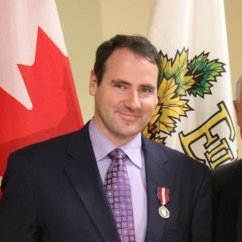
It describes the long-established Individual Pension Plan (IPP) and a newer variant called the Personal Pension Plan (PPP). The creator of the latter, Jean-Pierre Laporte (pictured to the left) estimates 1.2 million Canadian business owners could benefit from these plans, which are in effect Defined Benefit (DB) pension plans designed for professionals and business owners.

The newer PPP from Integris Pension Management Corp. is a hybrid in that it can be either a DB plan or a more market-sensitive Defined Contribution (DC) pension.

Trevor Parry

Several sources in the piece have written at more length on these topics here on the Hub. For example, see this blog from the Hub last November: How a Personal Pension Plan can mimic gold-plated DB pensions. Or see Trevor Parry’s most recent Hub blog, Making Canada Great Again. Perry sees both IPPs and PPPs as increasingly relevant in the current Canadian tax environment.

Tim Paziuk

One source I consulted for the piece but didn’t appear is financial advisor and author Tim Paziuk. Paziuk – of Victoria, BC-based TPC Financial Group Ltd. – laments the fact that “employees of the public sector and large corporations enjoy benefits and retirement plans that are unavailable to the private business owner.” As he noted in a recent Hub blog after the last federal Budget — On the Middle Class and Paying One’s Fair Share of Taxes — the pending Liberal working paper on the middle class and tax fairness doesn’t augur well for owners of corporations and even family members who enjoy “income sprinkling” from such corporations.

Fortunately new tools like the PPP and the not-so-new IPP give business owners a way to fight back. You can find on the web various debates between those who prefer the IPP and the PPP. For example, also quoted in the Globe article is Stephen Cheng, of Westcoast Actuaries, who has debated the plans with LaPorte here. Laporte’s reply can be found here: Comparing old IPPs to PPPs.

Motley Fool: Canadians overrate their financial literacy?

P.S. Here’s my latest blog for Motley Fool Canada. The headline pretty much sums up the story: Overconfident Millennials and Gen X flunk Financial Literacy Test, but Boomers only marginally better.

And while on the topic of financial literacy, I was gratified to be named one of Canada’s top online finance influencers, as conveyed by RazorPlan.com in this post.