
Hub Blogs

Hub Blogs contains fresh contributions written by Financial Independence Hub staff or contributors that have not appeared elsewhere first, or have been modified or customized for the Hub by the original blogger. In contrast, Top Blogs shows links to the best external financial blogs around the world.

How to achieve “Flow” — or optimal experience

flowBy Jonathan Chevreau,

Financial Independence Hub

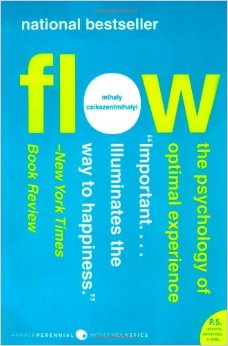
In a book on happiness we reviewed here recently, I came across a book called Flow, billed in the subtitle as “The psychology of optimal experience.”

This book, first published as a hardcover way back in 1990, became a New York Times bestseller and has spawned several followup titles elaborating on the concept of flow and creativity. The author’s name is not easily recalled: Mihaly Czikszentmihalyi, a psychology professor at California’s Drucker School of Management and also director of the Quality of Life Research Center at Drucker. (Incidentally, if you find the name unpronounceable and unmemorable, as I do, one of his books helpfully suggests the surname can be pronounced “chick-SENT-me-high.”)

Here’s what Wikipedia says about Flow and the author who coined the term.

I must say that I was a bit skeptical about the term at first: Continue Reading…

US Large Caps top Templeton asset-class chart but remember Winners Rotate

Here’s my latest MoneySense column, entitled Why Diversify? This chart shows you why. I used to write about this chart back at the Financial Post, and tacked the chart up on my cubicle wall. An updated version of the chart later followed me to my office at MoneySense, and the one below is now in my Editor-at-Large’s home office. Click on the above link to get to the chart, which can be further enlarged on your monitor.

The Hub’s version of the blog below also shows a second chart at the bottom about Risk. As you’ll see, it’s more predictable, living up to Franklin Templeton’s assertion that risk is more predictable than returns. I’ve always found it a useful reminder of the futility of chasing last year’s winners or attempting to predict next year’s winning asset classes. If you can’t get the charts  free through your financial advisor, you can download them here.

By Jonathan Chevreau

Franklin Templeton Why Diversify_low resolution

Continue Reading…

How to get the new TFSA limit to work for you

Illustration depicting a red and white road sign with a taxt free concept. Blue blurred sky background.

By Jonathan Chevreau

Financial Independence Hub

Here’s my latest column from the print edition of MoneySense magazine, written right after the federal budget: Get the new TFSA limit to work for you.

Click on the link for details, but in a nutshell — and has been extensively reported in the media, such as this piece by Gordon Pape (subscribers only)  — there’s no reason why you can’t add another $4,500 to your Tax Free Savings Account right now, in addition to $5,500 you may have contributed anytime on or after Jan. 1, 2015. (Note to American readers: the TFSA is the equivalent of Roth IRAs, providing no upfront tax deductions but which let you eventually withdraw money tax-free in Retirement or for other purposes).

That means a whopping $20,000 per couple. Now while Liberal Leader Justin Trudeau seems to think only “rich” people have that kind of money available, the fact is that many hard-working middle class people have been saving and investing for the better part of two or three decades, and built up substantial non-registered or “taxable” portfolios. Even though they may have paid income tax to acquire the capital in the first place, over those decades they have been paying annual taxes on interest, dividends and (often) capital gains generated by that capital.

As the column points out, those who have built such “open” portfolios don’t have to use new cash to put $10,000 per annum into their TFSAs. They merely have to start transferring their non-registered securities into their TFSAs. This is called a “transfer-in-kind” Continue Reading…

Seniors fastest growing risk group for insolvency

A speedometer with needle plunging down past word Bankrupt

By Jonathan Chevreau

Financial Independence Hub

While this website is devoted to Financial Independence, it’s an unfortunate fact that many people in all age brackets are so far from Findependence as to be under water financially.

Today a report entitled Joe Debtor: Marginalized by Debt is being released by Kitchener, Ont.-bankruptcy trustees Hoyes Michalos.

Among the many disturbing findings are the fact that seniors continue to be the fastest growing risk group when it comes to debt. The 2015 study shows insolvency filings by debtors over age 49 rose 30%, compared to a 27% rise in the 2013 study. The single biggest age group for insolvency is the 40s, where 28% of Canadian insolvencies occur. But those in their 50s account for 20%, those in their 60s 8% and 70-plus 3%.

DougHoyesCanadaTrustee
Doug Hoyes

In the report, Doug Hoyes writes that older Canadians are carrying debt into retirement because of debt accumulated over time to pay for living costs, family needs and medical bills, additional borrowing to keep up with post-retirement mortgages and the financial cost of carrying unsecured debt into retirement as income drops; and tax obligations from extra earned income and pension withdrawals. Continue Reading…

How parents can give their children the gift of future Financial Independence

Two Red Christmas Balls with Blank Embossed PaperFriday’s post on how Hub readers are generally embracing the $4,500 TFSA expansion promised we’d run one particular letter in full on Sunday.

Below is the letter referred to.  The parents in question gave this letter to their three children at Christmas of 2011, just a few years after Tax-free Savings Accounts were launched. They gave us permission to run it, in the hopes that other families could benefit from the ideas, which include parental matching of whatever savings the kids can come up with to fund their TFSAs.

Merry Christmas    2011

 Name  of Child here _____________________                    

This Christmas and future Christmases Mom and I wish to help you to start planning and working towards your long term financial goals/security. We realize that as responsible young adults you use your financial resources to meet your everyday fixed/living expenses and that with your busy lifestyles you do not always have the time to manage/consider long term financial planning. Continue Reading…