Building Wealth

For the first 30 or so years of working, saving and investing, you’ll be first in the mode of getting out of the hole (paying down debt), and then building your net worth (that’s wealth accumulation.). But don’t forget, wealth accumulation isn’t the ultimate goal. Decumulation is! (a separate category here at the Hub).

FWB TV video: Can we expect lower returns in the future?

Screen Shot 2016-01-18 at 2.07.41 PMThe latest FWB TV video is now up now here and at FWBSecurities.com, titled Can we expect lower returns in the future?.

As usual, it will also be housed at Findependence.TV.

The preamble to the 3.5-minute video observes that If you have invested for any length of time, you will have heard the expression “Past results are not an indication of future performance.” The best minds in the investment industry not only agree with that but some feel that in the coming years we should prepare ourselves for lower returns than we are used to.

The corollary to this is that If the markets are indeed prepared to not be as generous, then keeping fees as low as possible has never been more important. We need to keep as much of the overall return as possible. Continue Reading…

BMO’s much rumoured robo-adviser service officially launches

Cute RobotAs the Hub predicted in October — BMO will be first big bank to enter robo-adviser space — the Bank of Montreal has officially launched a robo-adviser serviced called SmartFolio. According to Canadian Press, a trail run began on December 7th and it is now available to all investors as of Monday of this week.

CP notes that BMO is indeed the first of the big five banks to wade into the robo-adviser space, which shouldn’t come as a surprise, since it had led the banks with its own line of BMO ETFs.  Toronto Dominion Bank is also expected to enter the market shortly.

Focus on Millennials

Continue Reading…

Volatility is a natural part of investing

Bull market risk financial concept as a heavy bullish beast walking on a high tightrope shaped as a stock market profit chart representing the investment danger ahead.

By Ermos Erotocritou, CFP, CPCA 

 Special to the Financial Independence Hub
 

After a lengthy period of stock market gains, volatility has once again returned to the markets. While volatility can be unsettling, it’s important to remember that it’s a natural part of investing. In fact, it tends to occur far more frequently than most people realize.

Since 1956, there have been 22 occasions when the TSX declined by more than 10%. When you calculate the average of each of these occurrences, you discover that we have experienced an average decline of 19.5% every two and a half years.

Yet the S&P/TSX has delivered an annualized return of 9.2% since that time and has proven to be quite resilient through the worst market conditions that have occurred. Despite the frequent occurrences, the market has always recovered, achieved a higher level, and rewarded those investors who remained patient and stayed true to their investment plan.

Keep a long-term perspective

This stresses the importance of maintaining a long-term perspective. Volatility often causes panic and fear, which leads to investors making regrettable decisions, like liquidating and consequently locking-in investment losses. We need to accept volatility as being a common occurrence on the road to achieving our financial goals. When we consider the natural trajectory of the market is upward-sloping, it becomes clear that maintaining a long-term approach is really the best strategy to effectively deal with these inevitable declines.

As simple as this advice may be, it’s sometimes difficult to accept when the headlines scream it’s time to get out. There is vested interest in pessimism. No journalist ever captured the front page writing a story about how disaster was unlikely to occur.

Short-term market movements are mere “noise”

While it’s reasonable to monitor day-to-day events, it’s important to keep in mind that daily, weekly, monthly, even quarterly market movements are often little more than noise for an investment portfolio that likely has a time horizon of many years. That’s why it’s so important to practice patience and discipline by remaining in the market, as opposed to abandoning it believing that is the best way to preserve wealth.

There is no guaranteed formula to identify when the best and worst time to be in the market is. However, ensuring your portfolio is well diversified and by sticking with a long-term plan, the volatility you may experience today will become a distant memory as you work towards achieving your financial goals.

Warren Buffett says “The stock market is a device for transferring money from the impatient to the patient.” My advice to you is to remain patient, it will get better.

It’s times like these that people have lots of questions. Feel free to pass this blog on to friends and family that you think may benefit from this information. I will make myself available to anyone who wants to ask me any questions. There is no obligation to meet with me or become a client. It’s important that people are educated and don’t end up making a decision they will regret later.

Continue Reading…

The Art of Boring: Three Investment Lessons from 2015

Kara Lilly 4x6 Formal blue bg
Kara Lilly

By Kara Lilly, CFA

Special to the Financial Independence Hub

Every year our team devotes a couple of our regular Wednesday morning meetings for reflection on the year that has passed. This is a chance for our team to review the insights, errors and observations that were made in the preceding twelve months and learn from each other.

We thought we’d share three of these lessons with our readers:

1.) Beware the assumption of mean reversion

One of the greatest surprises to investors this year was the continued slide in the price of oil. Like other structural/thematic trends, the decline in the price of oil due to international oversupply and weakening global demand has gone on far longer than some initially anticipated. Many assumed that prices would dip and then return to a more normalized range between $60 and $80. This is a good example of assuming mean reversion, i.e., that prices will naturally revert back to their mean. Continue Reading…

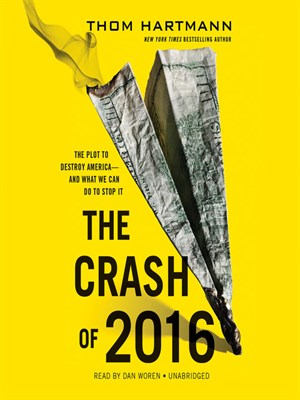
Book review: The Crash of 2016

crash2016Regular Hub readers may find this blog post familiar. That’s because it originally ran this time a year ago: in January 2015. Given that the year 2016 is now actually here, and last week’s market activity certainly had “crash-like” elements, it seemed appropriate to bring this one back  to the top of the queue. Starting with my byline below, the review is as it appeared a year ago: In a couple of spots, I’ve added editor notes to clarify dates and timing.

By Jonathan Chevreau

.As a rule, I avoid reading too many financial books based either on Greed or Fear. Still, when you have a good chunk of your net worth invested in the stock market, it’s hard not to have a twinge of doubt when you encounter books like Thom Hartmann’s The Crash of 2016.

I paid no attention to this book when it was published late in 2013 but now it’s 2015, well, 2016 isn’t so far away now, is it? (editor’s note: that was the review’s original sentence; of course, it is now 2016).

Why am I writing about it now? I wasn’t responding to a belated PR campaign by the publisher (Hachette Book Group) but stumbled on it while searching for other books on Kindle. The Kindle sample on offer didn’t enlighten me much about the author’s thesis (that should have been a clue!) so I ordered it from the local library, not feeling any urgency to get my hands on it.

Indeed, the last time I read such a book was Harry Dent Jr’s The Great Crash Ahead and of course so far that prediction has yet to manifest. Continue Reading…