Building Wealth

For the first 30 or so years of working, saving and investing, you’ll be first in the mode of getting out of the hole (paying down debt), and then building your net worth (that’s wealth accumulation.). But don’t forget, wealth accumulation isn’t the ultimate goal. Decumulation is! (a separate category here at the Hub).

Why a rising Loonie can be costly for investors

graham-bodel
Graham Bodel

By Graham Bodel, Chalten Advisors

Special to the Financial Independence Hub

There are many pitfalls that can trip up Canadian investors as they try to save and invest sensibly for the long run.  High and/or hidden fees, poor diversification, inappropriate investments for a given risk tolerance, under-utilization of tax efficient accounts are a few we see regular,  but the one that might just have the largest negative impact is behavioural.

You see, when it comes to investing unfortunately people are psychologically hardwired to do the opposite of what’s good for them.  In an October 2008 op-ed piece in the New York Times Warren Buffett advised investors to:

“be fearful when others are greedy, and be greedy when others are fearful.”

Words of wisdom but easier said than done, especially in the grips of the financial crisis.

Investors hurt by emotions

But it doesn’t take a financial crisis to spur fits of fear and greed — in fact, investors are prone to these emotions a lot of the time and it hurts them.  The data shows that individual investors who often use mutual funds as their investment vehicle of choice, perform much worse than the funds in which they invest.

This is because they invest more of their money during times of euphoria when markets are at their peak or when certain funds are performing well and they sell more of their investments during market bottoms at times of panic or when certain funds are performing poorly. (You’re supposed to buy low and sell high, not the opposite).  Investors get caught in a performance chasing struggle driven by fear of either missing out or losing their shirt.

One of the biggest drivers of this psychological roller coaster for Canadians in the last couple of years has been the Canadian dollar.  The following chart from Bloomberg Markets shows the USD/CAD over the last year:

CAD rollercoasterThe loonie hits its weakest point in mid-January which was actually the end of a long decline from the last point where the CAD was at par with the USD back in January of 2013.  Canadian investors tend to be too overweight Canadian stocks and bonds and this hurt through mid-January.  Having exposure to investments denominated in currencies other than Canadian dollars provided a return booster during that period.  Unfortunately this is where the poor behaviour kicks into high gear.  In December of 2015 investors piled out of Canadian equity and bond funds an into US and global funds.  According the Financial Post in January at the very trough of the loonie:

 “of the five best selling fund types in December, four were global or US focused.   Of the five worst, four were Canadian, reflecting the continued flight from our slumping equity markets and devaluing loonie.”

Timing couldn’t be worse

The timing couldn’t have been worse!  The turnaround since then has been steep, at least until the beginning of May this year when the trend seemed to reverse again.  You can understand how investors and their advisors can become really frustrated.  Performance chasing can be a killer in these circumstances.  Rob Carrick chronicled this really well in his Sunday Globe & Mail article “How the rising loonie is costing Canadian investors” capturing the sentiment as follows:

“They made a lot of money when the dollar was falling, but this year’s reversal has cost them. They’re annoyed about this turn of events and wondering who to blame. God help us when the housing market falls. People are going to self-combust.”

The reality unfortunately for many investors is that they didn’t make a lot of money when the dollar was falling because they waited to invest in foreign markets when the dollar had already fallen and are now being punished for chasing performance.

The evidence shows clearly that trying to time the market is extremely difficult and that is especially true of currency markets.  Carrick suggests some investors may want to hedge foreign currency exposure to mute this type of volatility.  Whether you hedge or keep currency as a source of risk and return in your portfolio, the most important thing is to just set a target allocation to domestic and foreign stocks and bonds that suits your risk profile and trade only when things drift out of balance.  That will force you to buy low and sell high and that is good investing behaviour.

Graham Bodel is the founder and director of a new fee-only financial planning and portfolio management firm based in Vancouver, BC., Chalten Fee-Only Advisors Ltd. This blog is republished with permission: the original can be found on Bodel’s blog here.


The truth about Handhelds — it’s not pretty

Two young people looking into smartphones while walking on city street
Millennials distracted by their Handhelds

By Andy Sherwood

Special to the Financial Independence Hub

Young people today, and I’m talking about Millennials and those who just made it into Generation X, think they can do everything on their Smartphones,  Handhelds or other mobile devices. But I have news for them. They can’t.

In Germany a pedestrian who was typing on a Handheld walked into a busy intersection, and was promptly killed by a passing car. It wasn’t the motorist’s fault. The person on foot was oblivious to where they were and what they were doing.

Nowadays people are apt to check their precious mobile devices twice a minute. Every thirty seconds. They exist in total crisis mode. This is a huge problem in terms of productivity. Here’s why.

Prioritizing impossible with Handhelds

First, it is impossible to prioritize your day if you live on your Handheld. On the other hand, Microsoft Outlook is an efficient way to do that – but only if you know how. Think of Outlook as a ten-ton truck that can carry ten tons of steel (i.e., a lot of information.) But if that’s a ten-ton truck, then your Handheld is a motorcycle and no motorcycle can carry ten tons of anything. It just doesn’t have the power to put your tasks into any intelligent order or scheme. You will be much more efficient, and productive, if you recognize what your Handheld won’t do.

Continue Reading…

Navigating a U.S. election year stock market

patmckeough
Pat McKeough, TSINetwork.ca

By Pat McKeough, TSINetwork.ca

Special to the Financial Independence Hub

The U.S. election year stock market rule can be profitable for investors in any political climate.

As we’ve pointed out in the past, an election year stock market tends to go on an above-average rise in U.S. Presidential election years. This provides a statistical rationale for optimism in 2016, since the next election is this November. But it’s no guarantee that the market will rise substantially, for a couple of reasons.

First, several ominous factors are weighing on the market right now, in addition to the election. These include the outlook for interest rates; the trend in prices for oil and other commodities; the rise in terrorist activity; the Chinese economic slowdown; and the sharp rise in the U.S. dollar and corresponding drop in the Canadian dollar.

An abrupt shift in any of these factors could have a big influence on the market for the remainder of the year and beyond.

Obama diverging from usual pattern

Second—more important—the election-year indicator works because U.S. politicians have a characteristic way of behaving during these years. President Obama is diverging from the traditional pattern that helped spur market gains in past election years.

Continue Reading…

You say you want a (Blockchain) Revolution?

WP_20160505_17_41_31_Pro
Alex Tapscott at Rotman School Thursday evening

My latest Financial Post article can be found by clicking the highlighted text here: Bitcoin and Blockchain could be the start of a revolution bigger than the Internet itself.

My actual words in the lead to the piece were “as big or bigger” but no matter. That’s the gist of a new book by author and technology guru Don Tapscott, and his investment banker son, Alex.

The duo launched their co-authored new book, Blockchain Revolution, to a standing room only audience at Toronto’s Rotman School of Management on Thursday evening. It was the first stop in a ten-city book tour.

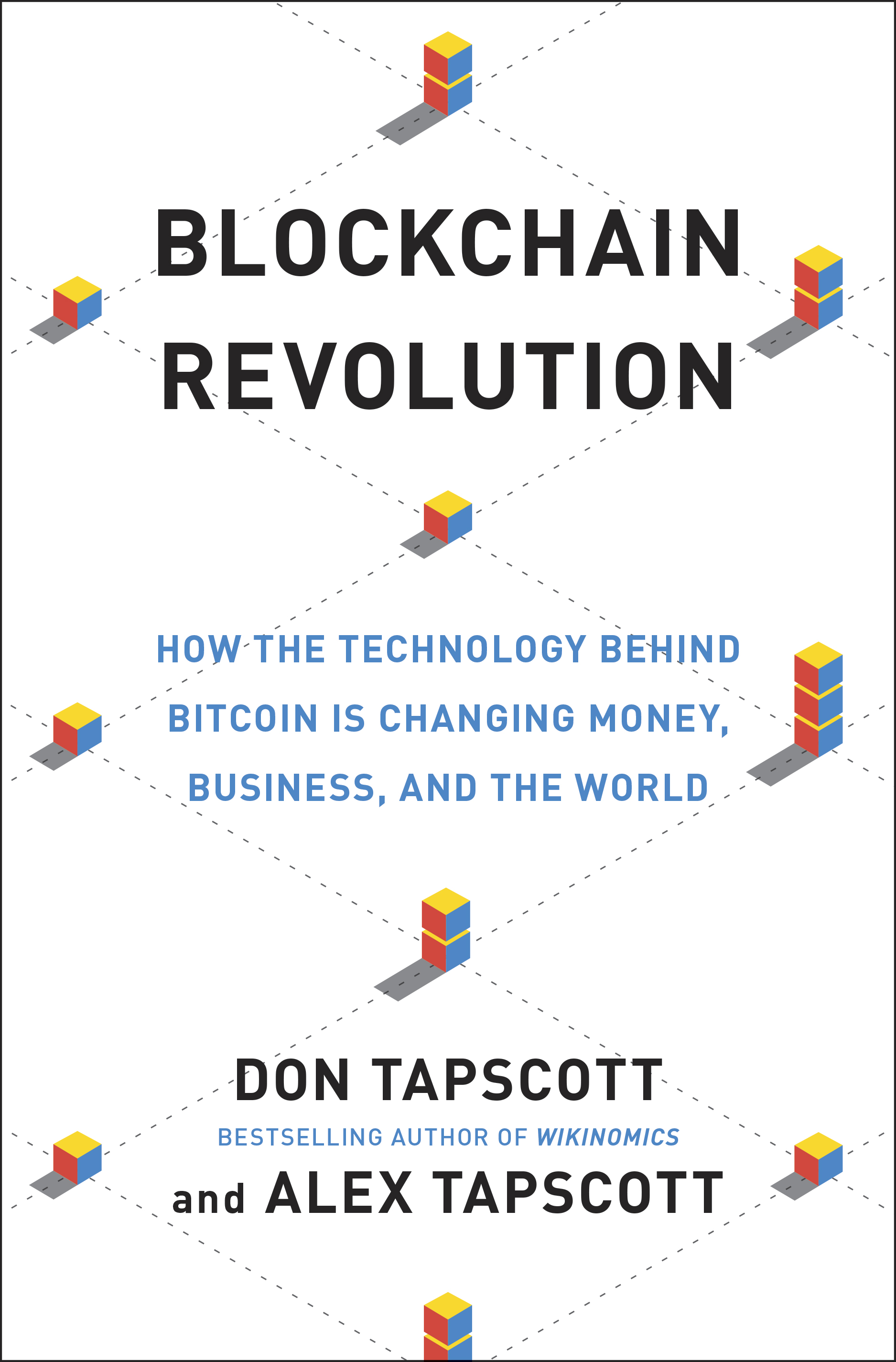
9781101980132_Blockchain_final process.indd Blockchain is the Trust Code

The famous Bitcoin is based on blockchain, which meant that for the first time in history two or more parties don’t need to know or trust each other in order to transact or do business online. They don’t need powerful intermediaries because “Trust is programmed into the essence of the technology so blockchain is the trust code.” The book (shown to the right) says big banks and some governments are implementing blockchains as distributed ledgers to speed transactions, improve security and lower costs. These ledgers reside on millions of computers provided by volunteers, so there is no central database that can be hacked. Using heavy cryptography, transactions are time-stamped and validated by a community of miners who are rewarded with more bitcoins. Every time a new block is added to the chain, it must refer to a previous block to be valid: hence the term blockchain.

Real FinTech is based on Blockchain

Continue Reading…

Some tough questions for the financial advice industry

JustWealth Andrew Headshot
Andrew Kirkland, JustWealth

By Andrew Kirkland

Special to the Financial Independence Hub

The Canadian financial advice industry is facing some existential challenges. Over the past decade, the investment sector has seen a slow decline in best practices and value-driven client service.

Consumers have taken note of this industry shift and the results are worrisome: investor trust in financial professionals in Canada has taken a sharp turn downwards from 2013 to 2015. Recent surveys further demonstrate this erosion in trust— a 2015 survey by the CFA Institute and Edelman indicates that only 61 per cent of Canadian retail investors and 57 per cent of institutional investors trust the financial services industry to do what’s right. It’s time the investment industry engaged in some much-needed introspection on what its future will look like.

Outdated advisor-client model

The outdated traditional advisor-client model is largely the cause for shortcomings in client satisfaction and trust. Continue Reading…