Building Wealth

For the first 30 or so years of working, saving and investing, you’ll be first in the mode of getting out of the hole (paying down debt), and then building your net worth (that’s wealth accumulation.). But don’t forget, wealth accumulation isn’t the ultimate goal. Decumulation is! (a separate category here at the Hub).

Sharing mortgages with unequal incomes

By Alyssa Furtado, RateHub.ca  

Special to the Financial Independence Hub

When you decide to buy a home with another person, there’s a good chance there will be a difference in your incomes. Whether the difference is big or small, it raises questions about how expenses will be split up. Two people with unequal incomes getting a mortgage together is a very common occurrence: couples make up a vast majority of homebuyers. But you can also buy a home with a friend or family member.

If you’re planning on sharing a mortgage with someone else, here’s what you need to know to make it work.

How will the home be owned?

If you’re purchasing a home together, you need to discuss how the ownership will be structured. If you’re a married or common-law couple, you’ll probably opt for what lawyers call joint tenancy. Both parties share a 100% stake in the property and both are fully responsible for everything related to the home, including the mortgage, taxes, and maintenance. If one partner dies, the other becomes the sole owner of the home.

If you’re buying with a friend or family member, you might opt for what lawyers call tenancy in common. With this structure, each person owns a separate share in the property and is responsible for their share. If you’re planning on being tenants in common, and one of you earns a higher income, you’ll need to discuss how that affects each partner’s ownership stake in the home and who will be responsible for what payments.

Who pays for what, and why?

When making decisions about how to share expenses, couples in joint tenancy usually take on equal responsibility. Since both partners are 100% owners of the home, finances are joined and mortgage payments are made using a joint account. Household income is the only thing that matters in this situation. Couples have to work together to make decisions about their budget to ensure the mortgage, property tax, and maintenance costs are all paid.

For tenants in common, you can choose to split up ownership and expenses a few different ways:

Continue Reading…

Most Canadians aren’t researching financial products before purchase

By John Shmuel, LowestRates.ca

Special to the Financial Independence Hub

Canadians love using comparison websites when it comes to booking flights to exotic locales, but when it comes time to make big decisions on major financial products, they’re skipping out.

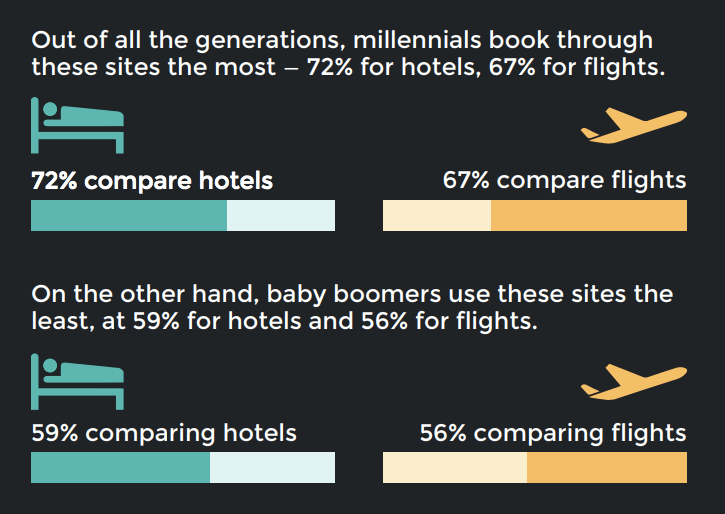
That’s what we found in our latest survey conducted in partnership with Ipsos. The survey found that 60% of Canadians use comparison websites when looking for a flight, and 63% use them when booking a hotel.

Then we started asking about whether they did the same for financial products. We expected to find a gap — but not by such a wide margin.

Less than half of Canadians are really researching their options when it comes to these products. Only 47% do “a lot of” research when they’re buying car insurance, while only 45% do a lot of research when they’re applying for a credit card.

Those numbers rose to 60% when it came to mortgages. Reassuring, right? Not really. It seems that when mortgages come up for renewal, Canadians are just taking the rates their broker or bank hands them. Only 42% did a lot of research into interest rates before renewing their mortgage. Continue Reading…

India’s ambitious renewable energy plans

By Caroline Grimont

(Sponsor Content)

Greater access to electricity — one of the pillars of Prime Minister Narendra Modi’s reform program –is powering increased economic activity, enhanced efficiency and improved productivity in India.

Modi has pledged to achieve universal electrification in India by the end of 2022; and to make increasingly greater use of solar power. In fact, India hopes to derive at least 40% of its energy needs from renewable sources by 2030.[i]

Although India is the 6th largest country in the world in terms of power consumption,[ii] almost 300 million of its people, particularly in rural areas, did not have access to 24×7 power supply prior to Modi assuming office. As of June 30, 2017, 14,834 census villages out of 18, 452 have been electrified.[iii]

Even as it expands the production of coal-generated electricity, India has started ramping up its solar capacity and hopes to generate 100 Giga Watts of solar energy by 2022, which will make it one of the largest users of solar power in the world. This will help to bring sustainable, clean, climate-friendly electricity to millions of India’s people.

“The world must turn to (the) sun to power our future,” Modi is reported to tell the 2015 COP21 climate conference in Paris. “As the developing world lifts billions of people towards prosperity, our hope for a sustainable planet rests on a bold, global initiative.”

And to support India’s solar power ambitions, the World Bank has approved a $625 million loan that will support the Government of India’s Grid Connected Rooftop Solar program by financing the installation of solar panels on rooftops across India. The project draws funds together from the Bank, as well as from the Clean Technology Fund of the Climate Investment Funds (CIF), and will mobilize additional funding from public and private investors.[iv] Continue Reading…

Unfair or not, get ready for these 3 big corporate tax changes

“We see these approaches to managing people’s affairs through a private corporation as creating an unfair playing field … We’re trying to tighten these loopholes to make sure that it’s fair.”

Doesn’t sound like taxes for small business owners are going down, does it?  The above is from federal finance minister Bill Morneau’s July 18 announcement outlining some of the measures the government is proposing to help level what they perceive to be an unfair playing field.

Since the announcement we’ve been thinking about the potential implications of these changes and digesting comments from a variety of different tax experts.  We agree with one expert who opined that “fairness is subject to personal interpretation.”

Unfortunately adhering to these proposed changes won’t be subject to personal interpretation so the bottom line is that we encourage all small business owners, especially those using private corporations in conjunction with saving for retirement or for the benefit of their families as a whole, to seek expert tax advice ahead of these changes coming into effect.

How did this come about?

Taking a step back, the reason that small businesses were given preferential tax treatment in the first place was to encourage them to reinvest in growth opportunities, employ more people, contribute to the Canadian economy in a more meaningful way and that would be good for Canada – hard to argue with that.

Of course all rules, especially tax rules, end up with unintended consequences.   The current government feels many small business owners and their families have been taking advantage of opportunities (loopholes) in the legislation that allow for further savings when it comes to their personal taxes. Furthermore, they seem to be particularly concerned about the increased “corporatization” of certain professions that has taken place over the last 10 to 15 years in order to reduce tax bills. As not everyone is a small business owner, the tax advantages are deemed to be unfair to those who aren’t.

What are the specific areas that are deemed to be unfair?

1.) Income sprinkling

Income sprinkling is a strategy where a business owner looks to save tax by distributing income, dividends and capital gains to other members of his or her family in order to take advantage of multiple sets of graduated tax rates (i.e. pay other family members who are in a lower tax bracket) or exemptions, in order to lower the overall family tax bill.   Continue Reading…

The “nice” problem of million-dollar RRSPs

Are million-dollar RRSPs a looming tax problem for soon-to-retire baby boomers or simply a nice problem to have?

My latest Globe & Mail Wealth column has just been published on page B9 of the Tuesday paper and online, which you can access by clicking on the highlighted headline here: The secret to paying less tax in retirement.

As one expert cited — Doug Dahmer, who often guest blogs here at the Hub — tax is perhaps the single biggest expense in Retirement. This often becomes apparent when those growing RRSPs the Boomers and others have been accumulating are forced to become RRIFs or Registered Retirement Income Funds at the end of age 71, at which point they become taxable at your highest marginal rate, just like  interest or employment income. Million-dollar RRSPs are not that uncommon, according to the sources consulted for the column, whether individually or shared by couples.

(I say”forced” but of course there are two alternative options: annuitize or cash out. Very few people choose the latter option, while annuitization or partial annuitiization is certainly a valid option as you progress through your 70s, although ideally when interest rates are higher.)

The initial RRIF withdrawal percentage is 5.28% at 71 but minimum withdrawal rates rise steadily over time, hitting 6.82% at age 80, 10.21% by 88 and reach 20% by age 95 and beyond.

Draw down RRSPs/RRIFs early, delay CPP/OAS to 70

As the article notes, this has two implications: one, since it’s unlikely most investors with balanced portfolios will generate returns as high as the withdrawal percentages, most RRIF recipients will start breaking into capital. Continue Reading…