Building Wealth

For the first 30 or so years of working, saving and investing, you’ll be first in the mode of getting out of the hole (paying down debt), and then building your net worth (that’s wealth accumulation.). But don’t forget, wealth accumulation isn’t the ultimate goal. Decumulation is! (a separate category here at the Hub).

Stock portfolio management and planning for your Heirs

Our work with stock portfolio management clients sometimes gives us a window into problems that can arise with the death of parents and the distribution of their personal belongings and financial assets.

For instance, siblings may assume they were supposed to get particular items of jewelry or furniture. When they learn that somebody else asked first, they can harbour a grudge that can last for decades.

Planning for your heirs: Head off sibling conflict with frank discussions

The best way to spare your family this problem is to head it off while you’re still alive. Tell your kids that you want to be fair to everybody. Ask them to send you a note or an email to express interest in any particular article. But don’t put too much emphasis on who asked first, and don’t feel you need to rush into making a list of who gets what. Some of your children may be slow to think of what items matter most to them. Or they may feel shy about asking for them.

Everybody should understand that if one child gets valuable household items from the estate, they may wind up receiving less cash.

Unpaid loans from parents can also cause dissension. Sometimes adult children run into money problems and wind up having to sell their home, for instance. Later, they may want to borrow the down payment to buy another home. If you grant that request, don’t simply write a cheque.

Instead, have a lawyer register a mortgage on the new home for the full amount of the loan. Explain to your child that this protects the money from attachment by creditors if new money problems come along, and keeps it in the family. You should also be aware (no need to mention it to your child) that this step also keeps the money in the family in the event of divorce.

Dissension can also arise when a child stays in the family home long after his or her siblings have moved out. Living at home and taking care of a parent can hold a child back from career advancement, and may get in the way of the child’s social or romantic life. But siblings may see it as simply taking advantage of free room and board. If you think it’s appropriate, you may want to add a line or two in your will that acknowledges the personal contribution of the stay-at-home child.

It’s hard to avoid all tension that grows out of these all-too-human conflicts. But if you think about them and talk about them with your children, things will go much more smoothly than if you leave them for the kids to sort out on their own.

Planning for your heirs: Invest based on your heirs’ timelines

If you have substantially more money than you’ll need for the rest of your life, and you plan to leave the excess to your heirs as part of your retirement planning, it makes sense to invest at least part of your legacy on their behalf. That is, invest based on their time horizon, not yours. And above all, choose investments with our Successful Investor philosophy in mind.

For instance, if your heirs are in their 40s, your retirement planning should involve holding at least part of your portfolio in a selection of investments that would suit investors in their 40s, and that follow our Successful Investor approach. Of course, you’d still want to invest conservatively. But you’d want to take advantage of the many years that 40-somethings have till they reach retirement age. Continue Reading…

Behind the scenes of ETF creations and redemptions

By Paige Corbin, Capital Markets Associate, WisdomTree Investments
Special to the Financial Independence Hub


Exchange-traded funds (ETFs) can offer an attractive and efficient way for investors to gain access to all aspects of the marketplace and have greatly leveled the investment landscape in terms of availability to all asset classes and regions.

As ETFs continue to grow in assets and scope of coverage, we are often asked these questions: What is an ETF creation or redemption? How does that work? What function does that provide, and does an investor make that decision? Let’s go behind the scenes of the life of a trade and discuss what the creation/redemption process is and how it fits into the trade life cycle.

How Does the ETF Creation/Redemption Process Work?

The creation/redemption mechanism allows for the increase or decrease of ETF shares based on demand without impacting other investors of the fund. This is an important contrast to a mutual fund where any buying or selling in the fund impacts all investors. If there is increasing demand for a specific ETF, new shares can be created to meet that demand in exchange for underlying assets, and if demand decreases, shares can be reduced by exchanging shares for assets. This flexible process is done solely by what is called an authorized participant, or AP. What is key to highlight is that the investor never makes the decision to create or redeem; that is simply a back-office function that is determined by the broker.

Illustrating the Life Cycle of a Trade

To illustrate how this process works, let’s follow the life cycle of a trade. In this example, John Doe at Smith Capital wants to purchase 500,000 shares of a new ETF. Since the fund is new, the on-screen volume is minimal, but John knows that the ETF structure allows him to purchase shares of the ETF with efficient pricing because of the creation/redemption functionality.

ETF Creation Process

1.) John goes to his broker and gives him the order to buy 500,000 shares of an ETF.
2.) The broker sells the ETF shares to John at a specific price. As mentioned before, the process of buying the ETF is seamless for John the investor, and his work is done.
3.) Behind the scenes on the back end, the broker has determined that, due to the increased demand by John, he as an authorized participant must create new ETF shares. He is now short the ETF shares since he sold them to John.
4.) The broker then buys the basket of securities held by the ETF to hedge himself and is now long the basket and short the ETF.
5.) The broker then delivers the basket of securities to the ETF issuer, initiating a creation.
6.) The broker receives new ETF shares from the issuer in return and flattens out his short ETF position. Continue Reading…

7 tips for earning extra money from your Driveway

By Sarah Kearns

Special to the Financial Independence Hub

Do you want to earn a quick extra buck or two with items that are just lying around the house? How about making money off your handyman skills? And, oh, did you know that it’s also possible to earn extra money from your unused driveway space?

If you’re looking to earn some extra cash by running your own business right on your very own driveway, then you might want to consider these seven money-generating tips.

1.) Hold a garage sale

The first thing that comes to mind when you think of earning money from your driveway is the garage sale. Aside from earning a few hundred dollars, you also get to clean out the clutter in your home. A garage sale is also a good weekend family activity and is a great exercise to learn about the basics of entrepreneurship.

2.) Set up a concession stand

Remember those lemonade stands kids put up during summer break? You can set up a concession stand on your own driveway too! It’s even better if your street has lots of foot traffic. Of course, different countries, states, or territories have different laws regarding this; so, always check your local regulations first before you set up.

3.) Rent out your tools

If you have tools that are seldom used, you can rent them out to neighbors and contractors in your area for extra cash. There are websites like ToolMates that let you post your for-rent tools and equipment online. These services let you make some extra money off your tools; which is always better than letting these expensive items just gather dust in the shed.

4.) Start your own handyman business

Since we’re already on the topic of tools, you can also set up your own, independent, handyman business. If you have handyman (or handy woman!) skills like carpentry, ceiling repair, car maintenance, and such, then it might be good to put those skills into work and earn some extra money. Sites like AirTasker allow you to post your services online so that people in your area can get in touch with you whenever they need your skills.

5.) Share your car with neighbors

Now, this is a fairly new concept and companies like Lyft and Uber have taken this innovative idea to the next level. However, if you don’t like driving around that much, it’s also possible to rent out your car to your neighbors when you’re not using it. CarNextDoor is a service that allows neighbors to ‘share’ their cars with each other, thereby offsetting the cost of ownership.   Continue Reading…

How much can you expect for investment returns?

“How much am I going to make?”

That’s likely the most reasonable question that an investor could ask. When you sign up for a savings account or GIC it’s usually the rate of return that lured you in, or got your attention. We know that many savers are ‘rate chasers’. They go from bank to bank, playing each bank against the other bank, asking for more, asking for a higher interest rate on their savings account or GIC.

I often had clients brag to me that they could get a savings account at 1.5% at so-and-so bank or credit union. I’d reply “That’s great, go for it, but I work in investments, I’m talking about earning triple or quadruple or more than that rate over time.” Of course, I would always qualify that there was the potential to earn that greater rate or return.

Did I mention that 1.5% don’t impress me much?

Of course, at this stage of the conversation I would probe the client’s savings accounts and whether or not they had a more than ample Emergency Fund. Typically, advisors will suggest that you hold 3-6 months of total spending needs in a savings account. That said, everyone knows their own personal situation and what types of emergencies that might pop up – and potentially the costs of those emergencies.

Separate short-term and long-term money

Another important practice is to separate our short-term monies and our long-term monies. Once we’re covered with that short-term emergency bucket, we move on to growth and try to make our long-term monies work real hard. You will also have day–to-day monies in a chequing or savings account.

One of the biggest mistakes Canadians make is to have too much money in “high interest” savings accounts. Guess what? That 1-2% is not going to take you to the retirement promised land. In fact, monies in a savings account are usually going backwards, it’s not making you a dime once you factor in inflation. A long term historical average for inflation is in the area of 3%. If you’re earning 2% in a savings account, you’re losing 1% spending power, each year.

Your $100,000 that you have today might feel like (or spend like) $90,000 or less in ten years. Start to extrapolate that over a few decades and the effect is greatly exaggerated. Inflation is nasty. Here’s an example that will also show my age. When I was a kid, I would take 25 cents to the movies to buy treats. With those 25 pennies I would be able to buy a pop and chips, I think I may have also been able to buy a 3-pack of gum. Yes, I also spent a lot of time in the dentist’s chair. Can you get anything for a quarter these days? I didn’t think so. Talk about losing spending power. And no, I did not grow up in the era of the Great Depression. I ‘grew up’ in the best decades of all time: the 60s and the 70s.

Only stocks can outstrip inflation

Now certainly, the 70s experienced some ‘hyper’ inflation so the effect was exaggerated. But inflation is there and it’s powerful, even in the 2.5 – 3% range. Continue Reading…

How investing makes it easier to achieve Financial Independence

By Gary Bordeaux

Special to the Financial Independence Hub

If you are looking for a way to secure your financial future, learning how to invest your money can help accomplish that goal. There are a variety of investment vehicles that can be tailored to fit your needs, timeline, and risk tolerance.

Let’s take a look at some of the specific reasons how investing helps a person obtain financial independence (aka “Findependence”).

Make money both today and tomorrow

If you are interested in generating a steady income from your investment portfolio, you can buy dividend stocks or a REIT (Real Estate Investment Trust). You make money today by receiving a dividend payment every month or quarter. You make money in the future by holding the security as it appreciates in value. When it reaches what you feel is the height of its value, feel free to sell it and lock in a profit. It is also possible to hold stocks in a trust that can benefit children, grandchildren or other beneficiaries after you pass on.

Obtain returns greater than the Rate of Inflation

Thanks to inflation, a dollar that you hold in your hand today will be worth the equivalent of 98 cents a year from now. This is because the price of goods will increase by an average of 2 per cent per year. In some cases, inflation can reach 4 per cent or greater in a given 12-month period.

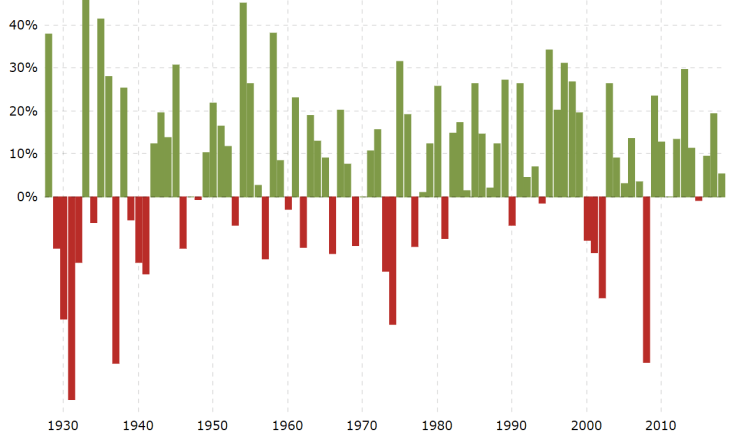
As a general rule, stocks will appreciate by about 7 per cent per year, and that amount is higher if a stock offers a dividend. What this means is that you are increasing your net worth above what it takes to keep up with cost-of-living increases. Over a period of years or decades, you could accrue tens or hundreds of thousands of dollars that can be used to enhance your lifestyle.

Improve your chances of owning a home

Let’s say that you are looking to buy your first house. You could decide to buy a single-family unit with a monthly mortgage of $1,000 that you are responsible for paying on your own. However, another option is to buy a duplex that you can both live in and derive income from. At the very least, having a tenant living in the other half of your home will decrease the monthly mortgage payment.

The money that you save can then be used to improve the home or make other investments. If you make improvements to a property that is used for rental purposes, it may be possible to write-off the amount of those repairs on a state or federal tax return. Continue Reading…