
 Posted By
  Diets! There are so many of them to choose from! How do you decide which one is right for you? There is no single, without-a-doubt best diet for every person to follow, always and forever. While you may feel like a particular nutrition idea – such as paleo or ketogenic – works for you, it doesn’t mean everyone else should follow the same program.
The human body can survive and thrive on a host of different nutritional conditions, which is clearly demonstrated by the traditional diets of various ethnic groups throughout the world. While there are huge differences in the common diets out there, they can all raise nutritional awareness and attention, they focus on food quality, they help eliminate nutrient deficiencies and they help control appetite and food intake.
The best diet is the one that works for you and takes into account your physical and biochemical differences, as well as your lifestyle such as family, life demands, work situation, income level, cooking experience and food availability. Before jumping onto the next fad diet train, take the time to research what the diet entails, what the pros and cons of the diet are and really think about why you want to consider following a restrictive diet in the first place.
Let’s take a look at some of the more common diets:
THE KETOGENIC DIET
 In the early 1920s, the Ketogenic diet was used in experiments on children with epilepsy. By the 1940s the Ketogenic diet made its way into medical textbooks as a treatment for childhood epilepsy.
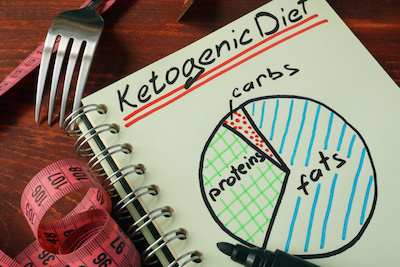
The Ketogenic diet is a high fat, extremely low carbohydrate diet. A typical balanced meal is about 30 percent protein, 40 percent carbohydrates and 30 percent fat. A Paleo meal would have about 40 percent protein, 20 percent carbohydrates and 40 percent fat. Ketogenic, on the other hand, is 20 percent protein, 5 percent carbohydrates and 75 percent fat.
Just how little is 5 percent carbohydrate? It’s about the equivalent of eating 10-15 grapes for the whole day. Indeed, the Ketogenic diet is the most restrictive and limited style of eating. However on the ketogenic diet, one can typically eat unlimited greens without going over the daily carbohydrate intake. For particular groups of people, ketosis is helpful, but for other people it can actually be harmful. For many populations ketosis has little to no effect, and is much too hard of a diet to follow consistently. Ketosis should not be used to try and cure ailments, it should not be used to randomly “get healthy” and should be done under close medical supervision for a specific objective.
In particular, the Ketogenic diet has probable benefits for those with metabolic diseases, neurodegeneration and brain injuries.
I have been eating a ketogenic diet for a year now – mainly to reduce inflammation and to prevent cancer re-occurrence. I do feel excellent on this diet – heaps of good, even energy all day, great focus and mental clarity, and great sleeps. I will be writing more extensively on this way of eating down the road.
If you have a specific health problem that a Ketogenic diet may help with, consult your doctor first and carefully monitor and track dietary modifications.
For Ketogenic recipes, I recommend a cook book written by Patricia Daly and Domini Kemp called The Ketogenic Kitchen. Continue Reading…
 Posted By


 Posted By