General

Seasonal work in Retirement

By Fritz Gilbert, TheRetirementManifesto.com

Special to the Financial Independence Hub

Have you ever thought about seasonal work in retirement?  My friend, Kirk, recently leveraged seasonal work to experience something for the first time in his life.  He became a cowboy, through a seasonal job at a Dude Ranch.

At Age 58!

You may remember Kirk, he’s visited with us before (including his thru-hike on the Appalachian Trail, his broken foot on the Pacific Crest Trail and the story of breaking his ribs when he Lived Life At The Limits on a mountain bike ride with yours truly).  This Fall, he’s heading to Nepal to do some trekking around Mt. Everest.  Interesting guy, my friend Kirk, and we can all learn something from the way he lives his life in retirement.

Today, he tells us the story of doing seasonal work in retirement at a Dude Ranch, which he did in the Spring of 2018.

The old military and corporate guy became a cowboy.  Well, that may be a bit of an exaggeration, but he did “wrangle horses” for 6 weeks at a Dude Ranch. How cool is that?

Here’s his story…

Working On A Dude Ranch

Kirk. A “FIRE Guy In His Prime”

I promised myself I would write three “potential” blog posts for my friend this year covering what could possibly be my most adventurous year since my retirement began 2 ½ years ago. Caution: I am not the spectacular writer that Fritz is; however, here is my latest adventure …

(Note from Fritz: I don’t know about my writing skills, but I do know that Kirk lives life more “on the edge” than anyone I personally know. Nepal, really? That Kirk guy is nuts!)

When I retired roughly 2 ½ years ago I decided to do away with my “LinkedIn” account. I was cleaning up some old things from my work years and didn’t think I would need a resume in my retirement life. As I started checking off things in my Dump Truck List (Buckets are no longer big enough) I started realizing that I had some skill gaps. Ultimately, I wanted to be a wrangler for a cattle drive in Montana but realized that wasn’t going to happen if I didn’t have some experience handling a horse.

I researched some possible jobs through www.coolworks.com and drafted a list of the qualifications for some of the wrangling jobs which interested me. Much to my surprise, I met them all with one exception:

I had no experience in riding a horse.

Having grown up on a farm really prepared me well for many aspects of the job, but we never had horses. How could I learn to ride a horse, handle the tack, teach the ranch’s customers, etc. if I didn’t know how to handle horses myself? While I suppose I could have paid for the experience — I am FI [Financially Independent], after all — there was something in me that kept gnawing in the deep recesses of my mind.

Thoughts which whispered, and thoughts that led to my decision to pursue seasonal work in retirement:

You have been so frugal all your life to get to FI, is this really how you want to spend your money?
Would you really be able to buy this experience or is this something you have to spend time acquiring skill, talent, and familiarity?
What other experiences do you need now in order to pursue the future adventures of your dreams?

(Note from Fritz: I like how Kirk thinks several moves ahead. Dream for your tomorrow, and identify what you should be doing Today in order to achieve your dreams. Move your life from Good To Great).

After much thought, I decided to venture out to an unknown area for me and listen to the younger crowd who said many of their wonderful experiences were as “Workaway” people.  Workaway is simply a web service that connects people who are looking for experience with people that are looking for help.  The Workaway people generally work 4 – 5 hours per day, 5 days per week in exchange for room/board and experience.  Given that I have plans to travel through Asia in the coming years, this approach could help with some international options as well. I looked into the site http://www.workaway.info and decided to give it a try.

It was somewhat difficult to determine where I would go to gain this experience.  I wasn’t sure how it would all work out, so I decided to minimize my risk by choosing a location that:

  • had good/great reviews by those who participated
  • was close so if it was horrible I could bail
  • had more than just myself as a workaway so I could learn from the experience of others

I ended up selecting a Bed and Breakfast Dude Ranch in upstate NY, only an hour away from where I grew up and where my mother still lives.  If it was a horrible experience I had a solid Plan B. I would simply bail out and stay with my mom, working around her house to complete some things on her “To Do” list.  It would also afford me the opportunity to spend time with some aunts, uncles, and cousins which I had not seen in far too long. Continue Reading…

5 surefire ways to stay out of Debt

By Gary Bordeaux

Special to the Financial Independence Hub

In the modern world, there are two types of debt: good bad and bad debt. Good debt would be considered financing something that has the potential to go up in value, like a home or a small business. Bad debt would be considered consumer debt like jewelry, designer clothes, and luxury cars. These things tend to depreciate. People typically get into trouble financially when they start going into debt with consumer goods or things they really don’t need.

1.) Create a budget

Unless you are already financially well-off, you are going to need to create a budget for you and your family. This is the single biggest way not to go into debt. Why? Because you are tracking every dollar you spend. Start out by listing your monthly income after taxes at the top of the budget, then list your expenses below that. If you don’t have a surplus of money after all your expenses are accounted for, you are either spending too much money or you are not making enough money. Whatever the case may be, adjust your budget accordingly.

2.) Quickbooks

The Quickbooks online platform by Intuit is probably one of the best online financial tools you can use for your business. In general, it is an online accounting software that helps manage your finances for you. With an easy Quickbooks online payment, you can pay people and you can receive money too. In the end, business finances can get pretty confusing. Quickbooks allows you to track your finances more easily. Also, Intuit has a budgeting app called Mint. I use Mint quite often and it tracks all my transactions and spending activity. It also tracks your budgets, monthly cash flow, and your credit score along with many other investments and other accounts.

3.) Emergency fund

Let’s face the fact that bad things happen to good people. When these setbacks occur, people need money set aside to protect themselves from debt. This is what an emergency fund can do. First, start by putting away a simple $1,000 just in case an emergency happens. Continue Reading…

The Paper Boy and the Theory of Nuclear War: Valuable Investment Lessons

Looking back over the past few decades, I’d say that some of my most useful and profitable investment principles came from things I’ve read or experienced that had nothing to do with the stock market.

I’ve already written about my first experience as a substitute newspaper delivery boy, filling in at age 11 for the 13-year-old who delivered the papers on our street. He made it sound simple: “You pick up the papers from the route boss on the corner, and you deliver them to the houses on this list. You go around to the houses and collect the money at the end of the week. The next day, you pay the route boss for the papers you took, and you get to keep all the money that’s left over.”

Every word in that explanation is true. However, he left out one crucial bit of info: rather than pay cash to the paperboy, a third or more of the customers mailed in a check every month to the newspaper office. After the check cleared, the office mailed a check to the (regular) paperboy. This was my first experience with paid work (other than leaf raking, lawn mowing or snow-shoveling, for which I got paid at the end of the day). It provided an instant, valuable lesson: before agreeing to any sort of business deal, you need to know all the details, even if this forces you to ask awkward questions.

Focus on plain-vanilla stocks and bonds

Over the years, this lesson has kept me out of all sorts of money-losing investments and unfair or poorly designed business proposals. It also explains how I came around to the view that you should focus on “plain vanilla” stocks and bonds in your portfolio, and avoid complex investment products, especially those with an insurance component.

Investment products profess to offer a “deal” that has more profit potential and/or less risk than you get from plain vanilla stocks and bonds. In my experience, what you lose on the one side of the promise is less valuable than what you gain (if anything) on the other. The deal in investment products is, however, much more complicated than the deal on the plain vanilla alternative.

It’s easy to find references to the hypothetical gains and advantages of investment products: just look in the marketing brochure, or ask the salesperson. To find out the downside of the product, you have to dig through many pages of legalese/fine print. The seller always has an information advantage over the buyer.

As a group, these products are likely to provide a lower long-term return than what you’d expect from a portfolio of high-quality stocks. But they provide a higher return to the salespeople, compared to what they can earn by selling you a portfolio of high-quality stocks. So, over a few decades, my first newspaper delivery experience at age 11 led me to advise against buying the many types of investment products that expose investors to costly conflicts of interest.

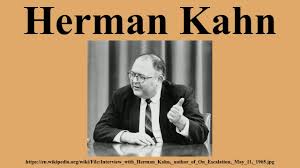
I learned a higher-level lesson about investing from the work of military-strategist/futurist Herman Kahn, author of On Thermonuclear War, Thinking About the Unthinkable and On Escalation. I first heard about Kahn in the early 1960s, when I had just entered high school. This was the height of the Cold War. Like many people back then, I worried that a nuclear war could conceivably break out at any time, with little or no warning. Scientists warned that if war came, “the living would envy the dead.” I tried not to think about it.

YouTube.com

In his book, Kahn said that thermonuclear war would not start overnight. Based on his study of military history, he said the world was more likely to go through 44 stages between the Cold War and World War III. He likened the 44 stages to rungs on a ladder, and divided them into seven subsets.

He labelled the first subset — rungs one through three — as “Subcrisis Maneuvering”; the second group, rungs four through nine, as “Traditional Crises”; the third, 10 through 20, as “Intense Crises”; the fourth, 21 through 25, as “Bizarre Crises”; the fifth, 26 through 31, as “Exemplary Central Attacks”; the sixth, 32 through 38, “Military Central Wars.”

Kahn refers to the passage from subset 6 to subset 7 — that is, from rung 38 to rung 39 — as “The City Targeting threshold.” He labels the final subset, number seven — rungs 39 through 44 — as “Civilian Central Wars.”

In Kahn’s ladder, the first use of nuclear weapons occurs at rung 23 (Local Nuclear War, Military). Civilians only start to become targets at rung 29 (Exemplary Attacks on Population). Civilians become a focus at rung 42, (Civilian Devastation Attack). Rung 43 is “Some Other Kinds of Controlled General War.” Rung 44 is World War III, but Kahn called it “Spasm or Insensate War.”

I found all this greatly reassuring. It gave me reason to believe that if war was coming, it would follow some sort of pattern, rather than come as a total surprise, like a global car crash. Of course, I was still in my teens. Adults differed widely in their attitude toward Kahn and his views.

Some people felt Kahn’s nonchalant writing about thermonuclear war marked him as a heartless monster. (On Thermonuclear War popularized the term “megadeath” — the death of one million individuals.) But Kahn was a jovial, gregarious individual, and this came through in his writing. If he had written in a morose, emotional tone, nobody would have read the book, and that would have been a tragic waste.

Others saw Kahn as an object of ridicule. They loved Stanley Kubrick’s political-satire/black-comedy film, Dr. Strangelove or: How I Learned to Stop Worrying and Love the Bomb. The film’s title character, Dr. Strangelove (played by Peter Sellers), is widely viewed as a parody of Kahn and his unflinching descriptions of the effects of war. It’s less widely known that Kahn collaborated with Kubrick on the script. Some of the film’s funniest lines make use of Kahnian terms, such as “Doomsday Machine.” Others are comical paraphrases of sentences in Kahn’s books. The project appealed to Kahn’s sense of humour.

Spotting unwise or unnecessary risks

Kahn’s work was widely read by high-ranking members of the U.S. and U.S.S.R. government and military. By describing and dissecting Kahn’s 44 stages, politicians and generals on both sides got better at spotting and avoiding unwise or unnecessary risks. In fact, many people give Kahn and his fellow “megadeath intellectuals” some credit for heading off World War III. Instead of world wars, major world powers shifted to regional proxy wars, like the Vietnam war, and the Soviet-Afghan war of the 1980s. Continue Reading…

The Do’s and Don’ts of Trading ETFs

By Bryan Moore, WisdomTree Canada
Special to the Financial Independence Hub
Exchange-traded funds (ETFs) have seen immense growth over the past decade. There are a multitude of benefits, including transparency, tax efficiency and the ability to make intraday trades, that have contributed to the use and growth of ETFs. While these are all beneficial to investors, we continue to see questions around ETF trading. Although ETFs trade on-exchange like stocks, investors have to understand that ETFs trade differently and that ETF execution is an imperative part of investing that should not be minimized.

Many investors know that when evaluating an ETF, average daily volume (ADV) does not indicate the true liquidity of an ETF. The liquidity of an ETF resides in its underlying securities, but how does one access that to ensure smooth execution?

Let’s discuss the do’s and the don’ts of how to best trade an ETF.

The Don’ts

1.)Don’t trade in the first or last 15 minutes of the trading day. This is when trade desks have less transparency and markets are more volatile.

2.)  Don’t place market orders; if you want to trade electronically, place limit orders. We advise investors to always use limit orders, especially in times of volatility. We also advise investors to not use stop-loss orders that turn into market orders.

The Do’s

1.) Do utilize your resources. Consult your trading desk as well as the relevant capital markets desk. The majority of issuers have capital markets teams that can consult on a trade. Additionally, the majority of advisors have access to a trading desk. These desks have access to expert market makers who can access the underlying liquidity.

2.) Do use a limit order when trading electronically, this cannot be said enough!

Most advisors have a trading desk through their firm or custodian, and they are always a resource as well. If there is one thing to take away from this piece, it’s to use your resources and make that phone call or email—it can be the difference between seamless execution and a very costly mistake.

Bryan Moore is Head of National Accounts and Capital Markets for WisdomTree Canada. 

Commissions, management fees and expenses all may be associated with investing in WisdomTree ETFs. Please read the relevant prospectus before investing. WisdomTree ETFs are not guaranteed, their values change frequently and past performance may not be repeated. 

Past performance is not indicative of future results. This material contains the opinions of the author, which are subject to change, and should not to be considered or interpreted as a recommendation to participate in any particular trading strategy, or deemed to be an offer or sale of any investment product and it should not be relied on as such. There is no guarantee that any strategies discussed will work under all market conditions. This material represents an assessment of the market environment at a specific time and is not intended to be a forecast of future events or a guarantee of future results. This material should not be relied upon as research or investment advice regarding any security in particular. The user of this information assumes the entire risk of any use made of the information provided herein. Neither WisdomTree nor its affiliates provide tax or legal advice. Investors seeking tax or legal advice should consult their tax or legal advisor. Unless expressly stated otherwise the opinions, interpretations or findings expressed herein do not necessarily represent the views of WisdomTree or any of its affiliates.

“WisdomTree” is a marketing name used by WisdomTree Investments, Inc. and its affiliates globally. WisdomTree Asset Management Canada, Inc., a wholly-owned subsidiary of WisdomTree Investments, Inc., is the manager and trustee of the WisdomTree ETFs listed for trading on the Toronto Stock Exchange.

How to Retire debt-free

By Laurie Campbell

Special to the Financial Independence Hub

These days, don’t be surprised to find a senior citizen standing behind the counter of your favourite fast food spot taking your order instead of a braces-wearing teen. What retirement looks like today has changed quite significantly from what it was even just ten years ago, and there’s no stopping this trend. More and more seniors are staying in the workforce, and for many of them, they have no choice.

Last June for Seniors Month, our agency, Credit Canada co-sponsored a seniors and money study that looked at the financial difficulties Canadian seniors are facing; the results, while shocking, were no surprise.

As a non-profit credit counselling agency, our counsellors are on the forefront of what’s happening when it comes to people and their financial hardships, and we are seeing a large number of people who should be starting to settle into their “golden years” still working, maybe even taking on an additional side job, just to pay off their debt, let alone get a time-share in Florida.

When we conducted our study in June 2018, it revealed that one-in-five Canadians are still working past age 60, including six per cent of those 80 and older. And while one third do so simply because they want to — which is fantastic, kudos to you — 60 per cent are still working because of some form of financial hardship, whether it’s too much debt, not enough savings, or other financial responsibilities, like supporting adult children.

The truth is the golden years have been tarnished, and I don’t know if we’ll ever get them back.

Half of 60-plus carrying some form of debt

Many of today’s retirees are living on fixed incomes, making them vulnerable to unpaid debt. In fact, our study revealed more than half of Canadians age 60 and older are carrying at least one form of debt, with a quarter carrying two or more types of debt. What’s even more alarming is that 35 per cent of seniors age 80 and older have debt, including credit-card debt and even car loans.

Staring at the problem isn’t going to help, nor is hiding from it. The best thing we can all do is to face the facts head-on and devise a plan of action that we know will work, whether it’s getting rid of any debt while building up savings, taking on a side job, delaying retirement by a few years, or all of the above.

Sizing up Government support

Before delving into the numbers it’s important to understand what income you can expect to have during your retirement. A few numbers have been compiled here as an example, but if you wanted to get more detailed information you can visit the Government of Canada website and click on the Canada Pension Plan (CPP) or Old Age Security (OAS) pages.

So, let’s get started by taking a look at 2017. Continue Reading…