
General

Business Owner suffering Pension Envy? Here’s a Remedy

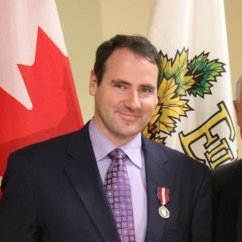
Jean-Pierre Laporte

The Globe & Mail’s Report on Business has just published my piece titled A remedy for sufferers of pension envy, which you can access by clicking the highlighted text.

It describes the long-established Individual Pension Plan (IPP) and a newer variant called the Personal Pension Plan (PPP). The creator of the latter, Jean-Pierre Laporte (pictured to the left) estimates 1.2 million Canadian business owners could benefit from these plans, which are in effect Defined Benefit (DB) pension plans designed for professionals and business owners.

The newer PPP from Integris Pension Management Corp. is a hybrid in that it can be either a DB plan or a more market-sensitive Defined Contribution (DC) pension.

Trevor Parry

Several sources in the piece have written at more length on these topics here on the Hub. For example, see this blog from the Hub last November: How a Personal Pension Plan can mimic gold-plated DB pensions. Or see Trevor Parry’s most recent Hub blog, Making Canada Great Again. Perry sees both IPPs and PPPs as increasingly relevant in the current Canadian tax environment.

Tim Paziuk

One source I consulted for the piece but didn’t appear is financial advisor and author Tim Paziuk. Paziuk – of Victoria, BC-based TPC Financial Group Ltd. – laments the fact that “employees of the public sector and large corporations enjoy benefits and retirement plans that are unavailable to the private business owner.” As he noted in a recent Hub blog after the last federal Budget — On the Middle Class and Paying One’s Fair Share of Taxes — the pending Liberal working paper on the middle class and tax fairness doesn’t augur well for owners of corporations and even family members who enjoy “income sprinkling” from such corporations.

Fortunately new tools like the PPP and the not-so-new IPP give business owners a way to fight back. You can find on the web various debates between those who prefer the IPP and the PPP. For example, also quoted in the Globe article is Stephen Cheng, of Westcoast Actuaries, who has debated the plans with LaPorte here. Laporte’s reply can be found here: Comparing old IPPs to PPPs.

Motley Fool: Canadians overrate their financial literacy?

P.S. Here’s my latest blog for Motley Fool Canada. The headline pretty much sums up the story: Overconfident Millennials and Gen X flunk Financial Literacy Test, but Boomers only marginally better.

And while on the topic of financial literacy, I was gratified to be named one of Canada’s top online finance influencers, as conveyed by RazorPlan.com in this post.

Is Canada’s Housing market starting to cool?

By Gordon Powers, Zoocasa.com

Special to the Financial Independence Hub

Canadians’ confidence in the housing market hit an all-time high less than a month ago, but the mood across the country seems to have shifted significantly in recent weeks.

Home sales across Canada fell by 6.2 per cent in May 2017, largely due to a sharp drop in Toronto, according to the most recent figures from the Canadian Real Estate Association. The month-over-month percentage decline was the largest since August 2012.

In nearly two-thirds of all local markets across Canada, sales were off. The decline was led by a 6.7 per cent drop in the GTA, where potential home buyers seem to be moving to the sidelines, delaying their purchase decisions in the hope of a drop in runaway home prices.

Prices beginning to shift slightly

The national average price for homes sold in May was $530,304, up 4.3 per cent from where it stood a year ago. While that number has been pulled sharply upward by transactions in the GTA and Vancouver – excluding these two markets trims more than $130,000 from the national average price of $398,546 – there’s no question that prices have dropped off in certain areas of the country

Prices in the GTA declined in May for the first time in years, according to recent figures from the Toronto Real Estate Board.

While home prices in and about Toronto rose 14.9 per cent year over year, they were actually 6.2 per cent cheaper between April and May, the first full month-long period following the implementation of the Ontario Fair Housing Plan rules.

The TREB May resale numbers reveal GTA sales dropped 20.3 per cent year over year with detached home sales leading the slide at 26.3 per cent, Toronto condo sales backing off 6.4 per cent, and Toronto townhouse sales declining at 18.1 per cent. Continue Reading…

5 Steps to a Victorious Retirement

Who doesn’t want a Victorious Retirement?

Just in time for the long weekend and Canada’s 150th birthday, MoneySense.ca has just published a 5-part series on retirement, going from deciding what you want to working longer, the Ages & Stages by decade, being a snowbird, and finally what to do once you finally reached the hallowed land of Retirement/Findependence/Victory Lap.

Here’s a summary of each piece (all written by Yours Truly), and links to the full articles:

1.) The first step: What do you really want?

Take a custom approach to retirement planning. There’s no point fretting too much about retirement and how much to save if you haven’t first determined what you want to DO once you’re retired. For starters, how are you going to fill those 2,000 hours a year you use to spend in the office and commuting? Click here for full article.


2.) We live longer. Why not work longer?

Ask questions about a retirement plan that’s right for you. Life expectancies are on the rise: more and more Baby Boomers can expect to become centenarians and that probably goes double for their children, the Millennials. Makes sense to consider working a little longer, if only part-time. Or if you really dislike your chosen profession, go back to school or retrain and find something you’d really enjoy doing in your golden years: preferably something that pays! Click here for full article.


3.) Snowbird? Learn the “substantial presence” test

Learn the tax pitfalls of retiring to the sun in the U.S. It all depends on how long you plan to stay down south each year: the formula isn’t simple. If you don’t relish the thought of paying tax to two countries, you may want to make sure you’re not considered to have a “substantial presence” in the U.S.  Click here for full article.

4.) Your retirement plan has a life cycle

Retirement planning strategies for every age. Every decade from your 20s to your 70s and beyond should take you a little further along the journey to financial independence/Retirement. Just like we all share the same fate in our human life cycle, so it is with the financial life cycle. Click here for full article.


5.) Retirement planning —after you retire

The plan doesn’t stop when you stop working.

My co-authored book Victory Lap Retirement features on its cover what appears to be a sprinter breaking through the finish line of a long marathon. But that doesn’t mean we’re saying Retirement is a literal finish line and with it the end of striving and purpose. In fact, we’re saying a “Victory Lap” really only begins when you reach the “finish line” of financial independence, or Findependence.

There will still be a big adjustment as you move from Wealth Accumulation to the De-accumulation or “Decumulation” phase: less earned income and more passive sources of income. And you’ll need to master the tax aspects because Tax may be one of the biggest expenses in Retirement. Click here for full article.

Retirement STILL Rocks

Heather Compton & Dennis Blas, coauthors of Retirement Still Rocks

By Heather Compton and Dennis Blas

Special to the Financial Independence Hub

Since retiring in 2004, we’ve learned a thing or two.  Foremost, a rockin’ retirement requires more than a bucket list: it’s not a given, it’s a statement of intention. A satisfying retirement requires finding new ways to satisfy our needs and utilize the skills and talents that give us the greatest satisfaction. Like a working career, a retirement career unfolds, develops, progresses and changes as life circumstances unfold. This doesn’t mean some front-end planning won’t be useful. Our cornerstones for a rockin’ retirement include Lifestyle, Relationship and Finances.

Go-Go to Slow-Go to (sigh) … No-Go

Many of us will have a third act lasting 30 plus years and few will plan for the full-stop retirement of a previous generation.  All play and no work also makes Jack a very dull boy! We may think of retirement as one long time frame, but those who study aging divide it into three distinct phases: the go-go, slow-go and no-go years. Certain Victory Lap careers, travel destinations and budding interests must be pursued in the go-go years; others might wait until the slow-go. Either way, you’ll want to mind-bank lots of great life experiences to relive in the no-go years! Continue Reading…

5 common mistakes when working with an advisor

Chris Ambridge

By Chris Ambridge, Transcend

Special to the Financial Independence Hub

Canadians are often faced with complex and nondescript investment products that can be overwhelming.  As such, most people need professional advice. With personal recommendations as one of the most common forms of referrals, selecting the right advisor should also be based on qualifications, fees that won’t gouge, and the advisors autonomy to act in the best interest of the customer.

However, many people are now spending a significant amount of time surfing the web and seeking advice online, where it can be difficult to distinguish expert advice from the inept.

In Canada, 96% of registered advisors are “dealing representatives,” which means they are salespersons not legally required to look after your best interests. On the other hand, just over 4,000 advisors are registered in categories where they must act as true fiduciaries and are legally required to deliver clients advice that must be in their best interest. While there are many financial advisors who look after their clients in the same way as true fiduciaries and deliver exceptional support and guidance, there are a whopping 118,000-plus advisors who do not have to adhere to such standards.

As an investor in search of an advisor, your goal should be to find the right person to help you reach your future financial goals. While you can correct a poor choice down the road, you would have wasted valuable time and may have actually suffered financial setbacks. It is therefore paramount you avoid the following mistakes:

Mistake #1

Don’t fall for the opening pitch. No matter how enticing the discussion and no matter how obvious the initial set of benefits are, chances are you are only seeing one side of the equation. No one wants to reveal their warts, especial right off the bat. So take your time to establish a rapport with the advisor. Trust comes with knowledge and clarity so make your first appointment about gathering information and creating a connection.

Mistake #2

If investments and products are the first subject of conversation before attempting to build a profile of you and your family, take a pass. Remember you are looking for someone that can give you personalized advice and not a canned spiel or off-the-shelf solution. If the advisor starts talking about investments before understanding your fears then you should think twice.

Mistake #3

Continue Reading…