Hub Blogs

Hub Blogs contains fresh contributions written by Financial Independence Hub staff or contributors that have not appeared elsewhere first, or have been modified or customized for the Hub by the original blogger. In contrast, Top Blogs shows links to the best external financial blogs around the world.

How do Canadians feel about the new Real Estate regulations?

By Penelope Graham, Zoocasa

Special to the Financial Independence Hub

The anniversary of the implementation of the Ontario Fair Housing Plan has come and gone, and the playing field is just starting to even in the province’s housing market. Designed to cool demand and price growth in the Greater Golden Horseshoe, the 16-part package of housing regulations has effectively done just that, with sales down double-digit percentages throughout the region, and prices softening for the most expensive housing types.

Housing analysts argue that this result is mainly due to psychological factors, rather than the new regulations – which include a foreign buyer’s tax, and overarching rent controls – themselves.

But what do Ontarians really think about the new regulations? To find out, Zoocasa conducted a survey of 1,400 respondents on their sentiments around the highlights of the plan, and whether they support the government’s intervention in the free housing market.

Following BC’s footsteps

If Ontario’s attempt to tax foreign purchasers of real estate seems familiar, that’s because it closely resembles what occurred in British Columbia; the province initially implemented a 15-per-cent levy on foreign buyers within the Metro Vancouver area in August 2016, before upping the tax to a full 20 per cent, and extending the affected geographical area, in February of this year.

While Ontario’s version, called the Non-Resident Speculation Tax (NRST) still taxes just 15 per cent of a home’s purchase price, it will apply to anyone buying a home within the GGH – including homes for sale in Hamilton, or condos for sale in Mississauga, who is not a Canadian citizen or permanent resident (those who obtain such status, or who are enrolled in a minimum two-year full-time post-secondary program within a year of their home purchase are eligible for a full rebate on the NRST).

At the time of its implementation, former Ontario premier Kathleen Wynne was adamant that the tax was not intended to discourage newcomers to Canada from settling in Ontario.

“The Non-Resident Speculation Tax has nothing to do with new Canadians or people who want to make Ontario their home,” she stated to a media scrum on April 20, 2017. “This is targeting people who are not looking to raise a family, who are just looking for quick profit or a place to park their money.”

The measure appears to have resonated well with all Canadians; according to survey results, 69 per cent of respondents from all provinces indicated they support the tax, while 61 per cent felt foreign ownership directly impacts prices in the local housing market.

Perhaps not surprisingly, respondents from provinces with the most competitive real estate marketplaces were most likely to support the tax: 77 per cent of British Columbians and 70 per cent of Ontarians indicated they were pro-tax.

Support extends beyond affected Housing markets

However, even respondents from provinces where foreign investment and homeownership is not considered a stressor on the market, indicated support for the tax; 65 per cent of Albertans indicated support, even though only 40 per cent feel out-of-country buyers impact housing prices in their region. Continue Reading…

Retired Money: How to be financially, physically and emotionally fit for Retirement

My latest MoneySense Retired Money column, which has just been published, looks at a self-published book by the semi-retired (at age 64) Howard Pell. His book is titled Retire Fit, Fit & Fit. Click on the highlighted headline to retrieve the full MoneySense column: Retirement fitness involves mind and body, as well as money.

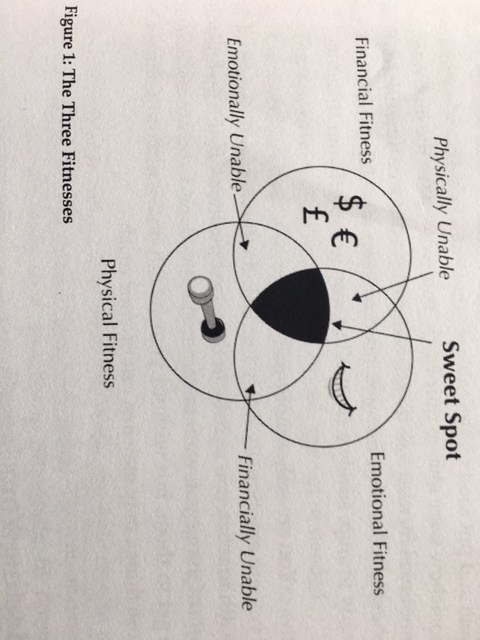
So what does the Fit, Fit & Fit mean? It’s in the headline of this blog as well as the adjacent photo taken from the book cover, which is the book’s subtitle. So it’s referring to being all three of financially fit, physically fit and emotionally fit for Retirement.

There are plenty of books about financial fitness so Pell pays only lip service to that aspect: what he brings to the table is insights on how to integrate finances with physical and emotional fitness. (To some extent, so does the book I co-authored with Mike Drak: Victory Lap Retirement)

Pell, who is based in Waterloo, Ont., does add a few newish terms to the semi-retirement lexicon.  He dubs the lifestyle “voluntary unemployment” but like many at this stage, finds the word “retired” inadequate. He tosses out several alternatives but the best one is his suggestion to simply adopt the Spanish word for “retired,” which is Jubilado (for males) or Jubilada (for females.”) He would use the term to signify anyone who is financially, physically and emotionally fit.

I can certainly relate to his observation of the semi-retired life that  “The big difference is that now all my deadlines and commitments are self-imposed.” Of course, as the old quip goes about driven self-employed business people: “My boss is a slavedriver.”

Pell also went personally through the “glide path” to semi-retirement described in other Retired Money columns and here at the Hub, via working a three-day week for his then employer during the last two years of his time there. This is a good way to test out your financial fitness while also clearing time for more physical fitness and — perhaps the toughest challenge — preparing for emotional fitness for retirement (I’m speaking for myself here.)

Finding the sweet spot

A Venn diagram on page 7 of Pell’s book (shown adjacent) illustrates that the sweet spot is the intersection where financial, emotional and physical fitness all converge.

If they don’t, and you became financially fit by selling out either your physical and/or your emotional health, the retirement your finances make possible may be a very limited and unsatisfying one.

It’s also possible to be only physically fit or only emotionally fit but lack the financial resources for retirement. The need to keep working to pay the bills will be frustrating, especially if all your peers have retired.

Continue Reading…

How in sync are global Central Banks?


By Kevin Flanagan, WisdomTree Investments

Special to the Financial Independence Hub

Without much fanfare, the U.S. Federal Reserve (Fed) provided its policy guidance late in May. Although no rate hike was implemented [it raised its overnight lending rate by 0.25% at 2 pm today, June 13, at 2 pm: Editor]  the money and bond markets fully expect the U.S. central bank to continue on its tightening path for the remainder of 2018, if not beyond. While the lion’s share of the focus has been Fed-centric on this front, it seems like a good exercise to check in on what the expectations are for the developed world’s other key monetary policy makers.

Heading into 2018, optimism for ongoing global growth seemed to be the norm. Indeed, along with the outlook for continued global growth, discussions were arising on whether central banks would soon turn their attention to any potential increase in inflation. While we still have almost seven months to go in this calendar year, recent data appears to be suggesting a plateauing of sorts on the economic front.

One economic indicator that is widely watched for help discerning economic trends on a global basis are the various Purchasing Managers’ Indexes (PMI) on a country or regional basis. While the levels being posted in the developed world still point toward further expansion, they don’t necessarily indicate a pick-up in growth prospects on the immediate horizon. In fact, the readings for April on an aggregate basis were relatively flat, and in some cases — such as the eurozone, the UK and Canada — have actually slipped a bit from their recent peaks.

So, what should investors expect in near-term global central bank policy? As illustrated in the table above, expectations for the upcoming policy meetings certainly differ quite a bit. The overarching outlook is for the Fed to raise rates at its convocation on June 13, with the Fed Funds Futures implied probability being 100%, as of this writing. The remaining four developed world central banks — the European Central Bank (ECB), the Bank of England (BOE), the Bank of Canada (BOC) and the Bank of Japan (BOJ)  — all fall in the “no rate hike” camp. Continue Reading…

Why Sean Cooper quit his full-time job after 8 years

What a thoughtful goodbye email. Gosh, it’s hard to keep a secret! I guess everyone knows about my mortgage burning story, even my colleagues at work!


By Sean Cooper

Special to the Financial Independence Hub

If you follow me on Instagram, you may have already heard the big news. After 8 years, I’m quitting my full-time job at the pension consulting firm. I gave my employer plenty of notice. I handed in my resignation 2 months ahead of time. June 1st will be my last day in the office. To celebrate this big career milestone, I’ve booked a weeklong trip to New York City and Boston.

I always planned to quit my full-time job. I just didn’t think it would happen so soon. I’m at a crossroads in my life. I’m 33 years old and not getting any younger. It’s time to make some tough “adult” decisions. I can either take the easy road and keep working for a company where I’m comfortable, or take the hard road and become a full-time entrepreneur. I chose the latter.

Keeping a promise to myself

A promise I made to myself after I burned my mortgage in September 2015 is that I’d slow down and get a better work-life balance. Unfortunately, that just wasn’t happening.

I’m someone who’s super ambitious. So, 6 weeks after burning my mortgage papers, I started writing a book. With the success of my book and speaking career, I’m finding myself busier than ever. I’m probably working harder now than when I was paying down my mortgage (no joke).

I’m still putting in the 80+ hour workweeks, waking up at 6:30AM and working until midnight or 1AM most days – and for what? I’m mortgage-free. I don’t have to work this many hours, but the problem is I love what I do. I enjoy my side hustle as a personal finance journalistmoney coach and speaker more than my full-time job. I couldn’t keep working at this insane pace forever. I was tired all the time. Something had to give.

So with mixed emotions, in early April I made the difficult decision of choosing my budding career as a personal finance expert over my full-time career. It wasn’t an easy choice, but I was ready to make the jump.

Taking a risk

This was probably the most difficult decision I’ve ever had to make. It wasn’t easy to walk away from a steady, full-time job with benefits and a defined benefit pension plan. It was especially difficult for someone as risk adverse as me (I did after all pay off my mortgage in record timing in 3 years).

When I shared the big news with those closest to me – friends, family and coworkers – I didn’t know what to expect. Thankfully everyone has been supportive of my decision. Saying goodbye to my coworkers will be especially tough. My coworkers are like family to me. They were there when I burned my mortgage and launched my book.

It’s going to take me a while to get up and running. Luckily I have time and money. My house is paid off. I also (still) rent out the main floor of my house. The rental income alone can support me. I also have savings to last me for the years to come.

From a personal standpoint, it helps that things are less complicated. I’m single (I’m half joking when I say I’m still looking for a frugal girlfriend). I don’t have a spouse or children to look after. (Although this is a double-edged sword since I don’t have a spouse’s income to rely on either.) I’d probably hesitate to do the same thing if my circumstances were different and I was married with children.

You’ll never get rich working for someone else

Continue Reading…

FP: How tax-efficient ETFs can help dividend and fixed-income investors

My latest Financial Post column (on page FP8 of Friday’s paper) looks at how certain tax-efficient ETFs can provide investors with a measure of tax relief in their non-registered portfolios. You can find the full column online by clicking on the highlighted headline here: Friends with Benefits: How ETFS can help keep the taxman at bay.

By definition, investing in taxable (non-registered) accounts is inherently tax inefficient. Outside registered plans, fixed income is the most harshly taxed asset while deferred capital gains is most favorably taxed.

In between are dividends. As anyone who receives T-5 or T-3 slips at tax time knows, dividends create a yearly tax liability, although as Markham-based fee-for-service financial planner Ed Rempel observes, those with annual taxable income under $47,000 will pay little or not tax on Canadian dividends.

Foreign dividends are highly taxed like Canadian interest, but qualifying Canadian dividends generate the dividend tax credit. This eases the pain but retirees are often irked by the dividend “gross-up” rules, which can bump them into higher tax brackets and result in clawback of government benefits like Old Age Security. Continue Reading…