Hub Blogs

Hub Blogs contains fresh contributions written by Financial Independence Hub staff or contributors that have not appeared elsewhere first, or have been modified or customized for the Hub by the original blogger. In contrast, Top Blogs shows links to the best external financial blogs around the world.

Super Longevity: The 100-year life in a Blue Zone

 the-100-year-lifeBy Mark Venning, ChangeRangers.com

Special to the Financial Independence Hub

If you accept the global average life expectancy as tabled by the World Health Organization (WHO), which currently rests at 71.4 (all factors calculated), it’s hard to imagine taking any projections fourteen years out to 2030 up to age 80, let alone 100.

There is no denying that the number of centenarians has increased in certain parts of the world, and I’m sure there’s a spot in a Blue Zone I can sell you on moving to, if you can’t begin one in your own back yard.

Canada, at an average life expectancy of 82.2, may not be a designated Blue Zone, but if you like the WHO’s info graphics colours, I’ll take Canada’s dark green – a lush, promising shade for an age of longevity. How fortuitous then, in the green of early July, that I should happen to be reading The 100-Year Life by Lynda Gratton & Andrew Scott, another volume written in the re-think aging category of a contemporary western world.

100-year life

Continue Reading…

Affordable Housing: Is it worth it to “Drive until you Qualify”?

DCIM100MEDIADJI_0412.JPGBy Penelope Graham, Zoocasa

Special to the Financial Independence Hub

It’s an affordable housing conundrum for many downtown city dwellers: is it worth it to trade the convenience of urban living for suburban sprawl? As Toronto real estate prices continue their ascent, the only affordable way to own a detached house seems to be packing up and moving beyond city borders.

Hence the term “drive until you qualify”: the practice of moving far away to a region where real estate is still affordable. Doing so often means assuming a long daily commute to and from a bedroom community to an urban business hub – and the need to drive to the nearest corner store just to pick up some milk.

An Urban Exodus

But logging more time behind the wheel doesn’t seem to be deterring buyers in the GTA; according to recent numbers, they’re heading to the burbs in droves.

Sales are soaring in the municipalities surrounding Toronto – 3,586 houses sold in the 905 region in August, up 24% from the previous year, according to the Toronto Real Estate Board (TREB). Townhouses are also in high demand, with 1,154 units sold. By contrast, a scant 863 houses and 357 townhomes sold within Toronto proper.

Condos were the only housing type that remained stronger in the city than on the outskirts: 1964 compared to 822 in the 905.

But is moving out of the city always an affordable decision for those looking to upgrade their real estate, or accommodate their growing families? There are a number of areas to consider.

You Won’t Escape the Bidding War

Continue Reading…

Millennials may need to save 22% of income just to retire by 70

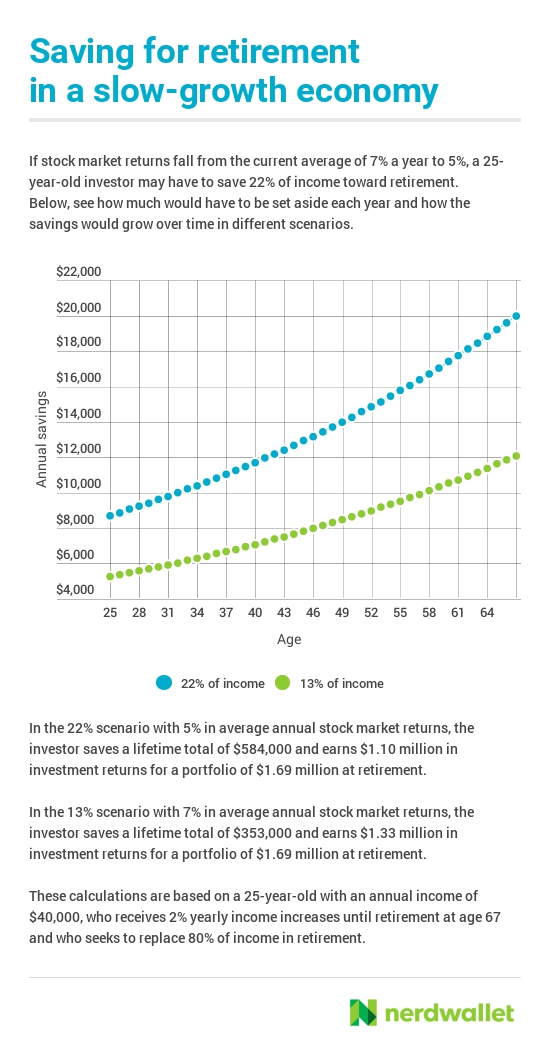
chart-1As my Financial Post blog today recaps, a new study being released today by the San Francisco-based personal finance site NerdWallet warns that just to retire by age 70, today’s millennials would have to save a whopping 22% of yearly income. Click on the highlighted text for the FP piece: Millennials may have less time on their side, U.S. retirement study shows.

The adjacent chart shows the math and how much millennials would need to save every year, depending on whether the stock market generates its historic 7% annual rate or the more pessimistic projections of 5%.

“Era of supernormal returns is over”

Continue Reading…

Debt-free in 30 podcast on Victory Lap Retirement

jonmikecropped
Doug Hoyes (in red), Mike Drak (C), Jon Chevreau (R)

As of Saturday morning, you can find a half-hour podcast conducted by Debt-free in 30’s Doug Hoyes about the new book, Victory Lap Retirement.

My co-author, Mike Drak, and I were in Waterloo last week to tape the session and sign a few books.

Click on the highlighted text here to listen to Victory Lap Retirement. EXCLUSIVE First Podcast Interview.

Or you can scroll down below for a lightly edited transcript of the proceedings.

But first, here’s an overview written by Doug Hoyes, co-founder of insolvency trustees Hoyes Michalos:

DougHoyesCanadaTrustee
Doug Hoyes

Doug Hoyes:

Today’s podcast is the first ever podcast interview with Jonathan Chevreau and Mike Drak together, talking about their new book Victory Lap Retirement.  This is so exclusive an interview that the book won’t even be officially released until October 10, 2016 but it is available for pre-order at amazon.ca, and the Kindle version is available now.

Jonathan was a guest back on Show #5 where we discussed his previous book, Findependence Day.

Mike Drak created the concept of a Victory Lap as an alternative to retirement, and teamed up with Jonathan to write their new book.

So what is a Victory Lap?

You will have to read the book for a full description, but as Jonathan and Mike and I discussed the concept of retirement has changed significantly.  Our grandparents and parents had a good chance of working at the same company until aged 65, and then retiring with a full pension before dying at age 70.

Today almost no-one works at the same company for their entire working life, and most employers no longer offer full pensions, so the old fashioned view of retirement at age 65 with a full pension is no longer reality for most workers.

Instead, we are working longer, and living longer.

The essence of Victory Lap Retirement is to leave corporate employment, which usually entails working for someone else, and enter a new and different phase of your life.

Mike and Jonathan wrote Victory Lap Retirement to show readers how to transition from a high stress work environment to a low stress sustainable lifestyle to enjoy a happier, healthier life.  For many, that may involve turning a hobby or passion into income during your “retirement” years, or working part time to “stay involved.”

Debt and Retirement

Debt is a prominent subject in Victory Lap Retirement, including this quote:

…make breaking free from the chains of debt your first priority.  Not only will debt limit your financial freedom severely, it will suck the life right out of you.

As we discussed, debt and retirement don’t mix.  When you retire your income decreases, so it’s likely you won’t be able to afford payments on a mortgage or other debt in retirement.  Get out of debt long before retirement.

Unfortunately that’s not always possible, which is why seniors are the fastest growing age group of people filing bankruptcy and consumer proposals. Older debtors, aged 50 and older, now account for 30% of all insolvency filings, up from 27% two years ago, and that number keeps growing.

Senior debtors, people aged 60 and over, have the highest amount of unsecured debt of any age group when they go bankrupt, almost $70,000.  A growing percentage of them even resort to payday loans to stay afloat.

If you’ve got debt, retirement is very difficult.  If you have trouble making your debt payments while you are working, it may be impossible to keep up when you retire and your income drops, which is why we all agree that eliminating debt is essential long before retirement.

In addition to eliminating debt, Mike and Jonathan suggest you ask yourself “what do I like to do?” and start planning your Victory Lap now. 

For more, listen to the podcast or read the transcript.

Transcript: 

Continue Reading…

Robo-Advisers disrupting wealth management industry but Service could determine how much

Male hands on the keyboard in front of computer screen with financial data and chartsAs my article in the print edition of Monday’s Financial Post goes into in some depth, the recently released DALBAR study on North American robo-advisers highlights several challenges the pioneering industry faces with new customers, or in poaching them from the established wealth management industry.

See the headline Service ‘gaps’ in robo advice: Dalbar study (page FP1). You can find the online version here under the headline ‘Robos are getting a pass’: Study points to gaps in automated investment advice.

Many older and wealthier clients may get “poached” from the traditional wealth management industry, whether retail mutual funds, banks, investment counsellors, full-service brokerage or other segments. Of course, in some cases, robo-advisers are landing “new” money from young people who may never have invested before. Millennials are a big focus of some robo-advisers (such as Toronto-based Wealthsimple).

Last Tuesday, the Hub ran a blog outlining the major points issued in the Dalbar press release, and we also published reaction from three Canadian robos: JustWealth, NestWealth.com, Wealthbar and the aforementioned Wealthsimple. See Becoming a Robo-Advisor Client may be challenging, Dalbar finds.

The 126-page study — which not all robo-advisers have seen — contains plenty of information that couldn’t be summarized in the FP piece. It begins by noting that these services are “one of the fastest growing segments in the wealth management space” and that they have “managed to capture significant share of wallet from the established wealth management providers in … a short period of time.” The report mentions that Wealthsimple has grown to $500 million in assets from a standing start in 2014.

The report has a relatively small sample size: 45 mystery shoppers  (15 US, 30 in Canada) were asked to sign up to various Robos. Almost half of them were in their 30s. To assess risk, Dalbar directed these mystery shoppers “to ask for high returns in a short time period to test risk response mechanisms.”

Below, I present some more highlights that have not yet been covered:

Robo firms covered in the Dalbar report

First, the report looked at five American robo-advisers and ten Canadian ones (interesting that there weren’t more US ones!)

The US firms were Betterment, Charles Schwab, Future Advisor, TradeKing Advisors and Vanguard. (interesting that the oft-cited Wealthfront is not in: Dalbar told me it was based on what clients chose.)

The Canadian firms were (in the order Dalbar listed them): BMO SmartFolio, Invisor, JustWealth, Modern Advisor, NestWealth, Questrade Portfolio IQ, RoboAdvisor Plus, Smart Money Capital, Wealthbar and Wealthsimple.

Why clients chose particular services

Asked why clients chose a particular service, 100% of Betterment clients cited convenience while 100% of Vanguard clients cited reputation. WealthSimple clients cited equally (25% each) advertising, convenience, executive team and reputation. Interestingly, 75% of BMO clients cited its bank affiliation, and 25% its reputation. Invisor was a 3-way split between advertisements, executive team and product selection. JustWealth was an even 4-way split between advertisements, reputation, convenience and — this is interesting — being the “first to return my initial contact.” The latter point also accounted for 25% for NestWealth, Wealthbar and Modern Advisor. For NestWealth, the other three reasons, all an equal 25%, were convenience, platform offered and reputation. For Questrade  Portfolio IQ it was 67% convenience and 33% reputation.

Reasons for Choosing vary with Client income levels

The report broke clients down into three clients with annual incomes that I’ll call low, medium and high: $60,000 to $75,000, $75,000 to $100,000 and $100,000 to $150,000 or more.

For the low-income clients, Convenience was most often cited, 30% of the time, followed by Platform Offered (26%) and Reputation (17%) and Pricing (9%).

For the middle-income clients, Reputation was most important, at 38%, followed by First to Return Initial Contact at 19%, executive team at 13%, and equal 6% allotments for Advertisements, Bank Affiliation, Convenience, Platform offered and Pricing.

For high-income clients, Reputation was most important in 33% of cases, followed by even 17% allotments to advertisements, bank affiliation, convenience and executive team. Remember these are small sample sizes, but none of the high-income clients even cited pricing, platform offered , product selection, or First to Return Initial Contact.

Motivations for trying a Robo-Adviser

Curiosity seemed to be a major driver for wanting to check out a robo service in the first place, Dalbar found, followed by lower fees and convenience. Not surprisingly, lower costs dominated for the high-income group, 83% citing it, followed by 17% time saving. For the middle-income group, 44% just cited the desire to try new technology; this was also cited by 30% of the low-income group. The two lower-income groups were also influenced by the fact robo-services let you start investing with relatively small amounts of money.

Cross-border differences in account opening times 

Time to open an account varied from five to more than 30 minutes in Canada. Canadian users needed up to six times more time to open than their US counterparts. 75% of US robo users needed just 10 or 15 minutes to open an account, while 70% of Canadian robo users needed 15 to 60 minutes.  Most Canadian users felt it took “too long” to open an account and US robos were perceived as being much easier to work with than their Canadian counterparts.

Dalbar singled out NestWealth as being most consistent, with most clients able to complete a risk assessment questionnaire in 15 to 30 minutes. US robo firms were faster but mostly because the questionnaires were shorter.

Aman Raina’s robo-experience

Continue Reading…