Hub Blogs

Hub Blogs contains fresh contributions written by Financial Independence Hub staff or contributors that have not appeared elsewhere first, or have been modified or customized for the Hub by the original blogger. In contrast, Top Blogs shows links to the best external financial blogs around the world.

A strategy for leasing a car in retirement

nissan2
2014 Nissan Versa Note

One of the features of the Decumulation years is making limited funds stretch. Below, early retiree and Montreal resident Michael Trani shows his analysis for his decision to lease rather than buy late-model cars for 20- and 30-year periods following his early retirement at age 55. He uses income from an investment to fund the lease, a strategy that lets him drive a new car every four years. He says he’ll never buy outright again. 


By Michael Trani,

Special to the Financial Independence Hub

A few months ago, for family-related reasons, I was forced to retire from my job at the relatively young age of 55. Yes, lucky me, I was now living the Freedom 55 dream! I was well aware that in this new phase of my life, my future earning capabilities would be severely restricted. Wishing to provide stability to my financial affairs, I embarked on a mission to essentially fix all the present and future costs I could control.

My first order of business was to develop a low-cost strategy to provide me with a car for the next 20 to 30 years.  While employed, I had saved quite a bit of money to purchase and carry out the required maintenance on a new car. However, now that I did not have the safety net of a job, I knew that once this money was spent, it would be gone for good. I certainly would not be able to replace it. I had been buying cars at 10-year intervals, and for my potential future car in 2024, things did not look good.

The solution to my predicament was simple. Why not simply invest the money I had saved in an investment that returned regular, monthly, tax-advantaged income,  then use this income to finance a car lease in perpetuity?

With the aid of a spreadsheet, I compared the cost of purchasing a new car for “cash” every ten years with a car lease financed strictly with the monthly distributions of my investment. My comparison looked exclusively at the 20- and 30-year timeframes, as these represent my future driving years. I also factored in the necessary tax treatment for the monthly distributions and the residual value of the investment.

The investment I used to finance my car lease strategy is: Investors Group Allegro Balanced Growth Canada Focus Class –T J DSC. This is a special balanced mutual fund that distributes 7% yearly on a monthly basis. The distributions are treated as a Return of Capital, and when all the capital has been returned (in approximately 15 years) the distributions become capital gains. I am sure that other well-established financial institutions will have similar products available.

In the following table I have summarized the findings of my comparison.

Comparison of car strategies for 20 and 30 years

Car: 2014 Nissan Versa Note

Duration of lease: 48 months


Car strategy 20-yr strategy; cost per month  20-yr strategy; total cost 20 years 30-yr  strategy; cost per month 30-yr strategy; total cost 30 years
purchase “cash” $300.60 $72,144.00 $300.60 $108,216.00
lease strategy $119.08 $28,579.76 $119.53 $43,030.76
savings of lease over “cash” $181.52 $43,564.24 $181.07 $65,185.24


Note 1: The lease includes the dealer-offered free scheduled maintenance for the duration of the lease (in this case 48 months) and a $600 winter tire credit ( ufficient to purchase 4 brand-new Michelin X-ICE tires)

Note 2: With the purchase “cash” strategy there is no free scheduled maintenance and no $600 winter tire credit

I was totally blown away by these results. Certainly, I had made assumptions in my calculations, but, nevertheless, it is clear that the leasing strategy considerably reduces the cost of financing new cars, in perpetuity I may add. The cost reduction is not trivial when I can lease a car with only a third of the money required to purchase that same car.

Leasing yields a new car every four years

Sure enough, I followed through on my plan. I implemented my investment strategy and recently leased a Versa Note. Now every four years I will have a new car. I realize that at the end of 20 or 30 years, I certainly will not own a car, but will instead own the units of the Allegro fund, which will continue to generate monthly income. I believe I succeeded in my mission to devise a low-cost strategy to finance my future car requirements. I will never buy a car outright again.

As a side note, while negotiating my car lease, I learned that car dealers are willing to give away quite a bit of goodies for free. I negotiated four years of free scheduled maintenance and four really good, brand-name, winter tires for free as well. What more could I ask for?

The following table I details all my calculations, to permit easy verification.

Fund: Investors Group Allegro Balanced Growth Canada Focus Class – T J DSC

Date: June-27-2014

Unit Value on this date: $10.8492

Monthly Distribution: $0.0616 per unit

To generate $332.50 monthly requires 5,397.7273 units or $58,561.02 to be invested in the Allegro fund (the initial cost)

20-year strategy          

Purchase price of a 2014 Versa Note:                  $19,072.00                   cash payment in full, assume value of trade-in cancels the sales tax

Average maintenance cost per year:                  $1,700.00

Total cost for 10 years:                                    $36,072.00

Total cost of purchasing per month:                  $300.60

Total cost for 2 cars over 20 years:                  $72,144.00


Leasing a 2014 Versa Note for:                   $332.50                  per month                                                                        line 1

Maintenance expense:                                    $0.00                  per month, free scheduled maintenance                                    line 2

Insurance for replacement value:                  $17.51                  per month, $840.40 for 48 months                                    line 3

Insurance for end of lease protection:                  $19.79                  per month, $950 for 48 months                                    line 4

For 20 years this will cost:                                    $88,752.00

The actual cost of leasing:                                    $67,513.02                  A. the initial cost of the Allegro fund + ((lines 2+3+4) x 240 months)

The capital gains tax:                                    $4,987.50                  B. to be paid on the distributions from years 15 to 20

The net cost of leasing for 20 years:                  $72,500.52                  C. defined simply as (A + B)

Residual value of the Allegro fund:                  $43,920.77                  D. value of the Allegro fund after all return of capital has been used up and units theoretically sold

The “true cost” of leasing for 20 years is:                  $28,579.76                  E. defined simply as (C – D)

The “true cost” of leasing per month is:                  $119.08                  F. defined simply as (E / 240 months)

30-year strategy

Purchase price of a 2014 Versa Note:                  $19,072.00                  cash payment in full, assume value of trade-in cancels the sales tax

Average maintenance cost per year:                  $1,700.00

Total cost for 10 years:                                    $36,072.00

Total cost of purchasing per month:                  $300.60

Total cost for 3 cars over 30 years:                  $108,216.00


Leasing a 2014 Versa Note for:                  $332.50                  per month                                                                        line 1

Maintenance expense:                                    $0.00                  per month, free scheduled maintenance                                    line 2

Insurance for replacement value:                  $17.51                  per month, $840.40 for 48 months                                    line 3

Insurance for end of lease protection:                  $19.79                  per month, $950 for 48 months                                    line 4

For 30 years this will cost:                                    $133,128.00

The actual cost of leasing:                                    $71,989.02                  A. the initial cost of the Allegro fund + ((lines 2+3+4) x 360 months)

The capital gains tax:                                    $14,962.50                  B. to be paid on the distributions from years 15 to 30

The net cost of leasing for 30 years:                  $86,951.52                  C. defined simply as (A + B)


Residual value of the Allegro fund:                  $43,920.77                  D. value of the Allegro fund after all return of capital has been used up and units theoretically sold

The “true cost” of leasing for 30 years is:                  $43,030.76                  E. defined simply as (C – D)

The “true cost” of leasing per month is:                  $119.53                  F. defined simply as (E / 360 months)

Montreal-based Michael Trani can be reached at michael_trani@hotmail.com.


Rising Life Expectancy: Are you ready for a 40-year Retirement?

ermosphoto
Ermos Erotocritou, CFP

By Ermos Erotocritou, CFP

Special to the Financial Independence Hub

Are you planning for a 40-year retirement?

The question may sound absurd but if you are a healthy Canadian in your 40s having a 40-year retirement is not just possible but very likely.

According to the World Health Organization, a male’s life expectancy in Canada is 80 and 84 if you are female. Let’s take the half-way point between 84 and 80 and say longevity will be age 82.

The median retirement age in 2011 was 63.2 for men and 61.4 for women. The half-way point will be age 62. It seems logical to calculate your retirement years as your life expectancy minus the age in the year in which you retire. If you retire at age 62 and expect to live to age 82 then you should save up enough money to generate income for 20 years right? Wrong!

Planning for your retirement paycheque is a lot more complicated. Life expectancy is a moving target. In Canada, we have increased life expectancy by 5 years over the past 25 years. Increased life expectancy has been consistent for decades and there’s no indication it will stop.

If we continue at this pace, we will add 10 additional years of longevity within the next 50 years. If you are in your 40s today, it’s quite reasonable to expect your life expectancy will increase from 82 to 92. But now it gets even more complicated. Life expectancy for a surviving spouse is longer than an individual’s. As long as one or both spouses survive, savings are required to support their retirement.

Estimating your own life expectancy

Continue Reading…

One can be retired and not financially independent or vice versa

MattArdrey
Matthew Ardrey, T.E. Wealth

By Jonathan Chevreau

The headline on today’s blog so perfectly sums up the subtle difference between “Retirement” and “Financial Independence” (aka “Findependence”) that I felt compelled to devote a whole blog to the idea.

It was used in a guest post that began this week via certified financial planner Matthew Ardrey.

Foundation is a paid-for home

Ardrey, who is with T.E. Wealth, seems to view the topic of Financial Independence just as we do on these sites, even down to the basic principle repeated often in the book to which our sister site (FindependenceDay.com) is devoted. In Findependence Day, one of the two financial planning characters, Theo, tells his young clients more than once: “The foundation of Financial Independence is a paid-for home.”

Here’s what Ardrey tells clients just starting down the road to Financial Independence:

I’m often asked how one can get to this wonderful nirvana known as financial independence. The first step is to pay off your home. By having a debt-free residence, you have eliminated what is most people’s largest single expense. Without this hanging over your head, you have freed up significant cash-flow.

Even Ardrey mistook FI for Retirement early on

Ardrey and I have followed each other on Twitter for some time. Ardrey posts as @MattArdreyCFP. But it was only recently, in response to something on one of these sites, that Ardrey casually dropped the fact that he’s been preaching Financial Independence (as opposed to traditional Retirement) to his clients since he entered the financial planning business at the turn of the century.

He noted that the financial planning software used at the financial firm where he got his start did not have a retirement calculator. Instead it had an an analysis tool on “Financial Independence Needs.” At the time, being new to the business, Ardrey thought it was just a fancy way of referring to retirement planning but as the years progressed, “I would soon discover that financial independence was something else entirely.”

So, to return to the headline today, what exactly IS the difference? Here’s the key passage:

Retirement, by definition, is the cessation of work with the intent of not returning. Financial independence, on the other hand, is having sufficient financial assets to have the choice about whether or not you continue to work. So, one can be retired and not financially independent or vice versa.

It’s all about Freedom of Choice

This is of course pretty much what I’ve been saying, or at least the characters in the book and ebooks: “When you’re financially independent, you work because you want to, not because you have to (financially speaking).” And that’s exactly what Aubrey tell his clients:

The main differentiator is freedom of choice. If you are not financially independent, you have no choice but to continue working if you don’t want to alter other aspects of your life. Once you are financially independent, you can choose if you want to continue to work in the same capacity – or at all. This freedom to choose is empowering and it’s what I encourage all of my clients to work towards.

Some real examples

So far in this blog, I’ve reiterated Ardrey’s views. I want to close with some examples closer to home. I can think of a few friends or family members who are “retired, but not financially independent.” One couple in particular comes to mind: they do not work and live entirely on government largesse: some combination of CPP, OAS and GIS. Once upon a time they owned a home , a cottage and a car but today they rent a small apartment above a store. They have time freedom, yes, but no financial freedom. They depend entirely on the one source of income from the Government and if that dried up, I don’t know what they would do. Even with it, they are severely constrained in what they can do. So they are indeed “retired, but not financially independent.”

For the opposite situation, I need look only in the mirror. My wife and I choose to continue to work, and keep deferring future income sources that could be taken now if we chose: employer pensions, CPP, drawdowns from registered and non-registered investments, etc. Our home was paid for early in the 1990s, our cars are paid for and we have no debt. We are in fact financially independent but NOT retired, paradoxical as that may seem.

And finally …

Today is Boxing Day and I will probably CHOOSE not to do much more work on these sites, or for paying clients, until the New Year begins, apart from a few pre-arranged pieces and guest blogs. I wish all readers a very Happy New Year. See you on the other side!

Merry Christmas!

IMG_3915Merry Christmas to all who have visited the Hub in the past two months.

Enjoy the holiday season but if you’re “enjoying” to excess, please let someone else drive!

We’ll be back on Boxing Day.

Last-minute gifts on a budget (yes, even gift cards!)

Beautiful gift cardFrom Sheryl Smolkin’s Retirement Redux blog comes this useful list of budget gift-giving suggestions for the holiday season.

Sheryl is a bit hard on gift cards, which I find perfect for younger people when you have no clue what they really want — plus of course, you can specify precisely how much you will spend for each gift-card recipient.

I find most millennials are quite happy with iTunes gift cards or, if they’re readers, with cards for Chapters or Amazon.

If you’re not convinced about gift cards read this piece from Time a few weeks ago about why some believe gift cards make the best presents of all.

Magazine Subscriptions

Next-Issue-Logos_Vertical-on-darkBeing a magazine guy on and off over my career, I agree magazine subscriptions are both affordable and have the advantage of showing up all year round.  The ultimate here is of course Next Issue, which has been characterized as the “Netflix of magazines.”

If the magazine lover you’re thinking of prefers tablets to filling the blue box with dead-tree editions, then Next Issue may be the way to go. However, at $10/month for monthlies and $15/month for weeklies and all other frequencies, it isn’t quite as affordable as a print subscription to a single publication, which often run about $20/year.

On the other hand, it’s certainly something a whole family could enjoy, with at least 140 magazines  to choose from, there should be something for everyone: a Yoga magazine for mum, for example, a golfing mag for Dad, a gaming magazine for the teens, etc.  It will literally be in your face (or that of the giftees) every day, depending on how many magazines are chosen (there’s no limit)

My only caveat: It can be a real time sucker if you are intent on getting your money’s worth from the subscription.  You may begin a given day all caught up on your magazine reading, only to find yourself at day’s end behind by three or four issues as new editions flow in. You feel a bit like the mythical figure, Sisyphus, forever rolling a boulder up a hill.

e-books

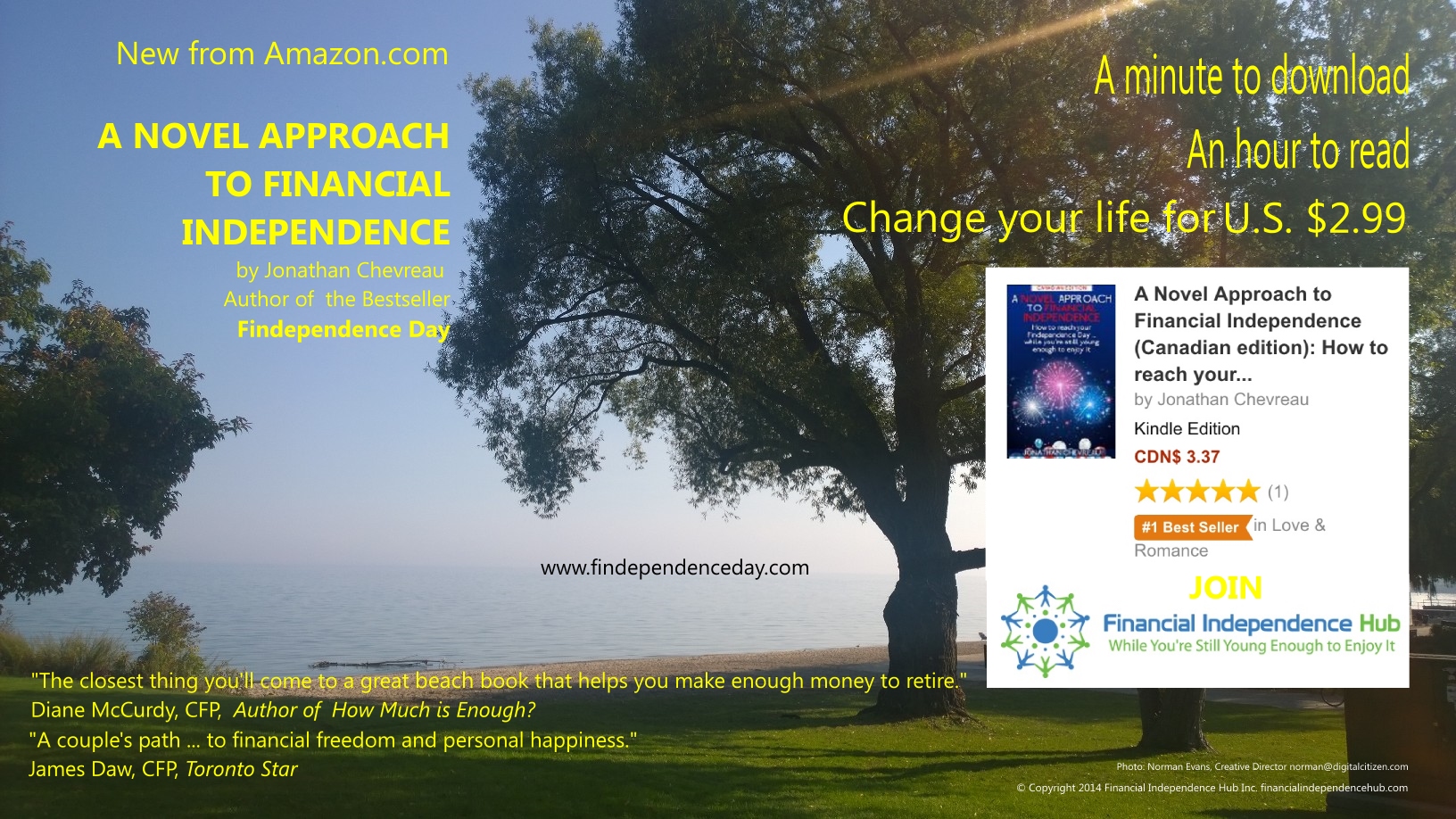
As a postscript, I may as well add a third suggestion: e-books. In particular, if you think US$2.99 or C$3.37 is a bargain price (and it is!), then consider the US or Canadian editions of my own e-book, pictured below.

You can find the US e-book at Amazon here. The Canadian e-book is here.

The good news is that while it may be too late to get physical books delivered from Amazon, you should be able to get an e-book delivered right down to the wire. And of course, Amazon does let you specify an e-book as a gift, provided you have the recipient’s email. If they don’t have a Kindle, they can download a free Kindle app for whatever device they have.

campaign5