
Hub Blogs

Hub Blogs contains fresh contributions written by Financial Independence Hub staff or contributors that have not appeared elsewhere first, or have been modified or customized for the Hub by the original blogger. In contrast, Top Blogs shows links to the best external financial blogs around the world.

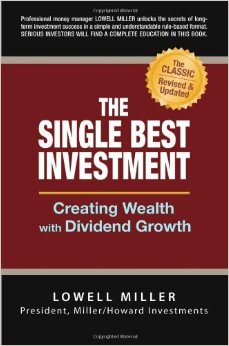
The Single Best Investment

singlebestBy Jonathan Chevreau

The Single Best Investment: Creating Wealth with Dividend Growth, is the title of a classic investment book first published in 2006 by Lowell Miller, who heads Miller/Howard Investments.

It came to my attention via Wes Moss, who I interviewed for an upcoming MoneySense column, whose book You Can Retire Sooner Than You Think we reviewed here at the Hub. I mentioned the book in passing last week in this MoneySense blog last week. That blog focused on asset allocation but provided a big hint about Miller’s philosophy: there’s no place for bonds in Lowell’s investment worldview.

The book’s first chapter sets the tone in its title: Say goodbye to bonds and hello to bouncing principal. Like many stock believers and bond haters, Miller takes it as a given that the investing environment generally includes inflation. Since “safe” investments like t-bills, bonds, money market mutual funds and CDs (Certificates of Deposits in his native USA; known as GICs in Canada) are all “poor investments because what they give is less than inflation takes away.”

Stocks are the only asset class likely to beat inflation in the long run, but the “price” of such an investment is volatility. Continue Reading…

Peter Grandich interviews Paul Philip about his conversion to DFA’s strategic indexing

Grandich-headshot_lo
Peter Grandich

Peter Grandich is a well-known financial and economic commentator and author, based in New Jersey. His fascinating story of financial success and setbacks and gradual transition to more spiritual matters can be found in his recent book, Confessions of a Wall Street Whiz Kid. ( I provided a testimonial.)  You can also get a free PDF version. Find out more at his website at PeterGrandich.com.

Paul Philip is a Toronto-based financial planner and head of Financial Wealth Builders Securities. I’ve known both gentlemen for years and can say they are intimately familiar with the concept of Findependence.

In the Q&A below, Peter asks Paul about his (that is, Paul’s) conversion from a belief in active security selection to strategic indexing via the index mutual funds of Dimensional Fund Advisors (DFA).

Yes, mutual funds, not ETFs. As you will see in the interview, the pair certainly sing the praises of this “best-kept secret” but I believe it’s in the best interests of consumers to learn about this firm and the advisors who are building practices sometimes exclusively around DFA index funds. I have in the past attended several all-day seminars presented by DFA Canada and personally own some of their funds (though not exclusively). Several other guest bloggers here at the Hub focus on DFA funds and Paul will be providing the Hub with a regular blog on these topics.  — Jonathan Chevreau

Peter:  Paul, what are your thoughts on investing in today’s uncertain times? Continue Reading…

Live long & prosper

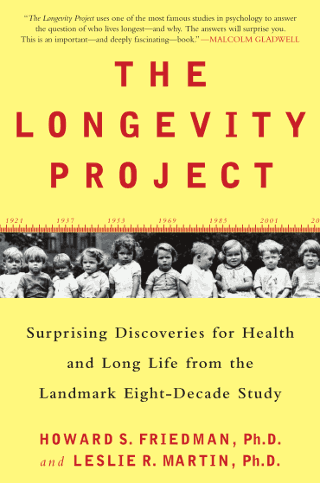
longevityprojectHere’s my latest MoneySense blog, which they’ve titled Working to Live Better, LongerSince it’s based on a reading of books about Longevity and even Immortality, we’re housing it here at the Hub in the Reviews, Encore Acts and Longevity & Aging blog categories.

Click on the red link above to reach the MoneySense version or if you want to see images of the book covers discussed, they are in the version posted below. (The two sites tend to use different images to illustrate):  Continue Reading…

Putting a ROBO adviser to the test, Part 2 (b)

Cute Robot

…. continued from Tuesday. Click here for Part 2 (a)) …

By Aman Raina, Sage Investors

Special to the Financial Independence Hub

CANADIAN STOCKS (PORTFOLIO WEIGHTING 10%)

ROBO Goal: Ownership share in companies based in Canada. Often over-represented in Canadians’ portfolios, but a major part of long-term returns.

ETF Used: iShares Capped Composite TSX Index (XIC) MER 0.05%

The investment seeks to replicate the performance, net of expenses, of the S&P/TSX Capped Composite Index. The index is comprised of the largest (by market capitalization) and most liquid securities listed on the TSX, selected by S&P using its industrial classifications and guidelines for evaluating issuer capitalization, liquidity and fundamentals.

Another go-to vanilla ETF, XIC,  provides exposure to the S&P/TSX Composite, which skews heavily into Canadian financials and commodity stocks. One bad habit Canadians investors get into succumbing to home country bias —  holding way more Canadian companies than foreign companies. The Canadian stock market represents only 6 per cent of the global market so it is positive to see ROBO allocating a  smaller weighting to Canadian stocks. It’s sad to say that in terms of investing opportunities, there are way way more of them outside Canada.

RISK-MANAGED STOCKS (PORTFOLIO WEIGHTING 10%) Continue Reading…

Putting a Robo-Adviser to the Test, Part 2 (a)

AmanRaina
Aman Raina, Sage Investors

By Aman Raina, Sage Investors.com

Special to the Financial Independence Hub 

 In my first post in this series I described the process I went through to setup a portfolio with a Robo-Advisor service (ROBO).  [The Hub’s version ran on Feb. 23: JC]

I contributed $5,000 to meet the minimum investment required and the account was set up.

Two business days later, the money was invested according to the asset allocation weightings  the ROBO created based on my responses to questions about my risk tolerances.

To recap,  this is my portfolio, along with portfolio weightings allocated by my ROBO:

Dividend Stocks 15%

Risk Managed Bonds 15%

Foreign Stocks 15%

US Stocks 15%

Canadian Stocks  10%

Risk Managed Equities 10%

Real Estate Stocks 10%

Emerging Markets 10%

The ROBO calculated my risk score to be 9, which is high.  According to ROBO,

“You seek a portfolio that provides long term growth. Your assets are invested primarily in equities. You accept a high degree of market fluctuation, with the goal of achieving superior long term returns. You accept that there will be times of negative performance.” Continue Reading…