Hub Blogs

Hub Blogs contains fresh contributions written by Financial Independence Hub staff or contributors that have not appeared elsewhere first, or have been modified or customized for the Hub by the original blogger. In contrast, Top Blogs shows links to the best external financial blogs around the world.

A rare breed of financial planner

Piggy Bank Cuts with Money Savings Financial concept on Chalkboard Background
Photo credit: iStockphoto

by Doug Dahmer,  EmeritusFinancial.com

Special to the Financial Independence Hub 

Retirement Income Specialists are a very rare breed of financial planner. So rare, in fact, that to date, the vast majority of North Americans are unaware of their existence and consequently very few have benefitted from the valuable, and much needed, services they provide.

This new specialized category of financial advisor is at the leading edge of strategically assisting North Americans to convert their accumulated retirement nest egg into a reliable and sustainable income stream.

Long-lived boomers face greater saving challenge

The challenges are not for the faint of heart. With baby boomers living longer, the years to be funded have increased significantly. There is no clear path to follow, as baby boomers are redefining retirement in terms of both planned activity level and their desire to slowly transition out of active employment.

Most importantly, baby boomers represent the first generation where the vast majority will be left to their own devices to cobble together a process to fund their lifestyle after work ends. Continue Reading…

“Stop Doing” # 3: Stop Investing Without a Plan

stevelowrie
Steve Lowrie

By Steve Lowrie, Lowrie Financial 

Special to the Financial Independence Hub

We’re on a roll with our “STOP Doing” ideas. In prior posts, we advised you to STOP feeding on junk media and STOP reacting to market noise.

Today, we’ll cover a great way to stop doing nearly every other bad investment idea out there: STOP trying to invest without a plan. Typically, this plan should come in the form of a detailed Investment Policy Statement (IPS) – a written agreement that you and anyone else who is helping you manage your money signs off on initially, and whenever you make changes to it.

Why be so formal about it? As a financial advisor, I often field questions from family, friends or acquaintances, asking me what I think about some current hot investment tip. The specific “opportunity” changes each time, but the reason I’m being asked about it does not. It’s almost always after strong past performance has captured everyone’s attention. A recent example: I was golfing with a friend last Sunday who proceeded to tell me about the great recent returns from Apple and Google. “If I had only had the guts to buy Apple at $6,” he bemoaned, “I would be really rich now.”

I think he was hoping I could name the next big Apple for him so, this time, he could get in on the action. Instead, I concentrated on my golf game – and mulled over how some things never change and some lessons are rarely learned.

The importance of a formal Investment Policy Statement

Continue Reading…

Weekly Wrap: ORPP gets flak, investors watch weights, the worst form of debt

2_hc1oqU
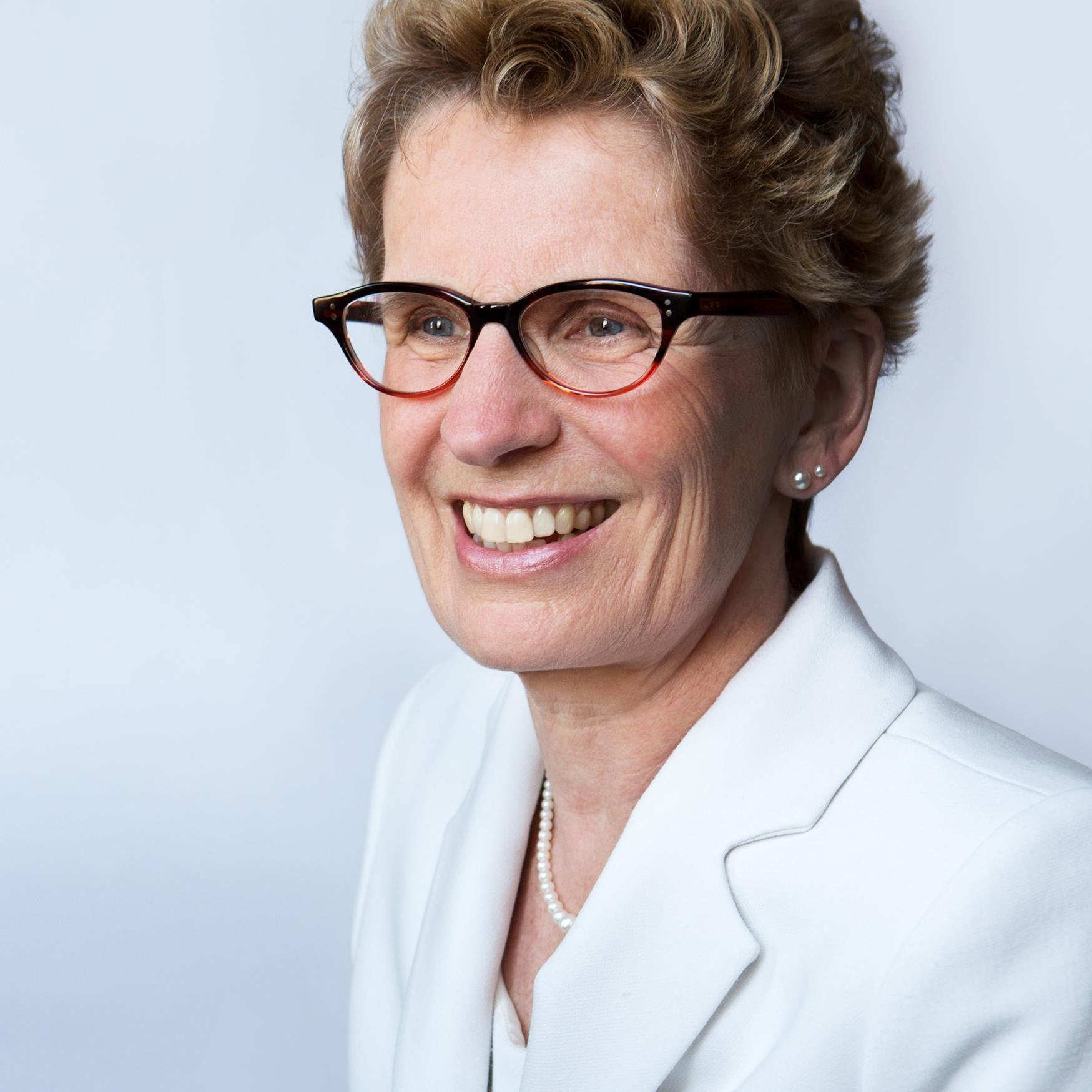
Ontario premier Kathleen Wynne (Twitter.com)

First an apology that there was no weekly wrap last weekend because of a long weekend I took up in cottage country. Summer is fast fading!

This week the big macroeconomic story was China’s devaluation and the consequent negative impact on global markets. Probably the least confusing and most insightful analysis of this story was in The Economist, titled The Devaluation of the Yuan: The Battle of Midpoint.

On the retirement front in this country, the controversial story was the Ontario Government’s unveiling of the details of the much-loathed ORPP, or Ontario Retirement Pension Plan. This appears to becoming an election issue as the animosity between Stephen Harper and Ontario premier Kathleen Wynne heats up. We did weigh in with a recap on the Hub, which you can find here.

Note the references to two studies that came out hours before the official ORPP announcement, providing a little grist for the mill for both fans and foes of the plan. My own take on this will be in an upcoming Motley Fool blog but the main critiques of the ORPP — and there were many — are summarized below.

10 reasons ORPP should be T-ORPP-EDOED

Continue Reading…

The Sabattical as a Dress Rehearsal for Retirement

Adrian
Adrian Mastracci, KCM Wealth

By Adrian Mastracci, KCM Wealth Management

Special to the Financial Independence Hub

“Life is a great big canvas, and you should throw all the paint on it you can.”
— Danny Kaye, (1913 – 1987), actor, singer, dancer.

“We are often reminded of not pursuing enough personal enjoyment. Well, here is to rectifying that — your coveted sabbatical.”  — Adrian Mastracci.

How many dream of arranging a sabbatical — not just a vacation? Leaving the office behind for a long time — say, three months to one year, maybe more.

blue, green and white oil paint on canvas

I can attest from experience, having had a 17-month one, that a sabbatical is magnificent.

I threw some paint on my canvas of life — it’s one of the best personal investments I’ve made.

Sabbaticals are well known among educational institutions. Teaching faculty often arrange one to pursue research and personal interests.

Sabbaticals have plenty of appeal.
Imagine an extra long time to pursue whatever you fancy, without your ties to the office.

My 17 months away from the office were a series of very refreshing experiences.
I had no pressing daily agenda, long lunches, pursuing avenues of interest, travel and no need to rush anywhere.

A sabbatical offers immense personal satisfaction. It can be a time to reflect, explore, slow the pace, relax and change.

Perhaps, all of these at once. Think of it as your dress rehearsal to a healthy retirement.

Adrian’s sabbatical tips

Continue Reading…

Ontario Retirement Pension Plan to roll out from 2017 to 2020

Minister Robb with Ontario Premier Kathleen Wynne, Northern Development and Mines Minister Michael Gravelle, HOM Tony Negus and Consul General/Senior Trade and Investment Commissioner Portia Maier.
Ontario premier Kathleen Wynne (Wikipedia)

The National Post today reports the Ontario Government has revealed more detail today about its oft-criticized Ontario Retirement Pension Plan or ORPP. As it reported in a later update, staff at the province’s bigger employers will have to start paying into the plan by 2017, with a full rollout by 2020.

Employers will be exempt only if they already offer a mandatory Registered Pension Plan that Ontario deems comparable to the ORPP.

In 2022, Ontario residents who are 65 or older can start drawing benefits from the ORPP. Full-time or part-time workers  can  start contributing at 18 and continue until they turn 70.

While Premier Wynne has not released cost estimates of the program, the Post reported the plan will collect 1.9% of a workers’ income up to $90,000 from both employers and employees to a total of 3.8%, or a combined total of $3,420 a year

Meanwhile, proponents and critics of the plan got a little more ammunition from two different retirement reports produced by the Fraser Institute and the Mowat Centre.

Released Tuesday, the Fraser Institute report is titled Lessons for Ontario and Canada from Forced Retirement Savings Mandates in Australia. It suggests that if Canada really needs more “forced” retirement savings, Ontario should look for global examples that could be alternatives to its current plans for the ORPP. For example, it should look at Australia’s “superannuation” program, a contribution-based scheme to which both employers and employees must contribute. Australia’s system of “individual accounts” provide more flexibility and choice than, for example, the Canada Pension Plan (CPP.)

Like the CPP, the ORPP is a “collective” pension plan that pay out defined benefits over a lifetime. The paper by the Mowat Centre (titled Lower Risk, Higher Reward: Renewing Canada’s Retirement Income System) says the Australian plan has had “mixed” success because as a Defined Contribution plan it doesn’t guarantee a set income for life, as does the CPP and DB pensions in general.

Middle-to-upper income earners may need more help

Continue Reading…