Hub Blogs

Hub Blogs contains fresh contributions written by Financial Independence Hub staff or contributors that have not appeared elsewhere first, or have been modified or customized for the Hub by the original blogger. In contrast, Top Blogs shows links to the best external financial blogs around the world.

Book review: The Crash of 2016

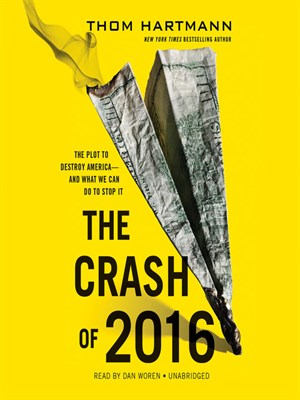
crash2016Regular Hub readers may find this blog post familiar. That’s because it originally ran this time a year ago: in January 2015. Given that the year 2016 is now actually here, and last week’s market activity certainly had “crash-like” elements, it seemed appropriate to bring this one back  to the top of the queue. Starting with my byline below, the review is as it appeared a year ago: In a couple of spots, I’ve added editor notes to clarify dates and timing.

By Jonathan Chevreau

.As a rule, I avoid reading too many financial books based either on Greed or Fear. Still, when you have a good chunk of your net worth invested in the stock market, it’s hard not to have a twinge of doubt when you encounter books like Thom Hartmann’s The Crash of 2016.

I paid no attention to this book when it was published late in 2013 but now it’s 2015, well, 2016 isn’t so far away now, is it? (editor’s note: that was the review’s original sentence; of course, it is now 2016).

Why am I writing about it now? I wasn’t responding to a belated PR campaign by the publisher (Hachette Book Group) but stumbled on it while searching for other books on Kindle. The Kindle sample on offer didn’t enlighten me much about the author’s thesis (that should have been a clue!) so I ordered it from the local library, not feeling any urgency to get my hands on it.

Indeed, the last time I read such a book was Harry Dent Jr’s The Great Crash Ahead and of course so far that prediction has yet to manifest. Continue Reading…

Falling Loonie strategies

The Canadian dollar or loonie is under pressure amid weak oil prices and a strengthening U.S. currency. Today, the loonie dropped to 78.39 cents for a U.S dollar the lowest in a many years.By Adrian Mastracci, KCM Wealth

Special to the Financial Independence Hub

“Investors who have US cash and/or US portfolios are advised to revisit their currency strategies.

Canada’s Loonie has been falling to under 70 Cents against the US Dollar.
Recall it climbed from near 86 cents in mid-2009 to over parity.

Many market forces, such as currencies, are well beyond investor control.
Currency adds yet another potential hazard or reward to portfolios.

Of course, currencies are extremely hard to predict. They can also move very quickly in either direction.

Treat currency as an asset class

Treat currency as an investment with longer time horizons. Those with US cash and/or US portfolio may consider the merits, if any, of converting to Canadian Dollars.

It is important to get a handle on the Canadian tax cost of the US cash/portfolio before taking any action. It may also make good sense, depending on account values, to convert on more than one occasion.

Other considerations: Continue Reading…

The economy in 2016: half-speed ahead

Couple Relaxing on BoatBy Aubrey Basdeo

Special to the Financial Independence Hub

Coming off a tumultuous 2015, Canadians are ready for some good news in 2016. When it comes to the economy, however, they might have to wait a while longer.

This is not to say we foresee uniform doom and gloom. One bright spot remains the U.S. economy, which was given a vote of confidence last month when the Federal Reserve raised its target interest rate. If the U.S. expansion is as robust as the Fed thinks it is, that should bode well for the Canadian economy and exporters, which rely heavily on the American market.

On a broader level, the Fed liftoff was also a signal that monetary policy, which has dominated the macroeconomic landscape for years now, will be less important going forward. The days of easy money may have begun to draw (slowly) to a close, and as they recede we’ll have a clearer picture of other factors – like the business cycle and asset valuations – which have been masked by accommodative monetary policies for nearly a decade.

But we might not like what we see. Growth globally is poised to be slow in 2016. Canada’s prospects will be tied to this low-flying trajectory, in large part because there are so few potential growth drivers in the domestic economy.

5 reasons for only modest growth in 2016

Continue Reading…

Sell everything? Consider these costs and drawbacks first

Depositphotos_14227153_s-2015My latest Financial Post blog addresses the controversial call earlier this week from the Royal Bank of Scotland to “sell everything.” Click on this headline for the blog: If you try to time the market to sell everything you have to time it to get back in.

In a nutshell there are both commissions and taxes to consider. It all depends on whether you’re in discount brokers, full-service brokerages or use Managed Money, and the split between Registered and Non-Registered Funds. It’s going to cost much more to liquidate individual stocks in a taxable portfolio than a single “Go anywhere” global ETF held in registered accounts. And depending on the kind of mutual funds you own, the costs could be negligible or significant.

Guess what Buffett isn’t doing right now

See also an excellent piece by investment writer Dan Solin that ran in today’s Huffington Post: What Warren Buffett isn’t doing. For starters, he’s not listening to media pundits. As Solin points out, the financial media loves market crashes because it creates fear and anxiety, hence more TV ratings or web traffic. And the more people panic by “selling everything,” the more commissions generated for the financial industry, as we demonstrated above.

If anything, people should be considering buying if markets sag much further, the very opposite of selling everything. But that’s a topic for another day. Generally, though refer to the series of videos we’ve been running the last few months, including the one earlier today titled Winning the Loser’s Game, part 5.

Video: How to Win the Loser’s Game, Part 5

UntitledThe fifth video instalment in SensibleInvesting.TV’s How to Win the Loser’s Game has been posted here and at Findependence.TV.

Often we hear say someone ask us the question, “Do you play the market?” The answer should be a resounding no, as the market is not a game. In fact, it’s quite scientific. A trio of Nobel Prize winning economists each have created a model that better helps us to understand the science behind the market.

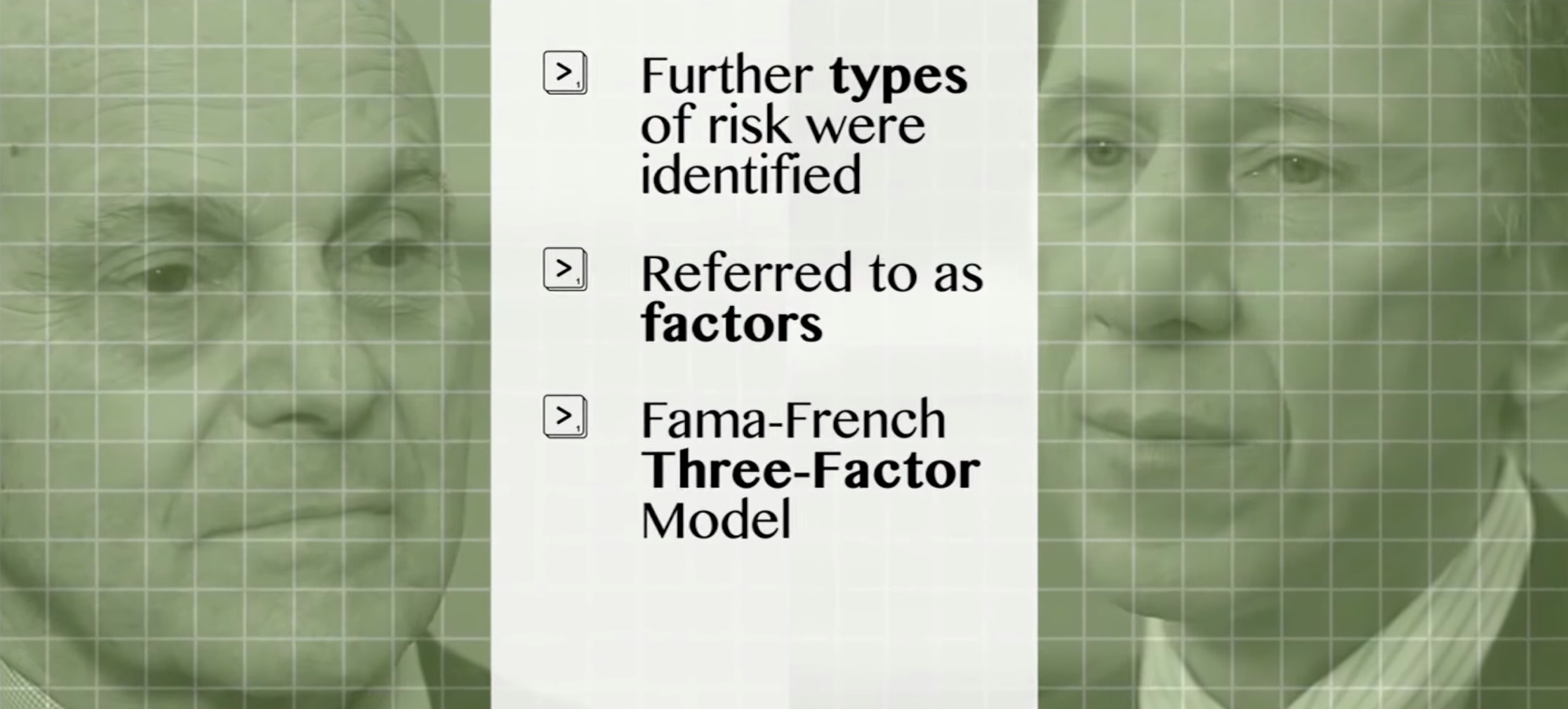
This 8-and-a-half minute video features interviews with various executives from DFA and Vanguard and reviews the groundbreaking academic research on modern portfolio theory spearheaded by Harry Markowitz, William F. Sharpe and Eugene Fama. The screen shot above shows Eugene Fama on the left and DFA board member Ken French on the right. Continue Reading…