Hub Blogs

Hub Blogs contains fresh contributions written by Financial Independence Hub staff or contributors that have not appeared elsewhere first, or have been modified or customized for the Hub by the original blogger. In contrast, Top Blogs shows links to the best external financial blogs around the world.

Video: the age-old debate of active management vs. indexing

Screen Shot 2016-05-23 at 3.03.36 PMWhen it comes to investing philosophies, there are two camps that are almost diametrically opposed: so-called “active” security selection practiced by mutual funds, hedge funds and similar vehicles; and the low-cost “passive” approach epitomized by index funds and ETFs.

A good summary of this old chestnut can be found in the latest FWB TV video, which runs just under four minutes. It can be found by clicking on this highlighted link: He said, she said: the active versus passive argument.  In the investment industry, “she” is correct and her name is SPIVA® (S&P Indices Versus Active).

Is Mr. Active telling us the whole story?

Continue Reading…

Book Review: Blockchain Revolution

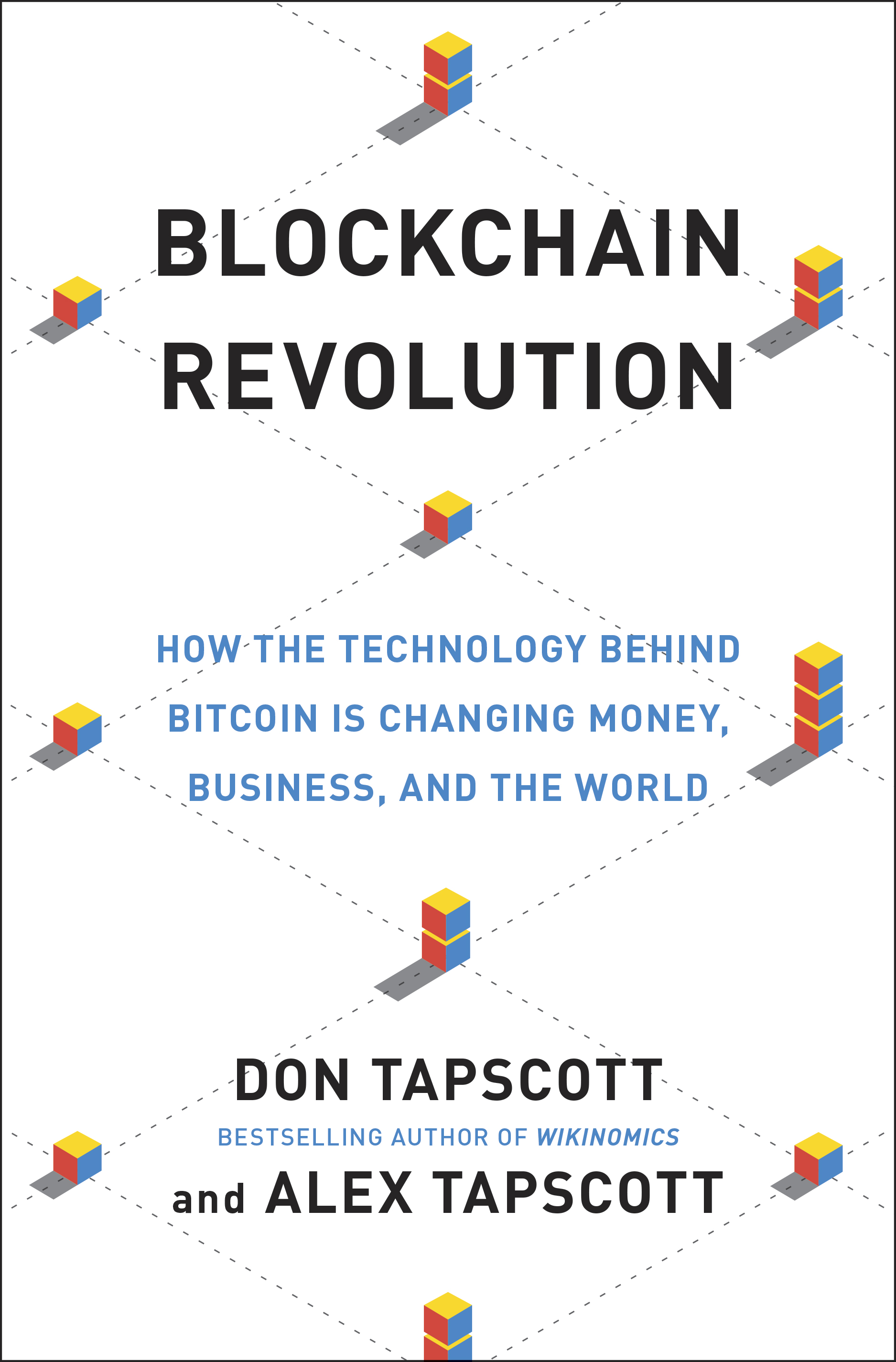
9781101980132_Blockchain_final process.inddTechnology guru Don Tapscott, together with his investment banker son Alex, makes a bold claim on the subtitle of the pair’s just-published book, Blockchain Revolution (Penguin Canada, Toronto). They promise that the “technology behind Bitcoin is changing money, business and the world.”

Certainly Bitcoin and Blockchain technology are something anyone in the financial services industry needs to pay attention to. The first of seven chapters on Transformations is devoted to reinventing the Financial Services Industry, which the authors dub “the world’s second-oldest profession.”

The global financial system supports a global economy worth more than $100 trillion, making it the world’s most powerful industry and foundation of global capitalism, the authors write. And yet, with some of it still running on 1970s mainframe computers, close up the financial system is a “Rube Goldberg contraption of uneven developments and bizarre contradictions.”

If ever an industry were ready for disruption, this one would appear to be it. In an interview at the book launch, Alex Tapscott told me that true “fin tech” (financial technology) is based on the blockchain. And blockchain itself is what The Economist magazine dubbed “The Trust Machine.” Accordingly, the Tapscotts’ book begins with a chapter titled The Trust Protocol.

Distributed Ledger Technology

Continue Reading…

ETFs break past $100 billion milestone in Canada

Tiwari_Atul_11_bBy Atul Tiwari

Special to the Financial Independence Hub

Last Friday, ETFs (Exchange-traded Funds) surpassed the magic $100 billion mark in assets under management in Canada and hopefully, continued growth in the markets and sales will keep us moving forward. But this milestone signals that many investors are gaining greater appreciation for these powerful, low cost and transparent investment vehicles.

And the industry is growing rapidly with new providers and products joining the ranks, regulatory changes on the horizon and technology changing the investment management field, like it has many others.

But the doubling of assets and tripling of ETF providers since 2010 is an indication that ETFs are being integrated into more investors’ portfolios. We see this every day with a growing number of ETF options and lower costs across the industry.

While there are a multitude of factors for the rising popularity of ETFs, I wanted to take a deeper look into four in particular.

  • The rise of indexing.
  • Increased competition.
  • Regulatory efforts to increase the transparency and awareness of investment fees.
  • More fee-based financial advisors.

The rise of indexing

Canada was an early innovator in ETFs, as the first ETF in the world was listed here in Canada 26 years ago. Continue Reading…

The 2-letter 4-letter Word

Gignac - Headshot - 2013By Robert M. Gignac

Special to the Financial Independence Hub

One of the things I love about my job is that I get to have interesting and passionate conversations with North Americans regarding money, personal finance and fiscal responsibility. We all have a relationship with money – sometimes it is a good relationship – sometimes not.

I spoke at an event in Victoria, B.C. recently and during the Q&A portion a guest asked the following question: “What is the one biggest thing I can do to improve my financial situation?”

Now, I’m a firm believer that there is no single thing we do that makes us financially successful – it’s the repetition of a variety of little things, done over and over and over that make us successful. I could tell from the way the question was phrased and the rather emphatic index finger in the air as they asked the question – they were looking for “one thing.”

Looking for one big answer

While the silence seemed to hang in the air, an audience of 250+ waited for the answer. I took a sip of water from the glass on the table and hoped they were going to be happy with what I had to say: “There is no one “biggest” thing you can do – but – if you’ll humor me for moment – I’ll share with you what I think the one biggest word is? How’s that?” Continue Reading…

Millennial Blog Wrap: Cheap vs Frugal and Chronic Money Stress

Beautiful young woman listening to music and having takeaway coffee outdoorsby Helen Chevreau, Hub Staff

This short and to-the-point post from Budget Bloggess is here to quell all our concerns about the millennial generation being frugal. Sure, the word ‘frugal’ may get some flack for its apparent likeness to ‘cheap’, but oh how different the two really are. If you were ever unsure as to whether cutting up your old t-shirts to use as dishrags qualified you as cheap, you can stop worrying. Thanks to Toronto-based Budget Bloggess for putting my mind at ease:  I’m not cheap, I’m frugal.

Have Your Latte

 We’ve probably all been told at this point in our financial journeys about the magical ‘latte factor.’ You know the one:  if we just save the $5 a day we would normally spend on our Starbucks, we’ll be rich before we know it. Of course there’s nothing wrong with this tactic. However, this new post from My Money Counts will definitely help us put that $5 in perspective when compared with the “4 expenses that will steal your savings.” Those being expensive car payments, having too much house, insane student loan debt, and of course, credit-card debt. It is a well-informed look at some of the most common and burdensome factors that contribute to young peoples’ savings struggles. And, if nothing else, it’ll make you feel a little less guilty about that double mocha frappucino!

 Chronic Money Stresses?  Continue Reading…