All posts by Jonathan Chevreau

How savers can cope with minuscule interest rates

Joe Atikian Saving Money Book
Joe Atikian

By Joe Atikian

Special to the Financial Independence Hub

Savers almost everywhere have nearly been beaten into submission by seemingly perpetual Zero Interest Rate Policies (ZIRP) imposed by central banks around the world.

The simple connection is that when interest rates are low, there is no incentive to save money. The flip side is that low interest rates make borrowing cheap, so people raise their debt load. So, is it still worthwhile to save when interest rates are low?

Continue Reading…

Indexing guru Andrew Hallam’s three book recommendations

mthands
Andrew Hallam

By Jonathan Chevreau

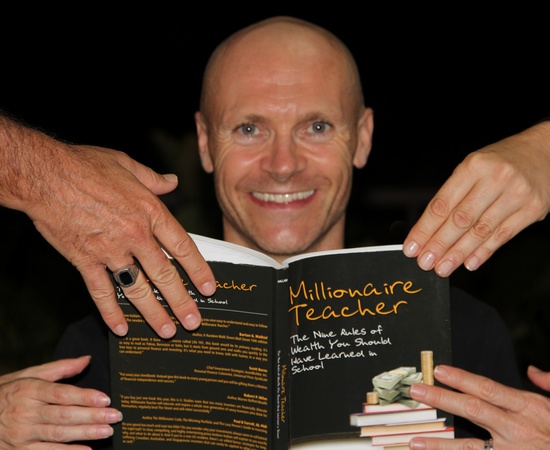
Indexing evangelist Andrew Hallam, also author of Millionaire Teacher, recommends “three good investment books you’ve probably never heard of”  in a column in the Globe & Mail.

As recounted in his own book, and columns in MoneySense and elsewhere, Hallam used to buy individual stocks until he realized the error of his ways and switched to indexing: and not just “core and explore” but 100% indexing. If you feel like following suit but don’t want to pick your own ETFs at a discount brokerage, check out Sandi Martin’s excellent piece on how to choose a robo-adviser, right here at the Hub. Continue Reading…

Guest Blog: How to pick a robo-adviser

Sandi-Casual-Small
Fee-only Planner Sandi Martin

By Sandi Martin

Special to the Financial Independence Hub

In general, I don’t believe there’s ever much new under the investment sun; common-sense, low-cost, boringly well-diversified and regularly rebalanced portfolio management doesn’t sell newspapers, does it?

But the advent of online investment advice and management (robo-advisors, if you prefer) to the Canadian market is news, and — unlike much of what passes as financial “news” these days — it’s news that regular investors pursuing findependence should be paying attention to. For once, it’s an innovation whose promise to make common-sense investing cheaper and easier — and findependence closer — is believable.

I have only one caveat, and it’s for those of you close enough to findependence to start thinking about spending that money rather than saving it: the decumulation advice that these companies are offering now hasn’t had a chance to mature and develop as fully as it should.

It seems that the broad attitude is “yes, it’s important and we want to offer great withdrawal planning, but we’ll develop an advice framework and some good tools for that once we have more clients who are closer to needing it”.

How (and Why) to Choose between NestWealth, Wealth Simple, WealthBar, Shareowner and Steadyhand

The point of this post: Each online investment management company has a slightly different fee structure and value proposition. Calculating their relative cost for your circumstances will let you compare their relative value depending on the kind of service you want to pay for. (Includes a link to the Canadian Online Investment Advisor Fee Calculator.)

Canadian investors have traditionally had three choices for their savings:

  1. Open up a self-directed brokerage account and invest directly in stocks, bonds, ETFs or mutual funds.
  2. Go to the bank or invite that mutual fund/insurance salesperson you met while you were dropping your kids off at school over to your house, who will sell you mutual or segregated funds that cost in excess of 2% per year and pay her a commission based on the kind of funds they are and how expensive they are for you to own.
  3. Find a fee-only investment manager close enough to you to do business with, provided you have enough money (somewhere in the $500,000 to $1,000,000 range), and feel that paying 1-1.5% annually on that money is worth the management and financial planning advice you’ll get.
As a financial planner and occasional personal finance blogger, it’s really very tempting to look at each of these companies and declare a winner based on cost alone, or the combination (or lack) of services I value most, or what I think the average investor should want from portfolio construction.
But the reality is that each of us falls somewhere along parallel spectrums: an ability spectrum that moves from “comfortable with DIY” to “needs full-service advice,” and an asset spectrum that starts at “small nest egg” and runs all the way to “significantly large pile of money.” In short, you and I and the neighbour across the road might all need more or less help with more or less money, and while one provider might be a perfect fit for me, another might be just the ticket for you.


I unequivocally believe that — provided you have the relatively small amount of time necessary to set it up and maintain it and the relatively large amount of intestinal fortitude to stick with your plan no matter what the markets are doing — a self-directed, simple Couch Potato portfolio of low-cost, index ETFs is the best investment strategy for most Canadians.

A reasonably intelligent person should be able to follow an able guide like John Robertson’s soon-to-be-released The Value of Simple and do just fine, sometimes in combination with the service of an advice-only planner like me or most of the people on this list from MoneySense Magazine, or possibly by paying for the DIY Investor Service offered by PWL Capital to get set up.

 Advantages of getting your money managed
 

But there are valid reasons to want someone else to manage your investments on an ongoing basis for you. Sound asset allocation, rebalancing across multiple accounts, and tax-efficiency can be worth paying for if you’re not going to be up to bothering with it yourself.  And the value you get from having a calm sounding board when markets (or market noise) get crazy might actually be priceless if — like most of us — you’re tempted to get out of the market when you shouldn’t and question your plan just when you should be sticking to it dispassionately.

Really Important Sidebar

I want to be really, really clear about costs here: the lower you can get your annual investing costs, the better off you’ll be. This can’t be overstated. Seemingly small amounts add up over a lifetime of investing to very large amounts of your savings (see this post from Michael James on Money for a good set of charts). However, the question shouldn’t be “what’s the lowest cost?,” it should be “what’s the lowest cost that I will stick with?”

I also want to be clear that “investment management” and “financial planning” are not the same thing: financial planning is the context, the “what do I want my money to do for me,” and investment management is the tool, the “and this is how my money is going to do it.” It’s one of many tools, and (often) not the most important one. (End of Really Important Sidebar

Online Investment Option Calculator

If you’re seriously looking at what the online advisors are offering (and you should be), I’d invite you to use the Canadian Online Investment Option Calculator** as a starting point to calculate the relative cost of each service. With that information, you can compare the different services based on where you fall on the “how much money do you have?” spectrum. That’s the objective part of the choice.

The subjective part of the choice (although each provider would probably argue it’s not subjective at all) is all the rest of the information you should spend some time gathering, preferably by calling each provider available in your province or territory, telling them where you fall on the “needs little advice” to “needs lots of advice” spectrum, and simply asking:

  • how the portfolios are constructed
  • how often they’re rebalanced
  • what institution is the custodian for your money
  • whether financial planning is included in the fee, if it’s purely investment management, or if all you’re paying for is access to the model portfolio with no other advice
  • whether your money is managed across accounts as a single portfolio or whether each account is managed separately
  • how simple it is to give them your money and get on with your life, and how simple and jargon-free the statements, online dashboard, and any ongoing communications are
  • how often you’re able to talk to someone if you need to get persuaded off the ledge while the markets go crazy
  • how well-developed their retirement income and decumulation strategies are
Again, the answers to these questions and the results of the calculator should function as a guide to your decision. The decision itself is yours, and might be based on characteristics that I haven’t even mentioned.

If you’re investing at the bank or with a salesperson that comes to your door, and have decided against investing on your own, write this down on a piece of paper right now:

“I will give myself until (date — no more than a month from now) to investigate the different online invesment options, and then I will decide on one and start the transfer process”

If you’re investing with an asset manager who’s charging you a percent of your total assets to manage them, and have decided against investing on your own, write this down on a piece of paper right now:

“I will give myself until (date – no more than a month from now) to investigate the different online investment options, compare the service they offer to the service I’m actually getting from my asset manager, and then I will decide whether to continue with my asset manager, negotiate a lower fee, or start the transfer process”

Or you can make a decision by virtue of not taking any action at all, and continue to pay for an Advisor Six-Pack, pay a high price for services you’re not actually receiving, and be more susceptible to fear, error, bias, and fund-of-the-month-itis.

*Not to be confused with their build your own portfolio service, which – for the purposes of this comparison – isn’t a contender.

**I have to thank John Robertson, blogger behind holypotato.net and author of The Value of Simple for his invaluable assistance with the vagaries of conditional formatting and =if formulas, as well as Randy Cass of NestWealth, Tea Nicola of WealthBar, Michael Katchen of Wealthsimple, Bruce Seago of ShareOwner, and David Toyne of Steadyhand for their remarkably candid responses to my very wordy emails and many, many questions. Any errors in either the calculator or the information are purely mine.

Sandi Martin is an ex-banker and fee-only/advice-only financial planner who specializes in working with regular folks who suspect their money might be a bit of a mess. She lives in beautiful Muskoka with her husband and three children, and works online and by phone with clients across Canada. (You can also find her listed here at the Hub under the Getting Help tab).  This piece is adapted with Sandi’s permission from one that appeared on Nov. 18th on her Spring blog.)

Destination Early Financial Independence: “Retiree at 43”

rossgrant
Ross Grant, Findependence 43

By Ross Grant

Special to the Financial Independence Hub

I recently connected with Jon Chevreau, who invited me to contribute with a guest blog here on the “Financial Independence Hub”.  I am honoured to participate and hope that sharing my financial independence experience will be of value to you.

At the relatively young age of 43, my wife and I were able to leave the full-time workforce. We were fortunate to have achieved this by establishing a financial plan in our early 20s and then selecting investment strategies that could get us to our goals as quickly as possible.

As fresh university graduates, we had very little in the way of assets. We both started in engineering careers in Toronto. We had your typical expenses with a mortgage, two cars and raising two daughters. How did we save enough in 21 working years to be able to have the choice to not work now? The short answer is that we looked for opportunities to ensure that our savings were as high as comfortably possible and then we focused on ensuring those savings were growing well.

Term Financial Independence was less common 7 years ago

When I left full-time employment, over seven years ago, I told people I was “retiring.” The term financial independence wasn’t as common back then. Unfortunately, there is a negative connotation associated with the term retiring. People seem to picture rocking chairs, watching TV and boredom. I pictured free time, skiing, mountain biking, travelling and all the other things you could do in the world if you weren’t working for 40+ hours per week. I had a great job as an Engineering Manager but really enjoyed my activities in my personal time more than work. I think this is common for most of us.

Destination EFI - CoverLast year, my youngest daughter started her first full-time job. I realized that if she could learn from our financial journey, it would be a great benefit to her. By passing on many fundamentals learned on our path to early financial independence, she would have a great jump-start in obtaining her financial goals. I decided to write a step-by-step book, in a series of letters, so our daughters would have a good financial education base to start with. During my writing process, I realized that publishing my letters in an e-book that I titled, Destination: Early Financial Independence, could benefit others. The e-book is for both for people starting to invest and for those who have been managing their portfolios for some time. My wife often reminds me she is so grateful that I have documented this for her learning too.   I share our personal roadmap from our first jobs to where we are today, managing our own portfolio in retirement with minimal time requirements, yet achieving above-average results.

Our steps can be replicated by others

I always believed the steps we took and the investment process we followed were all quite simple and the outcome could be replicated by others, if they only knew it could be done. When we “retired,” I knew a lot of friends and family thought we were crazy. They were all polite about it, but I could tell from their questions that they didn’t expect us to really stay retired. We would either run out of money or just get bored.

My prior work colleagues started a betting pool as to when I would go back to work. I am happy to report that no one ever won the pool. I wish when I started our financial planning, I had a book I could have referenced that said, “No Ross, you aren’t crazy. Your calculations are correct and you are on the right track. You have actually used conservative estimates and don’t need to worry about running out of money. It’s a beautiful Monday morning, go cycling!”

Fortunately, in the last couple of years, I have come across a number of firsthand accounts of people who have left the work force early, so I am now more confident it is a goal that can also be achieved by others. By documenting and sharing our story, including strategies and processes, I hope you will find many tips that will be helpful towards your Financial Independence!

Below, I have attached the details of how to obtain my e-book, if you are interested.

The book can be read with free e-reader software if you do not have a Kindle or Kobo device.  Links to the free e-reader software is at the bottom of this blog.

Destination: Early Financial Independence, By Ross Grant is available for $5.99 + applicable taxes, on Amazon.

It’s available at Kobo too.

Ross is a contributing writer for Canadian MoneySaver. Ross and Shal were featured in a Globe and Mail article, “Freedom 55? Couple couldn’t wait that long for retirement,” Oct 22, 2009.

Email: RossGrantEFI@gmail.com

Free E-reader software

Amazon’s Kindle for PC

Amazon’s Kindle for MAC

Kobo for PC


7 Retirement savings tips to avoid regret

Depositphotos_6339647_xsFrom the Chicago Financial Planner, Roger Wohlner, comes these seven retirement savings tips designed to stave off regret.

Wohlner (@rwohlner on Twitter) cites a recent survey that found 52% of those approaching retirement said they wish they started saving for the future sooner. 47% wished they had saved more of their pay check and 34%  regretted not saving more aggressively. As a result of all this, more than two thirds (68%) of those nearing retirement said they’re not prepared for what’s to come. Therefore, 42% of those between 55 and 64 plan to keep working, at least in a  part-time job.

Here are the 7 tips. Click on the link above for full detail on each tip.

1.) Start early.

2.) Increase your contributions.

3.) Start a self-employed retirement plan.

4.) Contribute to an IRA. [RRSP in Canada.]

5.) Don’t ignore old retirement accounts.

6.) Beware of toxic rollovers.

7.) Avoid high-cost financial products.