McLister says new limits on government-backed mortgage funding will make it costlier for lenders to fund mortgages, or new underwriting rules will make it harder to qualify for mortgages.
2.) Record discounts for variable mortgage rates:
By the end of 2015, some lenders or brokers will be advertising discounts better than prime minus 1%.
3.) Brokers will break into there camps:
These will be full-service, online mortgage brokers and everyday brokers. The latter will be uncompetitive versus other brokers, banks and credit unions, McLister says.
4.) A glut of private money:
Alternative lenders like Mortgage Investment Corporations (MICs) will thrive as investors chase higher yields and the abundance of capital will tempt sub-prime lenders to take more risk. McLister expects that as a result some will offer mortgages with only 10% or 15% down instead of the traditional 20% or 25%. As a result, consumers will have more lending options at lower interest rates.
5.) Brokers will pitch you other stuff:
Expect cross selling of everything from GIS to insurance, credit cards and RRSPs.
Sheryl is a bit hard on gift cards, which I find perfect for younger people when you have no clue what they really want — plus of course, you can specify precisely how much you will spend for each gift-card recipient.
I find most millennials are quite happy with iTunes gift cards or, if they’re readers, with cards for Chapters or Amazon.
Being a magazine guy on and off over my career, I agree magazine subscriptions are both affordable and have the advantage of showing up all year round. The ultimate here is of course Next Issue, which has been characterized as the “Netflix of magazines.”
If the magazine lover you’re thinking of prefers tablets to filling the blue box with dead-tree editions, then Next Issue may be the way to go. However, at $10/month for monthlies and $15/month for weeklies and all other frequencies, it isn’t quite as affordable as a print subscription to a single publication, which often run about $20/year.
On the other hand, it’s certainly something a whole family could enjoy, with at least 140 magazines to choose from, there should be something for everyone: a Yoga magazine for mum, for example, a golfing mag for Dad, a gaming magazine for the teens, etc. It will literally be in your face (or that of the giftees) every day, depending on how many magazines are chosen (there’s no limit)
My only caveat: It can be a real time sucker if you are intent on getting your money’s worth from the subscription. You may begin a given day all caught up on your magazine reading, only to find yourself at day’s end behind by three or four issues as new editions flow in. You feel a bit like the mythical figure, Sisyphus, forever rolling a boulder up a hill.
e-books
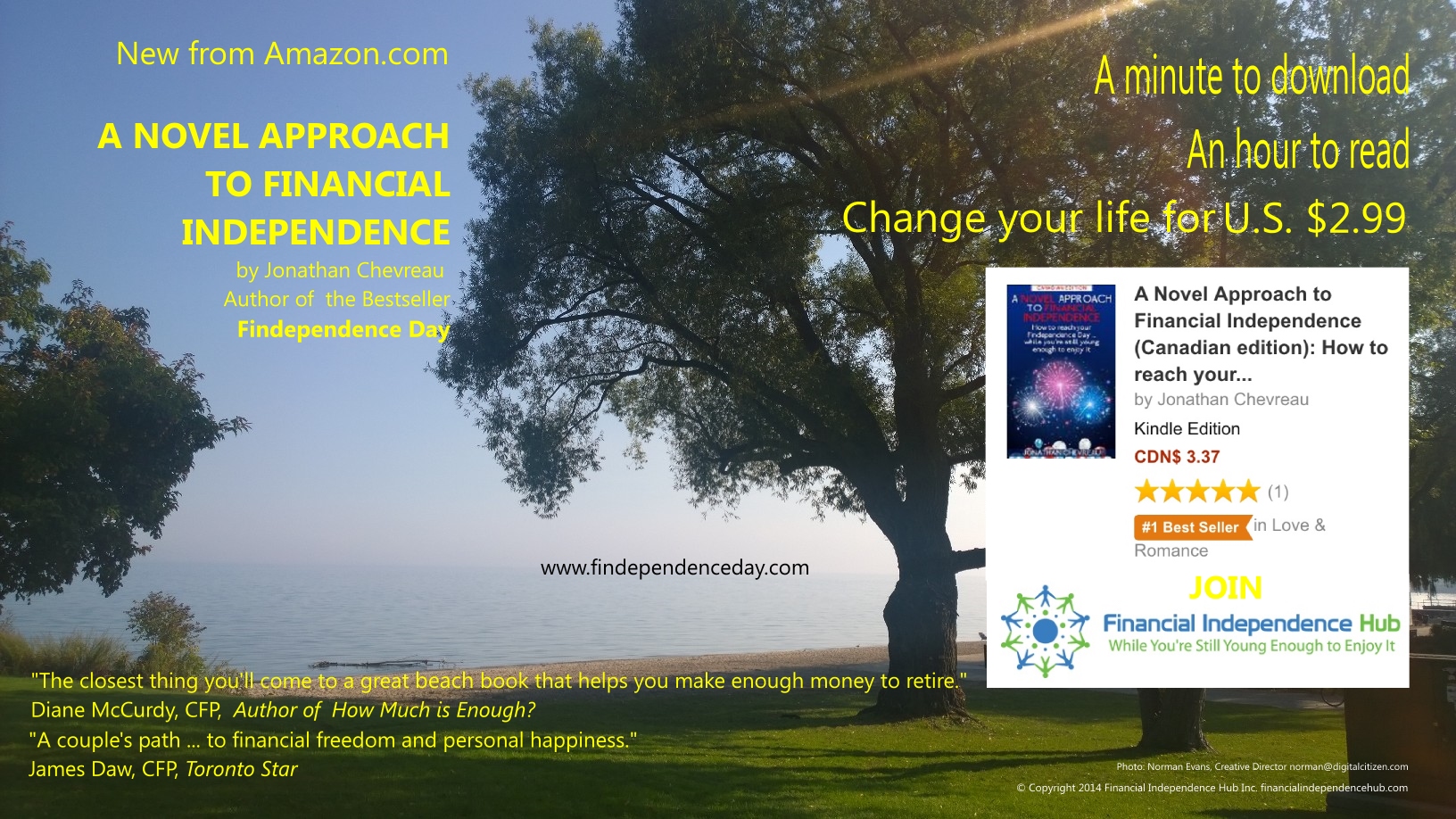
As a postscript, I may as well add a third suggestion: e-books. In particular, if you think US$2.99 or C$3.37 is a bargain price (and it is!), then consider the US or Canadian editions of my own e-book, pictured below.
You can find the US e-book at Amazon here. The Canadian e-book is here.
The good news is that while it may be too late to get physical books delivered from Amazon, you should be able to get an e-book delivered right down to the wire. And of course, Amazon does let you specify an e-book as a gift, provided you have the recipient’s email. If they don’t have a Kindle, they can download a free Kindle app for whatever device they have.
Not to put any pressure on anyone trying to finish their Christmas Shopping, but Wednesday, Dec. 24 is also the last day Canadians can sell stocks for tax-loss harvesting purposes.
You need three days to settle trades so next week just before New Year’s will be too late. Christmas on Thursday is obviously a holiday and Canadian markets are closed Friday for Boxing Day.
Americans have a little bit longer, since U.S. markets will be open part of the day Friday.
The guest blog below by certified financial planner Matthew Ardrey followed a discussion we had on social media about the distinction between traditional retirement and financial independence. Matthew, who is with T. E. Wealth, uses a definition of financial independence that is virtually identical to the one we use on this site, right down to having a paid-for home. We especially like this line: “One can be retired and not financially independent or vice versa.” Over to Matt:
Matthew Ardrey, T.E. Wealth
By Matthew Ardrey, CFP
Special to the Financial Independence Hub
I was first introduced to the concept of retirement as a young boy, when my grandfather retired from the TTC on his 65th birthday. I understood that he no longer worked, and that this is what you do when you reach 65. From the eyes of a child, it seemed like a far away notion.
It wasn’t until 2000, when I started working in the financial services industry, that I was properly introduced to the concept of financial independence as it differs from retirement. The proprietary financial planning software we used at my workplace did not have a retirement calculator. Instead, it had a “Financial Independence Needs” analysis tool. As I was young and green, I saw it as a fancy way of saying retirement planner. Through the benefit of experience, I would soon discover that financial independence was something else entirely.
Retirement vs. Financial Independence
Retirement, by definition, is the cessation of work with the intent of not returning. Financial independence, on the other hand, is having sufficient financial assets to have the choice about whether or not you continue to work. So, one can be retired and not financially independent or vice versa.
When I explain financial independence to my clients, I let them know that the main differentiator is freedom of choice. If you are not financially independent, you have no choice but to continue working if you don’t want to alter other aspects of your life. Once you are financially independent, you can choose if you want to continue to work in the same capacity – or at all. This freedom to choose is empowering and it’s what I encourage all of my clients to work towards.
How to Get There
I’m often asked how one can get to this wonderful nirvana known as financial independence. The first step is to pay off your home. By having a debt-free residence, you have eliminated what is most people’s largest single expense. Without this hanging over your head, you have freed up significant cash-flow.
The second step is budgeting – both before and after you have reached financial independence. Before, determine what you will need to save to reach your goals, and pay yourself first. After, understand what and how you spend to determine if you have accumulated sufficient assets in the “before” stage.
Know Your Asset Returns
Understand the return on the assets that are funding your freedom. Which assets in your portfolio are generating income or appreciating, and at what rate are they growing? How are taxes affecting these returns? These are questions to which you should know the answer, as small changes in that rate compounded over a long period of time can have a significant effect.
Costs matter, period. Focus on the cost/benefit relationship of your investment structures. Benchmark both what you make and what you pay to make it. If you find that the costs are inordinate while the performance is average or worse yet, lackluster, take steps to fix the cost/benefit. Even better yet, get the jump on “CRM2” by asking your advisor to fully delineate all costs pertaining to your investments and what services are offered in exchange for these costs.
As I guide my clients towards their future goals, I find the word “retirement” is used less and less in my lexicon. When my clients leave the workforce, the pursuits they undertake tend to be much different from my grandfather’s, who retired 35 years ago. What they are pursuing is the freedom to make their life whatever they want it to be.
Matthew Ardrey is a Certified Financial Planner with T. E. Wealth. He can be reached at its Toronto offices here. He is also on Twitter as @MattArdreyCFP.
Life expectancy around the world has risen by a whopping six years since 1990, according to a global survey released Friday.
As the CBC reports here, these longer lifetimes are occurring in both rich countries and poor ones, although for different reasons.
In the affluent west, it’s driven by falling death rates from the two big scourges of cancer and heart disease. In poorer countries, increased life expectancy is the result of progress in fighting tuberculosis, malaria and diarrhea. The tragic exception, however, is southern sub-Saharan Africa, where life expectancy has actually fallen five years because of rising deaths from HIV/AIDS.
The 2013 Global Burden of Disease Study was published in the Lancet medical journal.
For those born in 2012, life expectancy in Canada is now 80 for males and 84 for women, according to this report in May of 2014.

 Posted By
  From the Globe & Mail’s mortgage columnist Robert McLister comes this list of five predictions for mortgage shoppers in 2015: