Over the holiday break I’ve been reading about Russia and its president, Vladimir Putin, who came to power at the turn of the millennium. As one of the three books flagged below points out, Russia is the only power that has the capacity to destroy the United States in a nuclear strike. Those who assumed the west “won” the Cold War when the Soviet Union collapsed in 1991 should keep reading. From Ukraine to the War in Syria and the battles over gas pipelines and the plummeting price of oil, Russia is very much in the news as we enter 2015. It’s a fascinating story in itself but investors will find it of particular relevance.
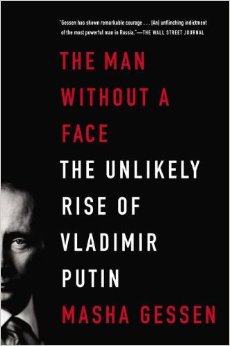
The Man Without a Face
Before his surprise appointment by Boris Yeltsin, little was known about the former KGB (now FSB) operative, which is why Masha Gessen titled her 2012 book about him The Man Without a Face. Subtitled The Unlikely Rise of Vladimir Putin, the gutsy Moscow-based veteran journalist pulls no punches about the true nature of Putin’s Russia.
She traces Putin’s formative years in a chapter entitled “Autobiography of a Thug.” Continue Reading…
… contributing as much as $5,500 to your TFSA (Tax Free Savings Account) if you’re Canadian. Launched at this time in 2009 and behaving somewhat like America’s “Roth” IRAs, it’s hard to believe this is already the seventh time you can contribute. By my calculations, that means $36,500 of collective contribution room plus any investment growth. That’s four years at $5,000 and now three years at $5,500: the maximum was boosted by $500 as an inflation adjustment for calendar 2013.
So if you’re one half of a couple, that means $73,000 in joint contribution room, even if you left it in interest-bearing investments paying almost zero. If you’ve been investing mostly in equities (either stocks or equity ETFs), it’s likely your TFSA had reached $40,000 or more by year-end, so it’s quite conceivable that some couples now have close to $100,000 invested in TFSAs between them.
Thursday, Jan. 1 was of course a holiday. While Friday, Jan. 2, 2015 is likely to be a quiet day for most, there’s no reason why you can’t contribute the next $5,500 to your TFSA that day, particularly if you use online banking and/or discount brokerages.
Good place for equity ETFs
What to invest in? In retrospect, those who invested in US investments with unhedged exposure to the US dollar would have done best up till now. Our daughter’s TFSA is more than half invested in US tech stocks and broader ETFs and the exposure to the greenback has boosted her TFSA to several thousand more than our own TFSAs with more exposure to the loonie.
Generally, I think a Couch Potato approach to investing in TFSAs makes the most sense, using broadly based ETFs from firms like Vanguard or iShares. Those closer to retirement may want a healthy exposure to Canadian dividends: foreign dividends will lose a bit of withheld tax in a TFSA and are better held in RRSPs for that reason. But for younger investors it may make sense to hold non-dividend paying US tech stocks in a TFSA for both the extra growth potential and the exposure to a strong US dollar that is showing no signs of weakening.
I still say the TFSA and Roths are the best games in an over-taxed town. While it’s true that many had hoped the 2015 limit would be more than $5,500, remember that unlike RRSPs, you can continue to contribute to TFSAs well past age 70 or 71: in fact, if you live that long you could still be contributing if you’re a hundred or more.
The key is to get the money in there as soon as you can and let it grow. And that means early January each and every year. While I think the benefit is particularly powerful for the young, they should balance the growth potential with debt repayment. There’s not much point in paying close to 20% a year in credit-card interest if you’re only earning 2% interest in a GIC or cash equivalent contained in a TFSA.
“Alzheimer’s disease – the degenerative brain condition that is not content to simply kill its victims, it must first snuff out their essence.” – Time Magazine, October 31, 2010
By age 85, an individual has a 50% chance of developing Alzheimer’s disease. It’s a matter of a flipping a coin. Chances are if you don’t have Alzheimer’s, you will be caring for someone who does.
The Grim Statistics about Dementia
• The incidence of Alzheimer’s disease is reaching epidemic proportions. Today, 500,000 Canadians have the disease or a related dementia.
• Alzheimer’s disease is considered the second most feared disease of aging.
• While 1: 11 people 65 years of age and older suffer from Alzheimer’s disease, 71,000 Canadians < 65 have the disease.
• It is estimated that one person is diagnosed every five minutes and it is projected that by 2035, 1.1 million Canadians will be living with Alzheimer’ or a related dementia. Continue Reading…
Here’s my column from the print edition of MoneySense magazine that’s being run online today at MoneySense.ca. Regular readers here at the Aging & Longevity section of the Financial Independence Hub will recognize several of the major themes.
In particular, they will note the phrase “Plan for Longevity, Not Retirement,” which I credit to Mark Venning of ChangeRangers.com, whose blog occasionally can be seen in this section.
One of the features of the Decumulation years is making limited funds stretch. Below, early retiree and Montreal resident Michael Trani shows his analysis for his decision to lease rather than buy late-model cars for 20- and 30-year periods following his early retirement at age 55. He uses income from an investment to fund the lease, a strategy that lets him drive a new car every four years. He says he’ll never buy outright again.
By Michael Trani,
Special to the Financial Independence Hub
A few months ago, for family-related reasons, I was forced to retire from my job at the relatively young age of 55. Yes, lucky me, I was now living the Freedom 55 dream! I was well aware that in this new phase of my life, my future earning capabilities would be severely restricted. Wishing to provide stability to my financial affairs, I embarked on a mission to essentially fix all the present and future costs I could control.
My first order of business was to develop a low-cost strategy to provide me with a car for the next 20 to 30 years. While employed, I had saved quite a bit of money to purchase and carry out the required maintenance on a new car. However, now that I did not have the safety net of a job, I knew that once this money was spent, it would be gone for good. I certainly would not be able to replace it. I had been buying cars at 10-year intervals, and for my potential future car in 2024, things did not look good.
The solution to my predicament was simple. Why not simply invest the money I had saved in an investment that returned regular, monthly, tax-advantaged income, then use this income to finance a car lease in perpetuity?
With the aid of a spreadsheet, I compared the cost of purchasing a new car for “cash” every ten years with a car lease financed strictly with the monthly distributions of my investment. My comparison looked exclusively at the 20- and 30-year timeframes, as these represent my future driving years. I also factored in the necessary tax treatment for the monthly distributions and the residual value of the investment.
The investment I used to finance my car lease strategy is: Investors Group Allegro Balanced Growth Canada Focus Class –T J DSC. This is a special balanced mutual fund that distributes 7% yearly on a monthly basis. The distributions are treated as a Return of Capital, and when all the capital has been returned (in approximately 15 years) the distributions become capital gains. I am sure that other well-established financial institutions will have similar products available.
In the following table I have summarized the findings of my comparison.
Comparison of car strategies for 20 and 30 years
Car: 2014 Nissan Versa Note
Duration of lease: 48 months
Car strategy
20-yr strategy; cost per month
20-yr strategy; total cost 20 years
30-yr strategy; cost per month
30-yr strategy; total cost 30 years
purchase “cash”
$300.60
$72,144.00
$300.60
$108,216.00
lease strategy
$119.08
$28,579.76
$119.53
$43,030.76
savings of lease over “cash”
$181.52
$43,564.24
$181.07
$65,185.24
Note 1: The lease includes the dealer-offered free scheduled maintenance for the duration of the lease (in this case 48 months) and a $600 winter tire credit ( ufficient to purchase 4 brand-new Michelin X-ICE tires)
Note 2: With the purchase “cash” strategy there is no free scheduled maintenance and no $600 winter tire credit
I was totally blown away by these results. Certainly, I had made assumptions in my calculations, but, nevertheless, it is clear that the leasing strategy considerably reduces the cost of financing new cars, in perpetuity I may add. The cost reduction is not trivial when I can lease a car with only a third of the money required to purchase that same car.
Leasing yields a new car every four years
Sure enough, I followed through on my plan. I implemented my investment strategy and recently leased a Versa Note. Now every four years I will have a new car. I realize that at the end of 20 or 30 years, I certainly will not own a car, but will instead own the units of the Allegro fund, which will continue to generate monthly income. I believe I succeeded in my mission to devise a low-cost strategy to finance my future car requirements. I will never buy a car outright again.
As a side note, while negotiating my car lease, I learned that car dealers are willing to give away quite a bit of goodies for free. I negotiated four years of free scheduled maintenance and four really good, brand-name, winter tires for free as well. What more could I ask for?
The following table I details all my calculations, to permit easy verification.
Fund: Investors Group Allegro Balanced Growth Canada Focus Class – T J DSC
Date: June-27-2014
Unit Value on this date: $10.8492
Monthly Distribution: $0.0616 per unit
To generate $332.50 monthly requires 5,397.7273 units or $58,561.02 to be invested in the Allegro fund (the initial cost)
20-year strategy
Purchase price of a 2014 Versa Note: $19,072.00 cash payment in full, assume value of trade-in cancels the sales tax
Average maintenance cost per year: $1,700.00
Total cost for 10 years: $36,072.00
Total cost of purchasing per month: $300.60
Total cost for 2 cars over 20 years: $72,144.00
Leasing a 2014 Versa Note for: $332.50 per month line 1
Maintenance expense: $0.00 per month, free scheduled maintenance line 2
Insurance for replacement value: $17.51 per month, $840.40 for 48 months line 3
Insurance for end of lease protection: $19.79 per month, $950 for 48 months line 4
For 20 years this will cost: $88,752.00
The actual cost of leasing: $67,513.02 A. the initial cost of the Allegro fund + ((lines 2+3+4) x 240 months)
The capital gains tax: $4,987.50 B. to be paid on the distributions from years 15 to 20
The net cost of leasing for 20 years: $72,500.52 C. defined simply as (A + B)
Residual value of the Allegro fund: $43,920.77 D. value of the Allegro fund after all return of capital has been used up and units theoretically sold
The “true cost” of leasing for 20 years is: $28,579.76 E. defined simply as (C – D)
The “true cost” of leasing per month is: $119.08 F. defined simply as (E / 240 months)
30-year strategy
Purchase price of a 2014 Versa Note: $19,072.00 cash payment in full, assume value of trade-in cancels the sales tax
Average maintenance cost per year: $1,700.00
Total cost for 10 years: $36,072.00
Total cost of purchasing per month: $300.60
Total cost for 3 cars over 30 years: $108,216.00
Leasing a 2014 Versa Note for: $332.50 per month line 1
Maintenance expense: $0.00 per month, free scheduled maintenance line 2
Insurance for replacement value: $17.51 per month, $840.40 for 48 months line 3
Insurance for end of lease protection: $19.79 per month, $950 for 48 months line 4
For 30 years this will cost: $133,128.00
The actual cost of leasing: $71,989.02 A. the initial cost of the Allegro fund + ((lines 2+3+4) x 360 months)
The capital gains tax: $14,962.50 B. to be paid on the distributions from years 15 to 30
The net cost of leasing for 30 years: $86,951.52 C. defined simply as (A + B)
Residual value of the Allegro fund: $43,920.77 D. value of the Allegro fund after all return of capital has been used up and units theoretically sold
The “true cost” of leasing for 30 years is: $43,030.76 E. defined simply as (C – D)
The “true cost” of leasing per month is: $119.53 F. defined simply as (E / 360 months)
Montreal-based Michael Trani can be reached at michael_trani@hotmail.com.

 Posted By
  The Man Without a Face