All posts by Jonathan Chevreau

BMO’s much rumoured robo-adviser service officially launches

Cute RobotAs the Hub predicted in October — BMO will be first big bank to enter robo-adviser space — the Bank of Montreal has officially launched a robo-adviser serviced called SmartFolio. According to Canadian Press, a trail run began on December 7th and it is now available to all investors as of Monday of this week.

CP notes that BMO is indeed the first of the big five banks to wade into the robo-adviser space, which shouldn’t come as a surprise, since it had led the banks with its own line of BMO ETFs.  Toronto Dominion Bank is also expected to enter the market shortly.

Focus on Millennials

Continue Reading…

Book review: The Crash of 2016

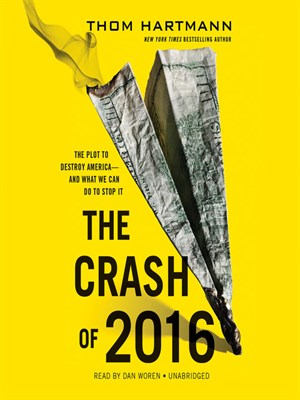
crash2016Regular Hub readers may find this blog post familiar. That’s because it originally ran this time a year ago: in January 2015. Given that the year 2016 is now actually here, and last week’s market activity certainly had “crash-like” elements, it seemed appropriate to bring this one back  to the top of the queue. Starting with my byline below, the review is as it appeared a year ago: In a couple of spots, I’ve added editor notes to clarify dates and timing.

By Jonathan Chevreau

.As a rule, I avoid reading too many financial books based either on Greed or Fear. Still, when you have a good chunk of your net worth invested in the stock market, it’s hard not to have a twinge of doubt when you encounter books like Thom Hartmann’s The Crash of 2016.

I paid no attention to this book when it was published late in 2013 but now it’s 2015, well, 2016 isn’t so far away now, is it? (editor’s note: that was the review’s original sentence; of course, it is now 2016).

Why am I writing about it now? I wasn’t responding to a belated PR campaign by the publisher (Hachette Book Group) but stumbled on it while searching for other books on Kindle. The Kindle sample on offer didn’t enlighten me much about the author’s thesis (that should have been a clue!) so I ordered it from the local library, not feeling any urgency to get my hands on it.

Indeed, the last time I read such a book was Harry Dent Jr’s The Great Crash Ahead and of course so far that prediction has yet to manifest. Continue Reading…

Sell everything? Consider these costs and drawbacks first

Depositphotos_14227153_s-2015My latest Financial Post blog addresses the controversial call earlier this week from the Royal Bank of Scotland to “sell everything.” Click on this headline for the blog: If you try to time the market to sell everything you have to time it to get back in.

In a nutshell there are both commissions and taxes to consider. It all depends on whether you’re in discount brokers, full-service brokerages or use Managed Money, and the split between Registered and Non-Registered Funds. It’s going to cost much more to liquidate individual stocks in a taxable portfolio than a single “Go anywhere” global ETF held in registered accounts. And depending on the kind of mutual funds you own, the costs could be negligible or significant.

Guess what Buffett isn’t doing right now

See also an excellent piece by investment writer Dan Solin that ran in today’s Huffington Post: What Warren Buffett isn’t doing. For starters, he’s not listening to media pundits. As Solin points out, the financial media loves market crashes because it creates fear and anxiety, hence more TV ratings or web traffic. And the more people panic by “selling everything,” the more commissions generated for the financial industry, as we demonstrated above.

If anything, people should be considering buying if markets sag much further, the very opposite of selling everything. But that’s a topic for another day. Generally, though refer to the series of videos we’ve been running the last few months, including the one earlier today titled Winning the Loser’s Game, part 5.

Happy volatile New Year! How to cope with turbulent markets

Stock and fear concept on grunge backgroundAs I observe in my latest Financial Post blog, it’s not been the happiest of new years for investors heavily invested in equities. See How to play the market’s ugly start to the New Year: Top up your tax-free savings with ‘Bargains for the Brave.’ It ran on Wednesday.

Coincidentally, earlier that day the Hub ran the latest FWB TV video, on the timely topic of the difficulty of timing the markets, even if you’re a major economist like John Maynard Keynes.

See No one can time the market consistently.

That said, global shares have now been falling for six days as of Thursday and futures looked bleak for US markets, as Shanghai shares fell 7% and Chinese stock trading was suspended in less than a half hour after the market open: the second suspension in a week. European shares were down too. It certainly looks “ugly,” as one hedge fund manager told Reuters.

Watch my Twitter feed over the day for market updates. You can also see my latest tweets off to the right side of the Hub’s main page.

In the meantime, it may time to take a deep breath and put things into a long-term perspective. Here’s what regular Hub contributor Adrian Mastracci has to say on the current volatility.

Reduce effects of market jitters

“Pick battles big enough to matter, small enough to win.”
— Jonathan Kozel, writer and educator.

Continue Reading…

Time to top up your TFSA by another $5,500

Canadian Tax-Free Savings Account concept with a piggy bank against black backgroundHere’s my first FP blog of 2016: How to find the money to max out your TFSA in January to make the most of your tax-free savings.

As intimated in the Hub’s New Year’s Day post on Friday, it’s about the first major investing action you can take in 2016: topping up your Tax-free Savings Accounts (TFSAs) by an additional $5,500 (down from $10,000 in 2015.)

On a personal note, since we eat our own cooking here at the Hub, I made contributions for myself and my wife on Friday. Depending on how you execute the transfers, this may or may not be an instantaneous process.

Transfers may not be instantaneous

Continue Reading…