
All posts by Jonathan Chevreau

Six rules for Foolish investing, as Fools visit Canada

IMG_6616(2)
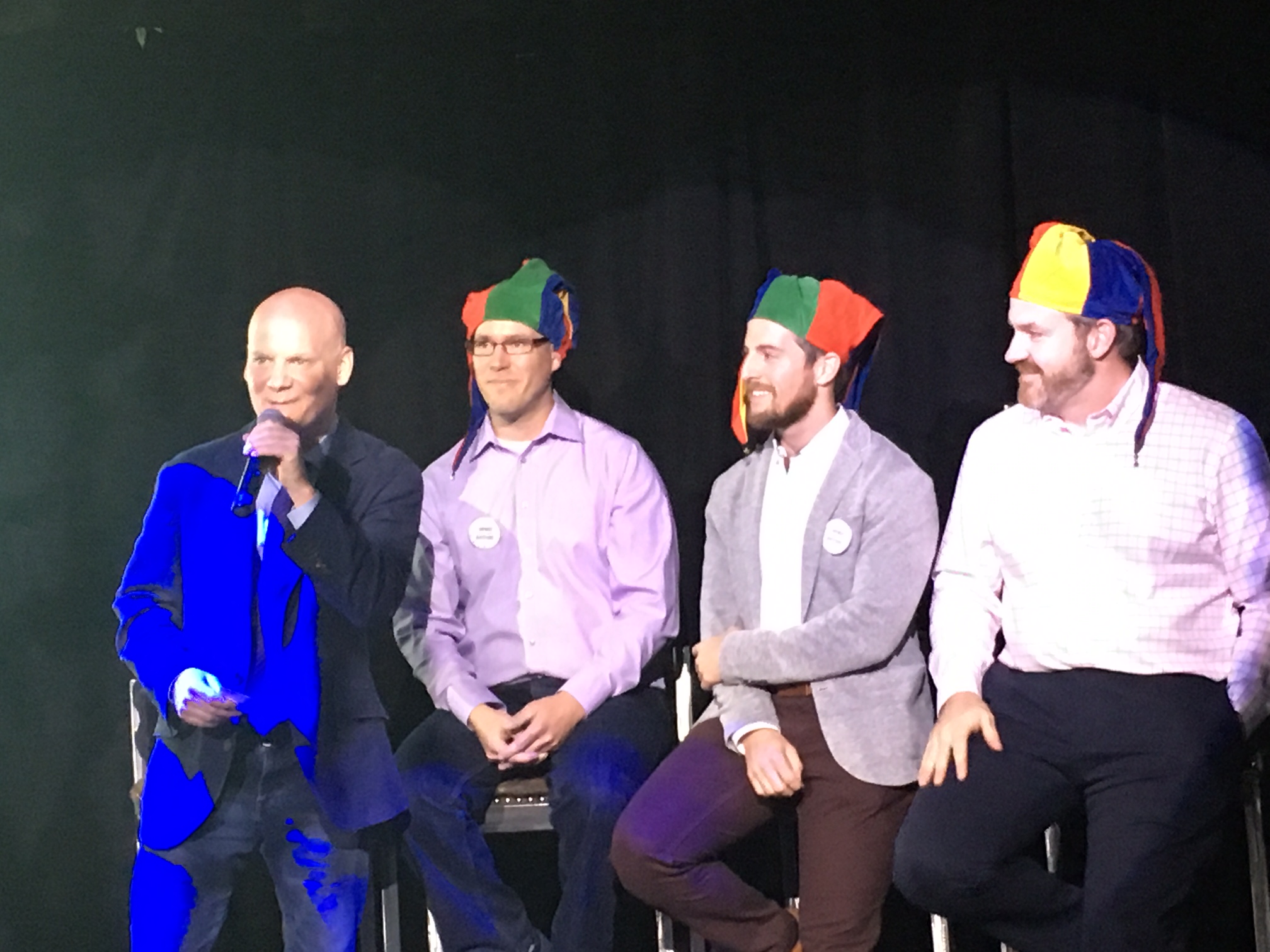
L to R: Motley Fool’s Gardner, Butler, Muckerman and Gillies (Photo J. Chevreau)

Motley Fool co-founder and CEO Tom Gardner and his team of Canadian stock analysts were in Canada for a members-only event in Toronto on Thursday night.

Pictured is Gardner (in blue on the left) asking for stock buy and sell recommendations from a panel of three Fool analysts. From left to right, they are Stock Advisor Canada’s Iain Butler and Taylor Muckerman, and Pro Canada’s Jim Gillies on the extreme right.

The colourful headgear is of course central to the Motley Fool brand. The stock newsletter publishing company is based in Alexandria, VA. It’s also well known for its daily financial podcasts, with most of the panelists regular contributors.

The 6 Rules

Gardner kicked off the evening with his six rules for succeeding as a Motley Fool investor:

Rule #1:  Everyone should have at least 20 to 40 stocks. That’s a minimum but there’s no need to cap it at 40, Gardner said. Continue Reading…

BMO slashes fees on bond ETFs

Kevin_Gopaul_Feature
BMO’s Kevin Gopaul

BMO Asset Management Inc. says it is slashing fees on its flagship bond ETFs, and that after they are implemented on or about June 22 BMO ETFs will sport some of the lowest-cost fixed-income ETFs in Canada.

Some of the fee cuts on its broad fixed-income products are more than 50%: Given the minuscule interest rates being paid out on bonds these days, that should get investors’ collective attention.

Here’s the new fee structure BMO issued in a press release today:

BMO ETFs

Ticker

Current Maximum Annual Management Fee (%)

New Maximum Annual Management Fee (%)

BMO Aggregate Bond Index ETF

ZAG

0.20

0.09

BMO Discount Bond Index ETF

ZDB

0.20

0.09

BMO S&P 500 Hedged to CAD Index ETF

ZUE

0.10

0.08

BMO S&P 500 Index ETF

ZSP/ZSP.U

0.10

0.08

BMO Short Corporate Bond Index ETF

ZCS

0.12

0.10

Kevin Gopaul, Global Head of ETFs for BMO Asset Management says the move follows earlier fee reductions in 2012, 2013 and 2014. “Clients are recognizing the value and liquidity of using low-cost ETFs for fixed income exposures in their portfolios.”

The 50% cut on the broad-market  ZAG and ZDB makes them the lowest-cost fixed-income ETFs in the country, at nine basis points. As the chart shows, it has also reduced fees on its currency hedged and non-hedged S&P500 ETFs (ZUE and ZSP/ZSP.U respectively) to 8 basis points from the previous 10 basis points.

Retired Money: The Joy of Pension Splitting

Elderly couple in a meeting with an adviser discussing a document as she watches across the desk in her officeThe third instalment of my new bimonthly Retired Money column at MoneySense.ca has just been published online and focuses on the important topic of pension splitting, or pension income splitting.

You can read the whole piece by clicking on this highlighted headline: How to keep more benefits with pension income splitting.

As the piece observes, pension splitting can be manna from heaven for retired or even semi-retired couples where one is collecting a generous Defined Benefit or other employer pension and the other is not.

Nor is it as complicated a process as it may seem at first blush: you don’t have to actually divide such a pension and send some to each spouse: it all happens at tax-time when for tax purposes you choose what percentage of the pension each spouse should receive. Naturally there are multiple things to consider, such as other income sources, relative tax brackets and so on.

But the bottom line is that in many cases, it should result in thousands of extra after-tax dollars a year in the pockets of the couple as a unit. And that’s how couples should behave, isn’t it?

For more information about pension income splitting, a good place to start is the Canada Revenue Agency’s web site, and in particular this explanation. Note too that it includes a short video.


FinTech wars heat up as Robo firm NestWealth hires former BlackRock sales director

14fc7a1
Chris Hogg heads up new Nest Wealth Pro unit

The fin-tech wars are heating up on the Sales front: Toronto-based robo adviser NestWealth.com today announced it has hired the former Director of National Accounts for iShares BlackRock to head up its new B2B offering, Next Wealth Pro.

The hiring of sales veteran Chris Hogg is a “huge day for Nest and I think for the industry as a whole,” says NestWealth founder and CEO Randy Cass.

Nest Weath Pro is a new digital wealth management platform: it provides traditional brokerage firms, advisors, and asset managers with a “white label” turn-key solution that includes know-your-client tools and customizable portfolio management.

Disruptive shift

In a press release issued this morning, NestWealth said Hogg has more than 20 years industry experience, including the last three years at BlackRock. The release quotes Hogg as saying that “I’ve seen many changes within the industry, but have never encountered a shift as meaningful and disruptive as what we’re seeing today.”

Case said Nest Wealth Pro demonstrates that “technology and tradition can co-exist in a way that supports advisors and benefits their clients.”

NestWealth describes itself as “Canada’s largest independent Robo-Advisor.”

Speaking of disruption, there’s a good piece on finch’s impact on the banks in Thursday’s Financial Post. See ‘Disruption here and now’: Pressure of Uber moment transforming banks, conference told.

With $100 billion in assets, can ETFs catch mutual funds?

An image of a 3d investment strategies funnel chart.My latest Financial Post column can be found in the print edition of Wednesday’s National Post as well as online right now, under the title The market share battle between ETFs and mutual funds is heating up, as Canadian ETFs pass $100 billion milestone.

As noted earlier here on the Hub, the ETF (Exchange-traded Funds) industry recently passed the significant milestone of $100 billion in assets under management. See ETFs break $100 billion milestone in Canada. That’s “Billion” with a B, but is still less than 10% of the $1.1 Trillion (Trillion with a T) that the entrenched and much older mutual fund industry still enjoys.

As an aside, if you have difficulty grasping how big the number “Trillion” is then read a hub post by Ian Campbell: Can you put the number ‘Trillion’ in context?

The FP column asks the question why the huge disparity in Management Expense Ratios (MERs) of mutual funds (i.e. high at around 2.5% per annum) versus ETFs (typically around 0.55% but in some cases as low as 0.4 or 0.5%) hasn’t resulted in even more incursions by the ETF industry into the mutual fund space.

ETF sign is held by businessman.

Powerful bank distribution network

One reason is the entrenched positions of the Canadian banks, whose powerful distribution network (i.e. bank branches)allows them to sell their own in-house no-load mutual fund families. Of course, BMO, RBC and now TD all sell ETFs as well but I doubt you’ll see many recommended by your local friendly branch rep any time soon.

As the old saying goes, mutual funds are sold, not bought. Continue Reading…