All posts by Financial Independence Hub

Could you become car-free?

Billy and Akaisha on a Jak-a-Ran in Thailand

By Akaisha Kaderli, RetireEarlyLifestyle.com

Special to the Financial Independence Hub

It wasn’t a decision we took lightly.

In fact, Billy and I discussed the idea of becoming car-free for several years. There were good reasons to do it: no more maintenance and repair costs; no more fees for insurance, license plate renewal, or registration; no more fuel expense; and no more worry about storing the vehicle here in the States when we are traveling overseas for months or years at a time.

But there were also some obvious downsides. We wouldn’t have the freedom to come and go at a whim. And because we live in the American Southwest, where temperatures reach triple digits in the summer, we wondered how we’d manage to get around during the sun season.

Silly idea or feasible plan?

Most people we know couldn’t fathom the idea of giving up their vehicle and saw this new lifestyle choice as a hardship. Americans love their automobiles, and owning one is packaged as part of the American Dream. A look at the automobile and truck commercials today describe how we will be sexier, more popular, physically stronger, and obviously smarter if we purchase their brand of car.

As we’ve described on our Retire Early Lifestyle website, Billy and I live in an active adult community where we are within walking distance to stores, restaurants, and several different entertainment options. Most of what we need is near to us, and we appreciate the slower pace of life with all the rewards it brings. Many of our neighbors use a small scooter, golf cart, or bicycle to get around within a reasonable range. When we need to go somewhere farther, we trade services or pay cash to a neighbor or friend for their time. This is much cheaper than a taxi, more sociable, and we aren’t bogged down with worries about maintaining a vehicle. Both sides appreciate the trade, and our lives are enriched.

After almost two decades of world travel, we realized that the only place where we need to drive is in the States. Elsewhere, we take public transportation or hire a private driver. For the amount of time we live in the States, and for the amount of money that owning our own transport required, we finalized our decision to sell our vehicle.

The year was 2009.

What about you? 

Retirement takes many expressions and even if you could never see yourself as becoming completely free of car ownership, maybe you have toyed with the idea of keeping only one vehicle instead of two.

The following sites may help you with this transition: Continue Reading…

Behind the scenes of ETF creations and redemptions

By Paige Corbin, Capital Markets Associate, WisdomTree Investments
Special to the Financial Independence Hub


Exchange-traded funds (ETFs) can offer an attractive and efficient way for investors to gain access to all aspects of the marketplace and have greatly leveled the investment landscape in terms of availability to all asset classes and regions.

As ETFs continue to grow in assets and scope of coverage, we are often asked these questions: What is an ETF creation or redemption? How does that work? What function does that provide, and does an investor make that decision? Let’s go behind the scenes of the life of a trade and discuss what the creation/redemption process is and how it fits into the trade life cycle.

How Does the ETF Creation/Redemption Process Work?

The creation/redemption mechanism allows for the increase or decrease of ETF shares based on demand without impacting other investors of the fund. This is an important contrast to a mutual fund where any buying or selling in the fund impacts all investors. If there is increasing demand for a specific ETF, new shares can be created to meet that demand in exchange for underlying assets, and if demand decreases, shares can be reduced by exchanging shares for assets. This flexible process is done solely by what is called an authorized participant, or AP. What is key to highlight is that the investor never makes the decision to create or redeem; that is simply a back-office function that is determined by the broker.

Illustrating the Life Cycle of a Trade

To illustrate how this process works, let’s follow the life cycle of a trade. In this example, John Doe at Smith Capital wants to purchase 500,000 shares of a new ETF. Since the fund is new, the on-screen volume is minimal, but John knows that the ETF structure allows him to purchase shares of the ETF with efficient pricing because of the creation/redemption functionality.

ETF Creation Process

1.) John goes to his broker and gives him the order to buy 500,000 shares of an ETF.
2.) The broker sells the ETF shares to John at a specific price. As mentioned before, the process of buying the ETF is seamless for John the investor, and his work is done.
3.) Behind the scenes on the back end, the broker has determined that, due to the increased demand by John, he as an authorized participant must create new ETF shares. He is now short the ETF shares since he sold them to John.
4.) The broker then buys the basket of securities held by the ETF to hedge himself and is now long the basket and short the ETF.
5.) The broker then delivers the basket of securities to the ETF issuer, initiating a creation.
6.) The broker receives new ETF shares from the issuer in return and flattens out his short ETF position. Continue Reading…

7 tips for earning extra money from your Driveway

By Sarah Kearns

Special to the Financial Independence Hub

Do you want to earn a quick extra buck or two with items that are just lying around the house? How about making money off your handyman skills? And, oh, did you know that it’s also possible to earn extra money from your unused driveway space?

If you’re looking to earn some extra cash by running your own business right on your very own driveway, then you might want to consider these seven money-generating tips.

1.) Hold a garage sale

The first thing that comes to mind when you think of earning money from your driveway is the garage sale. Aside from earning a few hundred dollars, you also get to clean out the clutter in your home. A garage sale is also a good weekend family activity and is a great exercise to learn about the basics of entrepreneurship.

2.) Set up a concession stand

Remember those lemonade stands kids put up during summer break? You can set up a concession stand on your own driveway too! It’s even better if your street has lots of foot traffic. Of course, different countries, states, or territories have different laws regarding this; so, always check your local regulations first before you set up.

3.) Rent out your tools

If you have tools that are seldom used, you can rent them out to neighbors and contractors in your area for extra cash. There are websites like ToolMates that let you post your for-rent tools and equipment online. These services let you make some extra money off your tools; which is always better than letting these expensive items just gather dust in the shed.

4.) Start your own handyman business

Since we’re already on the topic of tools, you can also set up your own, independent, handyman business. If you have handyman (or handy woman!) skills like carpentry, ceiling repair, car maintenance, and such, then it might be good to put those skills into work and earn some extra money. Sites like AirTasker allow you to post your services online so that people in your area can get in touch with you whenever they need your skills.

5.) Share your car with neighbors

Now, this is a fairly new concept and companies like Lyft and Uber have taken this innovative idea to the next level. However, if you don’t like driving around that much, it’s also possible to rent out your car to your neighbors when you’re not using it. CarNextDoor is a service that allows neighbors to ‘share’ their cars with each other, thereby offsetting the cost of ownership.   Continue Reading…

Aging business owners need to tackle estate planning

By Andre Guillemette

Special to the Financial Independence Hub

Did you know that more than 50% of medium sized enterprises in Canada are controlled by an owner between the age of 50 and 64? Additionally, about 75% of Canadian business owners plan to exit their business before 2022. However, according to the Canadian Federation of Business, only half of Canadian business owners have a proper succession plan in place. If you are a business owner, you need to think about the future of your company, no matter your age.

When a family’s assets and income are linked to a business, if the business owner passes away, both estate and succession planning will ensure that the family is taken care of and the company remains viable. If a person passes away without a will, provincial wills and estate law will determine how their assets are dispersed. Without any kind of estate planning in place, their heirs could be hit with a hefty tax bill, and unexpected fees and administrative costs.

There are many steps to effective estate planning and whether they all apply to you will depend on your personal circumstances. Some of them include:

  • ensuring your will is up-to-date
  • appointing an appropriate executor
  • establishing an Enduring Power of Attorney (EPOA)
  • providing an income for your spouse and family in the event of your unexpected disability or death
  • developing a plan for equitable and tax-efficient distribution of your assets
  • creating an emergency business plan
  • writing shareholder/partnership buy-sell agreements if applicable
  • planning for succession

To accommodate the above, there are several financial strategies at your disposal to help you meet your goals. As a business owner you should investigate:

1.) Looking at insurance as a way to shelter assets for the next generation.

Permanent cash value life insurance policies, such as participating whole life and universal life, are attractive to corporations for the potential tax-free death benefit and the tax-preferred cash accumulation benefits they offer. These insurance policies provide the corporation with valuable life insurance protection on a key person or shareholder. Another benefit is they allow for tax efficient growth and access to policy values tax-free immediately or in the future. By using life insurance, the estate value available for future generations can be significantly increased by the tax-free death benefit. Continue Reading…

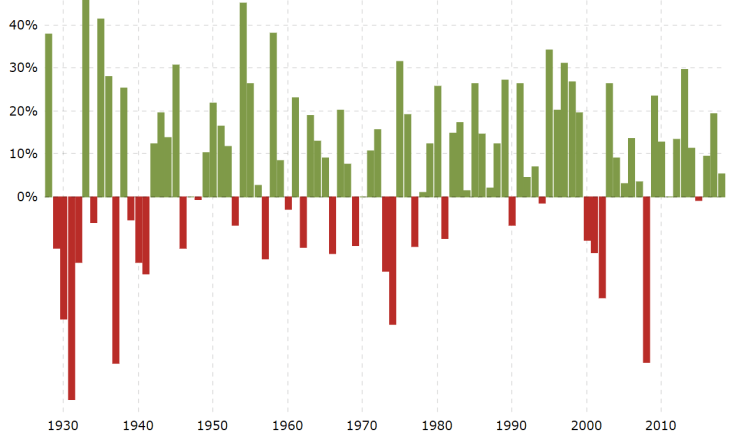
How much can you expect for investment returns?

“How much am I going to make?”

That’s likely the most reasonable question that an investor could ask. When you sign up for a savings account or GIC it’s usually the rate of return that lured you in, or got your attention. We know that many savers are ‘rate chasers’. They go from bank to bank, playing each bank against the other bank, asking for more, asking for a higher interest rate on their savings account or GIC.

I often had clients brag to me that they could get a savings account at 1.5% at so-and-so bank or credit union. I’d reply “That’s great, go for it, but I work in investments, I’m talking about earning triple or quadruple or more than that rate over time.” Of course, I would always qualify that there was the potential to earn that greater rate or return.

Did I mention that 1.5% don’t impress me much?

Of course, at this stage of the conversation I would probe the client’s savings accounts and whether or not they had a more than ample Emergency Fund. Typically, advisors will suggest that you hold 3-6 months of total spending needs in a savings account. That said, everyone knows their own personal situation and what types of emergencies that might pop up – and potentially the costs of those emergencies.

Separate short-term and long-term money

Another important practice is to separate our short-term monies and our long-term monies. Once we’re covered with that short-term emergency bucket, we move on to growth and try to make our long-term monies work real hard. You will also have day–to-day monies in a chequing or savings account.

One of the biggest mistakes Canadians make is to have too much money in “high interest” savings accounts. Guess what? That 1-2% is not going to take you to the retirement promised land. In fact, monies in a savings account are usually going backwards, it’s not making you a dime once you factor in inflation. A long term historical average for inflation is in the area of 3%. If you’re earning 2% in a savings account, you’re losing 1% spending power, each year.

Your $100,000 that you have today might feel like (or spend like) $90,000 or less in ten years. Start to extrapolate that over a few decades and the effect is greatly exaggerated. Inflation is nasty. Here’s an example that will also show my age. When I was a kid, I would take 25 cents to the movies to buy treats. With those 25 pennies I would be able to buy a pop and chips, I think I may have also been able to buy a 3-pack of gum. Yes, I also spent a lot of time in the dentist’s chair. Can you get anything for a quarter these days? I didn’t think so. Talk about losing spending power. And no, I did not grow up in the era of the Great Depression. I ‘grew up’ in the best decades of all time: the 60s and the 70s.

Only stocks can outstrip inflation

Now certainly, the 70s experienced some ‘hyper’ inflation so the effect was exaggerated. But inflation is there and it’s powerful, even in the 2.5 – 3% range. Continue Reading…